Hanging Half Windmill
MobilityCoreBalanceFunctional
Track Hanging Half Windmill in SmartWorkout and watch your numbers go up
Log sets, weights and progress for free, with no workout limits.


Body Part: Abs
Description
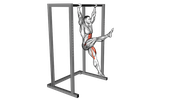
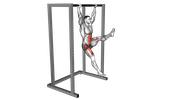
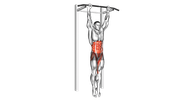
The Hanging Half Windmill is an advanced core exercise that targets the obliques, lower back, and hip flexors. It involves hanging from a bar and rotating the legs in a controlled manner to engage the core muscles effectively. This exercise requires significant upper body strength and core stability.
How to Perform
- Begin by hanging from a pull-up bar with an overhand grip, hands shoulder-width apart.
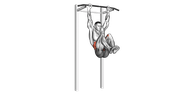
- Engage your core and lift your legs to a 90-degree angle, so your body forms an 'L' shape.
- Slowly rotate your legs to one side while keeping them straight, aiming to bring them parallel to the ground.
- Pause briefly at the end of the rotation, maintaining control and tension in your core.
- Return your legs to the center position in a controlled manner.
- Repeat the movement on the opposite side.
- Perform the desired number of repetitions, ensuring even distribution on both sides.
What Muscles Work
Primary Muscle:
Secondary Muscles:
Tips
- Ensure your grip is secure before starting to prevent slipping.
- Focus on slow and controlled movements to maximize core engagement.
- Keep your shoulders engaged and avoid swinging or using momentum.
- Breathe steadily throughout the exercise, exhaling as you rotate your legs.
- If you're unable to keep your legs straight, slightly bend your knees to reduce difficulty.
- Start with fewer repetitions and gradually increase as you build strength and stability.
Common Mistakes
- Swinging the legs instead of controlling the movement with the core.
- Allowing the shoulders to shrug instead of keeping them engaged and stable.
- Failing to maintain a straight line from head to tailbone, leading to a bent or arched back.
- Dropping the hips too low, reducing core engagement and control.
- Rotating the torso excessively, which can strain the lower back.
- Not fully extending the arms, resulting in reduced range of motion.
- Using momentum to initiate the movement rather than controlled muscle activation.
- Neglecting to engage the obliques, leading to poor rotational control.
Recommended Exercises
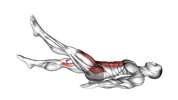
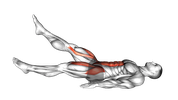
Explore exercises related to Hanging Half Windmill for abs training and similar movement patterns.
Choose a workout plan or create your own - for free
Ready-made plans for every goal, a free plan creator, hundreds of exercises and an advanced workout journal - all in SmartWorkout.