Hanging Knee To Chest
CoreMobilityFunctional
Track Hanging Knee To Chest in SmartWorkout and watch your numbers go up
Log sets, weights and progress for free, with no workout limits.


Body Part: Abs
Description
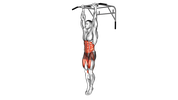
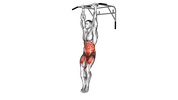
The Hanging Knee To Chest exercise targets the abdominal muscles, particularly the lower abs, and also engages the hip flexors. It is performed by hanging from a pull-up bar and drawing the knees up towards the chest in a controlled manner.
How to Perform
- Grip a pull-up bar with an overhand grip, hands shoulder-width apart.
- Allow your body to hang freely with arms fully extended and feet off the ground.
- Engage your core and keep your back straight.
- Slowly lift your knees towards your chest by flexing at the hips and knees.
- Pause briefly at the top of the movement when your thighs are parallel to the ground or higher.
- Lower your legs back to the starting position in a controlled manner.
- Repeat for the desired number of repetitions.
What Muscles Work
Primary Muscle:
Secondary Muscles:
Tips
- Ensure a firm grip on the bar to maintain stability throughout the exercise.
- Focus on using your abdominal muscles to lift your knees rather than swinging your legs.
- Keep movements slow and controlled to maximize muscle engagement.
- Avoid using momentum; this reduces the effectiveness of the exercise.
- Exhale as you lift your knees and inhale as you lower them back down.
- If you find it difficult to keep your body stable, try engaging your shoulder blades slightly for added support.
Common Mistakes
- Swinging the body excessively instead of using controlled movements.
- Failing to engage the core muscles, relying too much on the arms.
- Bringing knees only halfway up, not reaching full range of motion.
- Arching the lower back instead of keeping a neutral spine.
- Using momentum to lift the knees rather than muscle contraction.
- Letting the shoulders shrug up towards the ears, losing scapular stability.
- Not keeping the knees together, leading to uneven muscle engagement.
- Dropping the legs too quickly on the descent, risking lower back strain.
Recommended Exercises
Explore exercises related to Hanging Knee To Chest for abs training and similar movement patterns.

Choose a workout plan or create your own - for free
Ready-made plans for every goal, a free plan creator, hundreds of exercises and an advanced workout journal - all in SmartWorkout.