Doorway Chest Stretch
MobilityStretchingWarm-up
Track this exercise in SmartWorkout
Log sets, weights and progress for free, with no workout limits.


Body Part: Chest
Description
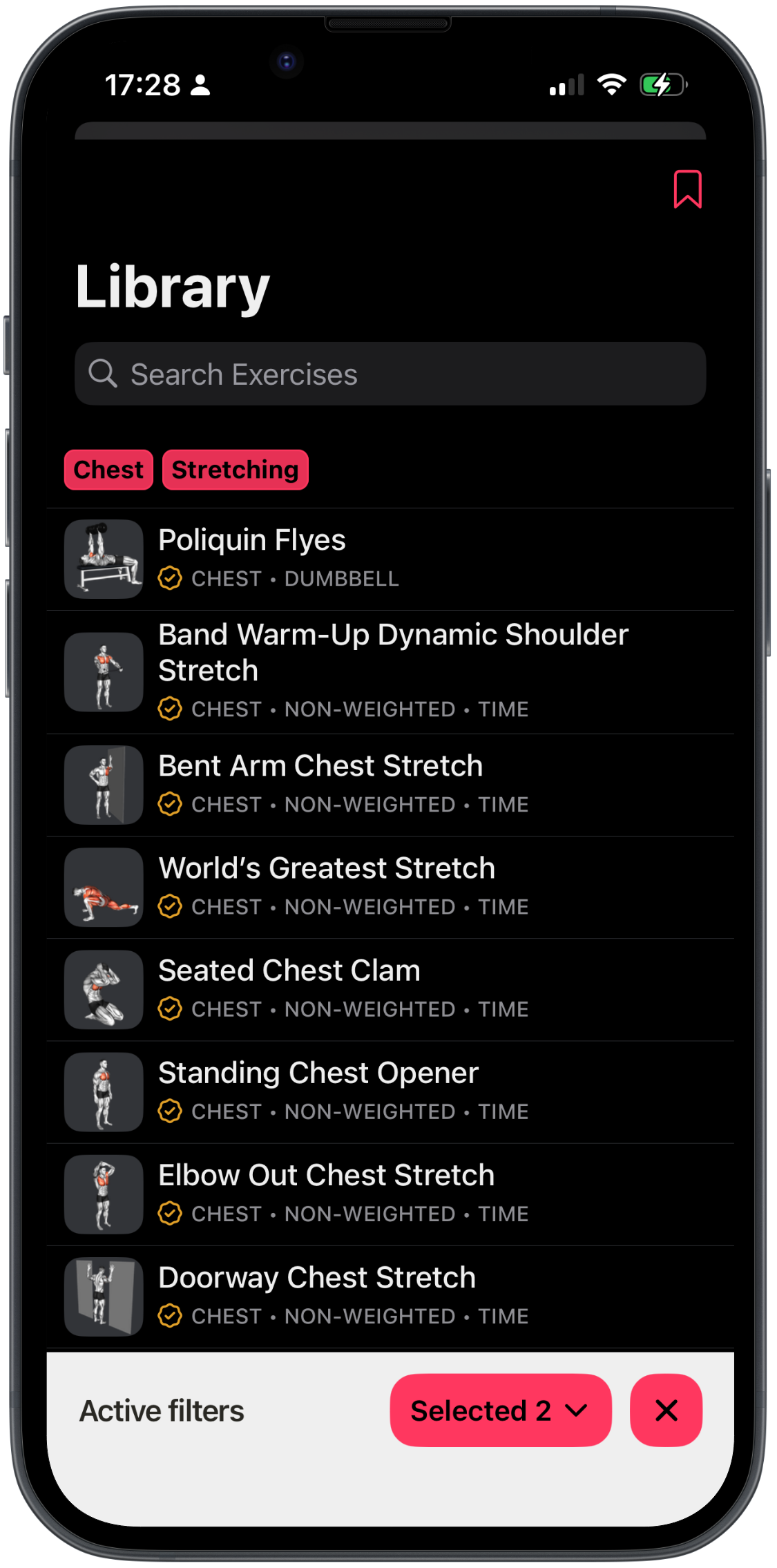
The Doorway Chest Stretch is a static stretch exercise designed to improve flexibility and mobility in the chest, shoulders, and upper back. It is performed using a doorway as support, allowing for a deep stretch of the pectoral muscles and anterior deltoids.
How to Perform
- Stand in a doorway with your feet shoulder-width apart.
- Raise your arms to the sides and bend your elbows at a 90-degree angle, forming a 'goalpost' position.
- Place your forearms against the door frame, ensuring your elbows are slightly below shoulder height.
- Step one foot forward through the doorway, keeping your back straight and core engaged.
- Gently lean forward until you feel a stretch across your chest and shoulders.
- Hold the stretch for 15-30 seconds, breathing deeply throughout.
- Slowly return to the starting position and switch feet if desired.
What Muscles Work
Primary Muscle:
Tips
- Keep your shoulders relaxed and avoid shrugging them during the stretch.
- Ensure your elbows remain slightly below shoulder height to prevent shoulder impingement.
- Maintain a neutral spine by engaging your core muscles throughout the stretch.
- Avoid leaning too far forward; the stretch should be gentle and not cause pain.
- Focus on deep, controlled breathing to enhance relaxation and effectiveness of the stretch.
- Perform this stretch after workouts or during breaks to alleviate tension in the chest and shoulders.
Common Mistakes
- Placing hands too high or too low on the doorway, leading to ineffective stretch.
- Leaning too far forward, causing strain on the shoulder joint.
- Arching the lower back excessively, reducing chest engagement.
- Failing to keep shoulders down and back, leading to shoulder impingement.
- Holding the stretch for too short a duration, minimizing benefits.
- Allowing the head to jut forward, causing neck strain.
- Not engaging core muscles, leading to instability.
- Rotating the torso instead of keeping it aligned, reducing stretch effectiveness.
Recommended Exercises
Explore exercises related to Doorway Chest Stretch for chest training and similar movement patterns.







Choose a workout plan or create your own - for free
Ready-made plans for every goal, a free plan creator, hundreds of exercises and an advanced workout journal - all in SmartWorkout.