Cable Double-Arm Tricep Kickback
StrengthPush
Track Cable Double-Arm Tricep Kickback in SmartWorkout and watch your numbers go up
Log sets, weights and progress for free, with no workout limits.


Body Part: Triceps
Description
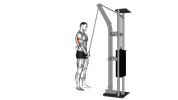
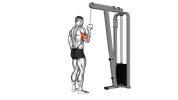
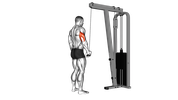
The Cable Double-Arm Tricep Kickback is an isolation exercise targeting the triceps brachii. It involves extending the arms behind the body using a cable machine, which provides constant tension throughout the movement. This exercise helps in building strength and definition in the triceps.
How to Perform
- Attach a handle to each side of a cable machine at the lowest setting.
- Stand facing the machine, holding a handle in each hand with a neutral grip.
- Step back slightly to create tension in the cables, and bend forward at the hips until your torso is nearly parallel to the floor.
- Keep your elbows close to your sides and bend them at 90 degrees.
- Extend your arms straight back by contracting your triceps, keeping your elbows stationary.
- Pause briefly at the top of the movement, then slowly return to the starting position.
- Repeat for the desired number of repetitions.
What Muscles Work
Primary Muscle:
Tips
- Maintain a slight bend in your knees for stability during the exercise.
- Keep your core engaged to prevent lower back strain.
- Focus on moving only your forearms; your upper arms should remain stationary.
- Exhale as you extend your arms and inhale as you return to the starting position.
- Use a controlled motion to maximize muscle engagement and avoid swinging.
- Start with lighter weights to perfect your form before progressing to heavier loads.
Common Mistakes
- Using too much weight, causing loss of control and poor form.
- Allowing elbows to drop below the torso, reducing tricep engagement.
- Swinging the arms instead of maintaining a controlled movement.
- Not fully extending the arms, limiting the range of motion.
- Arching the back excessively, leading to poor posture and potential strain.
- Leaning too far forward, shifting focus away from the triceps.
- Failing to keep the core engaged, compromising stability.
- Allowing wrists to bend, reducing tension on the triceps.
- Rushing the movement, sacrificing muscle activation for speed.
Recommended Exercises
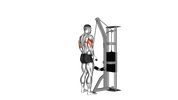
Explore exercises related to Cable Double-Arm Tricep Kickback for triceps training and similar movement patterns.
Choose a workout plan or create your own - for free
Ready-made plans for every goal, a free plan creator, hundreds of exercises and an advanced workout journal - all in SmartWorkout.