Triceps Push-Up
enums.exercise_tag.STRENGTHenums.exercise_tag.PUSHenums.exercise_tag.FUNCTIONAL
exercise_detail.body_part: enums.body_part.TRICEPS
exercise_detail.description
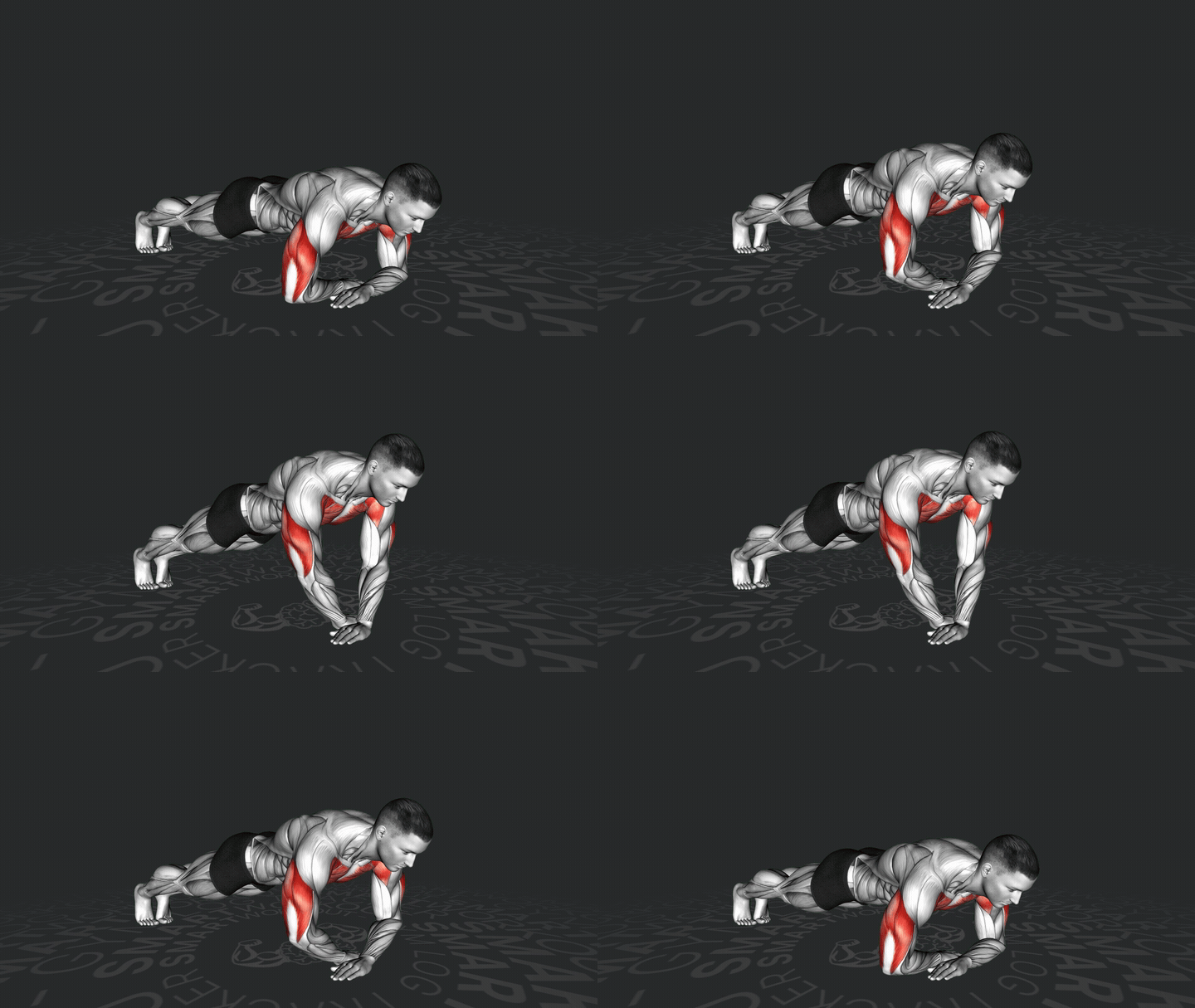
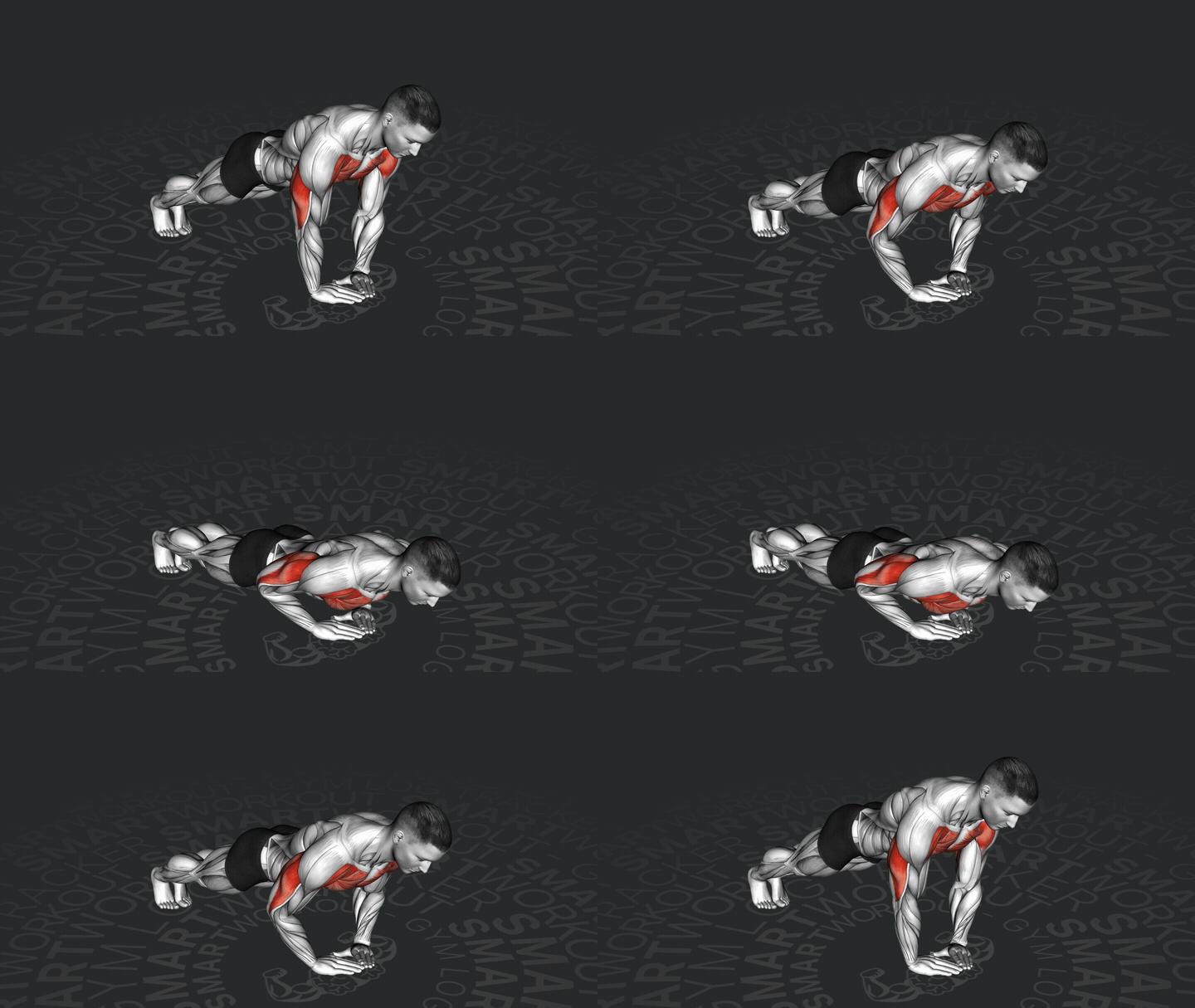
The Triceps Push Up is a bodyweight exercise that targets the triceps brachii muscles, along with engaging the chest, shoulders, and core. It is performed in a plank position, requiring stability and strength to effectively isolate and work the triceps.
exercise_detail.how_to_perform
- Start in a high plank position with your hands placed directly under your shoulders, arms fully extended.
- Keep your body in a straight line from head to heels, engaging your core and glutes.
- Lower your body by bending your elbows, keeping them close to your sides as you descend.
- Continue lowering until your chest is just above the ground.
- Push through your palms to extend your arms and return to the starting position.
- Repeat for the desired number of repetitions.
exercise_detail.what_muscles_work
exercise_detail.primary_muscle:
exercise_detail.secondary_muscles:
exercise_detail.tips
- Maintain a straight line from head to heels throughout the movement to prevent sagging or arching of the back.
- Keep your elbows tucked close to your body to maximize triceps engagement and reduce shoulder strain.
- Engage your core and glutes to maintain stability and prevent hip sagging.
- Breathe in as you lower down and exhale as you push up.
- If you find it difficult to maintain form, perform the exercise on your knees while keeping the same alignment.
exercise_detail.common_mistakes
- Hands placed too wide, reducing triceps engagement and shifting focus to chest muscles.
- Elbows flaring outwards, which decreases triceps activation and increases shoulder strain.
- Hips sagging or lifting too high, leading to poor core engagement and potential lower back strain.
- Failing to lower the body fully, limiting range of motion and triceps activation.
- Not maintaining a straight line from head to heels, causing misalignment and inefficient force distribution.
- Rushing through repetitions, reducing control and increasing the risk of improper form.
- Allowing shoulders to collapse, which can lead to neck strain and reduced triceps involvement.
- Neglecting to engage the core, resulting in instability and decreased overall effectiveness.
exercise_detail.recommended_exercises
exercise_detail.recommended_exercises_intro
exercise_detail.app_ad.title
exercise_detail.app_ad.description