Weighted Muscle-Up
enums.exercise_tag.STRENGTHenums.exercise_tag.EXPLOSIVEenums.exercise_tag.PULL
exercise_detail.body_part: enums.body_part.TRICEPS
exercise_detail.description
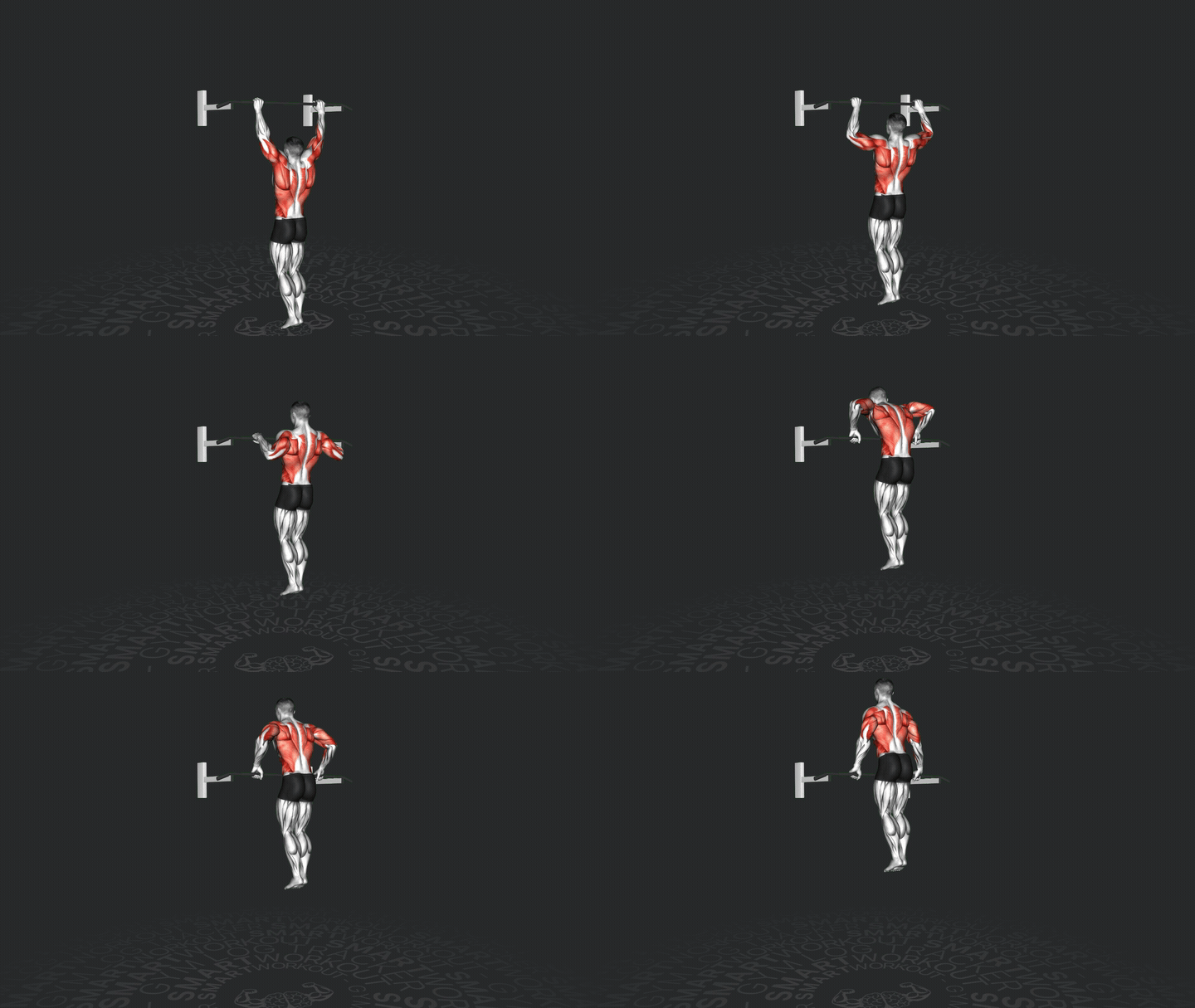
The Weighted Muscle-Up is an advanced compound exercise that combines a pull-up and a dip, performed with additional weight. It targets the upper body, primarily engaging the latissimus dorsi, biceps, triceps, chest, shoulders, and core muscles. This exercise requires significant strength, coordination, and technique.
exercise_detail.how_to_perform
- Begin by attaching a weight belt around your waist with the desired weight.
- Grip the pull-up bar with an overhand grip, slightly wider than shoulder-width apart.
- Engage your core and initiate the movement by pulling yourself up explosively.
- As your chest reaches the bar, transition by leaning forward and pushing down on the bar.
- Press your body up until your arms are fully extended above the bar.
- Lower yourself back to the starting position in a controlled manner.
- Repeat for the desired number of repetitions.
exercise_detail.what_muscles_work
exercise_detail.primary_muscle:
exercise_detail.secondary_muscles:
exercise_detail.tips
- Ensure you have mastered the basic muscle-up before adding weight to prevent injury.
- Focus on explosive power during the pull-up phase to aid in transitioning over the bar.
- Maintain a tight core throughout the movement to stabilize your body.
- Use a spotter or resistance bands if you're new to weighted muscle-ups for added safety.
- Start with lighter weights and gradually increase as you build strength and confidence.
- Keep your wrists straight and elbows close to your body during the dip phase for optimal form.
exercise_detail.common_mistakes
- Using excessive momentum to initiate the movement, reducing muscle engagement.
- Failing to maintain a hollow body position, leading to inefficient power transfer.
- Neglecting to fully extend the arms at the bottom of the dip, limiting range of motion.
- Allowing the elbows to flare out excessively during the pull-up phase, increasing shoulder strain.
- Not engaging the core throughout the movement, resulting in poor control and stability.
- Rushing through the transition phase, causing improper alignment and increased injury risk.
- Gripping the bar too tightly, leading to premature fatigue and reduced control.
- Neglecting to keep the wrists neutral, increasing the risk of wrist strain.
- Failing to control the descent, leading to a loss of form and potential elbow strain.
exercise_detail.recommended_exercises
exercise_detail.recommended_exercises_intro
exercise_detail.app_ad.title
exercise_detail.app_ad.description