Dumbbell Standing Side Bend
Core
Track this exercise in SmartWorkout
Log sets, weights and progress for free, with no workout limits.


Body Part: Abs
Description
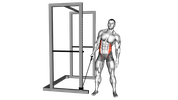
The Dumbbell Standing Side Bend is an isolation exercise targeting the oblique muscles on the sides of the abdomen. It also engages the lower back and helps improve core stability and flexibility. This exercise is performed with a dumbbell in one hand while standing upright.
How to Perform
- Stand upright with feet shoulder-width apart, holding a dumbbell in your right hand with your arm fully extended by your side.
- Place your left hand on your hip or behind your head for support.
- Engage your core and slowly bend at the waist to the right side, lowering the dumbbell towards the floor.
- Pause briefly at the bottom of the movement, feeling a stretch in your left oblique.
- Return to the starting position by contracting your left oblique muscles.
- Complete the desired number of repetitions on one side before switching the dumbbell to the other hand and repeating on the opposite side.
What Muscles Work
Primary Muscle:
Tips
- Keep your movements slow and controlled to maximize muscle engagement and minimize risk of injury.
- Avoid using momentum; focus on using your oblique muscles to lift yourself back to starting position.
- Maintain a neutral spine throughout the exercise to prevent strain on your lower back.
- Ensure that your hips remain stationary; only your upper body should move during the exercise.
- Start with a lighter weight to perfect your form before progressing to heavier dumbbells.
Common Mistakes
- Bending forward instead of strictly to the side, which reduces oblique engagement.
- Using momentum to swing the dumbbell rather than controlled movement, leading to poor muscle activation.
- Allowing the shoulders to rotate, which shifts focus away from the obliques.
- Holding the dumbbell too far from the body, causing unnecessary strain on the shoulder.
- Leaning too far, which can cause lower back strain due to excessive range of motion.
- Not keeping the core engaged throughout the movement, reducing effectiveness.
- Using too heavy a weight, compromising form and increasing risk of injury.
- Neglecting to perform the exercise on both sides equally, leading to muscle imbalances.
Recommended Exercises
Explore exercises related to Dumbbell Standing Side Bend for abs training and similar movement patterns.






Choose a workout plan or create your own - for free
Ready-made plans for every goal, a free plan creator, hundreds of exercises and an advanced workout journal - all in SmartWorkout.