One-Arm Neutral Wrist Dumbbell Curl
Strength
Track this exercise in SmartWorkout
Log sets, weights and progress for free, with no workout limits.


Body Part: Forearms
Description
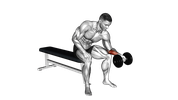
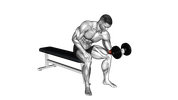
The Dumbbell One Arm Neutral Wrist Curl is an isolation exercise targeting the forearm muscles, specifically the wrist flexors. It involves curling a dumbbell with a neutral grip, focusing on strengthening and increasing endurance in the forearms.
How to Perform
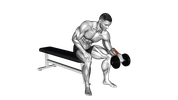
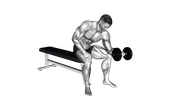
- Sit on a bench with your feet flat on the floor and your forearm resting on your thigh, palm facing inward.
- Hold a dumbbell in one hand with a neutral grip, thumb facing upward.
- Allow the dumbbell to roll down to your fingers while keeping your forearm stable.
- Curl the dumbbell upward by flexing your wrist, bringing it back to the starting position.
- Pause at the top of the movement for a brief moment to maximize contraction.
- Slowly lower the dumbbell back to the starting position, maintaining control throughout.
- Repeat for the desired number of repetitions before switching to the other arm.
What Muscles Work
Primary Muscle:
Tips
- Keep your forearm stationary and only move your wrist to isolate the forearm muscles effectively.
- Use a controlled motion to prevent using momentum, which can reduce effectiveness and increase injury risk.
- Start with a lighter weight to focus on form and gradually increase as you become more comfortable with the movement.
- Maintain a neutral wrist position throughout to target the correct muscles and avoid strain.
- Breath steadily; exhale as you curl up and inhale as you lower the dumbbell.
Common Mistakes
- Using too much weight, leading to swinging the arm instead of controlled curls.
- Allowing the elbow to drift away from the body, reducing bicep engagement.
- Curling the wrist excessively, causing strain and reducing forearm activation.
- Failing to fully extend the arm at the bottom, limiting range of motion.
- Not keeping the wrist in a neutral position, which can cause discomfort or strain.
- Rushing through the movement, sacrificing form for speed.
- Leaning the torso forward or backward, compromising stability and form.
- Engaging the shoulder to lift the weight instead of isolating the bicep.
Recommended Exercises
Explore exercises related to One-Arm Neutral Wrist Dumbbell Curl for forearms training and similar movement patterns.
Choose a workout plan or create your own - for free
Ready-made plans for every goal, a free plan creator, hundreds of exercises and an advanced workout journal - all in SmartWorkout.