Landmine Twist
CoreFunctionalBalance
Track this exercise in SmartWorkout
Log sets, weights and progress for free, with no workout limits.


Body Part: Abs
Description
The Landmine Twist is a core exercise that targets the obliques, abdominals, and shoulders. It involves rotating the torso while holding a barbell anchored at one end, providing a unique rotational movement that enhances core stability and strength.
How to Perform
- Secure one end of a barbell in a landmine attachment or corner of the room.
- Stand with feet shoulder-width apart, holding the other end of the barbell with both hands at chest level.
- Extend your arms fully in front of you, keeping a slight bend in the elbows.
- Engage your core and rotate your torso to one side, pivoting on the opposite foot.
- Return to the starting position by rotating back to the center.
- Repeat the movement to the other side, maintaining control throughout.
- Perform the desired number of repetitions on each side.
What Muscles Work
Primary Muscle:
Secondary Muscles:
Tips
- Keep your core engaged throughout the movement to protect your lower back.
- Focus on controlled movements rather than speed to maximize muscle engagement.
- Ensure your shoulders and hips move together to maintain proper form.
- Start with a lighter weight to master the technique before increasing resistance.
- Breathe out as you rotate and inhale as you return to the center position.
- Maintain a slight bend in your knees for better balance and stability.
Common Mistakes
- Rotating the hips instead of keeping them stable.
- Allowing the knees to cave inward during the twist.
- Twisting the spine excessively instead of maintaining a controlled range of motion.
- Using the arms to move the barbell instead of engaging the core muscles.
- Leaning forward or backward instead of maintaining an upright posture.
- Failing to keep the shoulders down and back, leading to poor shoulder positioning.
- Moving too quickly, sacrificing control and stability.
- Not keeping the feet firmly planted, causing imbalance.
- Overarching the lower back instead of maintaining a neutral spine.
- Neglecting to breathe properly, leading to tension and reduced effectiveness.
Recommended Exercises
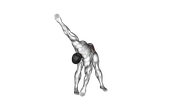
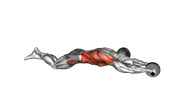
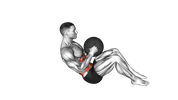
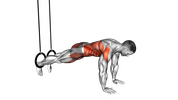
Explore exercises related to Landmine Twist for abs training and similar movement patterns.




Choose a workout plan or create your own - for free
Ready-made plans for every goal, a free plan creator, hundreds of exercises and an advanced workout journal - all in SmartWorkout.