Bodyweight Windmill
MobilityCoreBalanceFunctional
Track this exercise in SmartWorkout
Log sets, weights and progress for free, with no workout limits.


Body Part: Abs
Description
The Bodyweight Windmill is a dynamic exercise that targets the core, shoulders, and hips. It enhances flexibility, stability, and coordination by requiring rotational movement and balance. This exercise is performed without any equipment, making it accessible for all fitness levels.
How to Perform
- Stand with your feet slightly wider than shoulder-width apart and toes pointing slightly outward.
- Extend your arms out to the sides at shoulder height, forming a T-shape with your body.
- Shift your weight onto your right leg, bending your right knee slightly while keeping your left leg straight.
- Rotate your torso to the right, lowering your left hand towards your right foot while keeping your right arm extended upwards.
- Keep your gaze on your right hand as you hinge at the hips and maintain a straight back.
- Pause briefly at the bottom of the movement, then return to the starting position by reversing the motion.
- Repeat the movement on the opposite side, shifting weight onto your left leg and lowering your right hand towards your left foot.
What Muscles Work
Primary Muscle:
Secondary Muscles:
Tips
- Engage your core throughout the exercise to maintain balance and support your lower back.
- Focus on controlled movements rather than speed to maximize stability and effectiveness.
- Ensure that your knees do not collapse inward; keep them aligned with your toes during the movement.
- Breathe steadily, inhaling as you lower into the windmill and exhaling as you return to standing.
- If you're new to this exercise, practice in front of a mirror to ensure proper form and alignment.
- To increase difficulty, try performing the windmill on an unstable surface like a yoga mat or balance pad.
Common Mistakes
- Rotating the torso instead of hinging at the hips.
- Allowing the knees to bend excessively, reducing hamstring engagement.
- Failing to keep the back straight and neutral, leading to poor posture.
- Not keeping the supporting arm aligned with the shoulder, risking shoulder strain.
- Twisting the spine instead of maintaining a stable core.
- Letting the head drop forward, causing neck strain.
- Reaching too far down, compromising form and balance.
- Neglecting to engage the core muscles, reducing stability.
- Moving too quickly, sacrificing control and precision.
- Not keeping the feet firmly planted, leading to instability.
Recommended Exercises
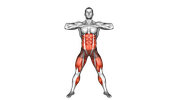
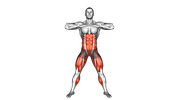
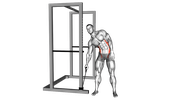
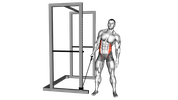
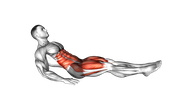
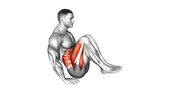
Explore exercises related to Bodyweight Windmill for abs training and similar movement patterns.
Choose a workout plan or create your own - for free
Ready-made plans for every goal, a free plan creator, hundreds of exercises and an advanced workout journal - all in SmartWorkout.