Standing Air Bike
enums.exercise_tag.COREenums.exercise_tag.CARDIOenums.exercise_tag.FUNCTIONAL
exercise_detail.body_part: enums.body_part.ABS
exercise_detail.description
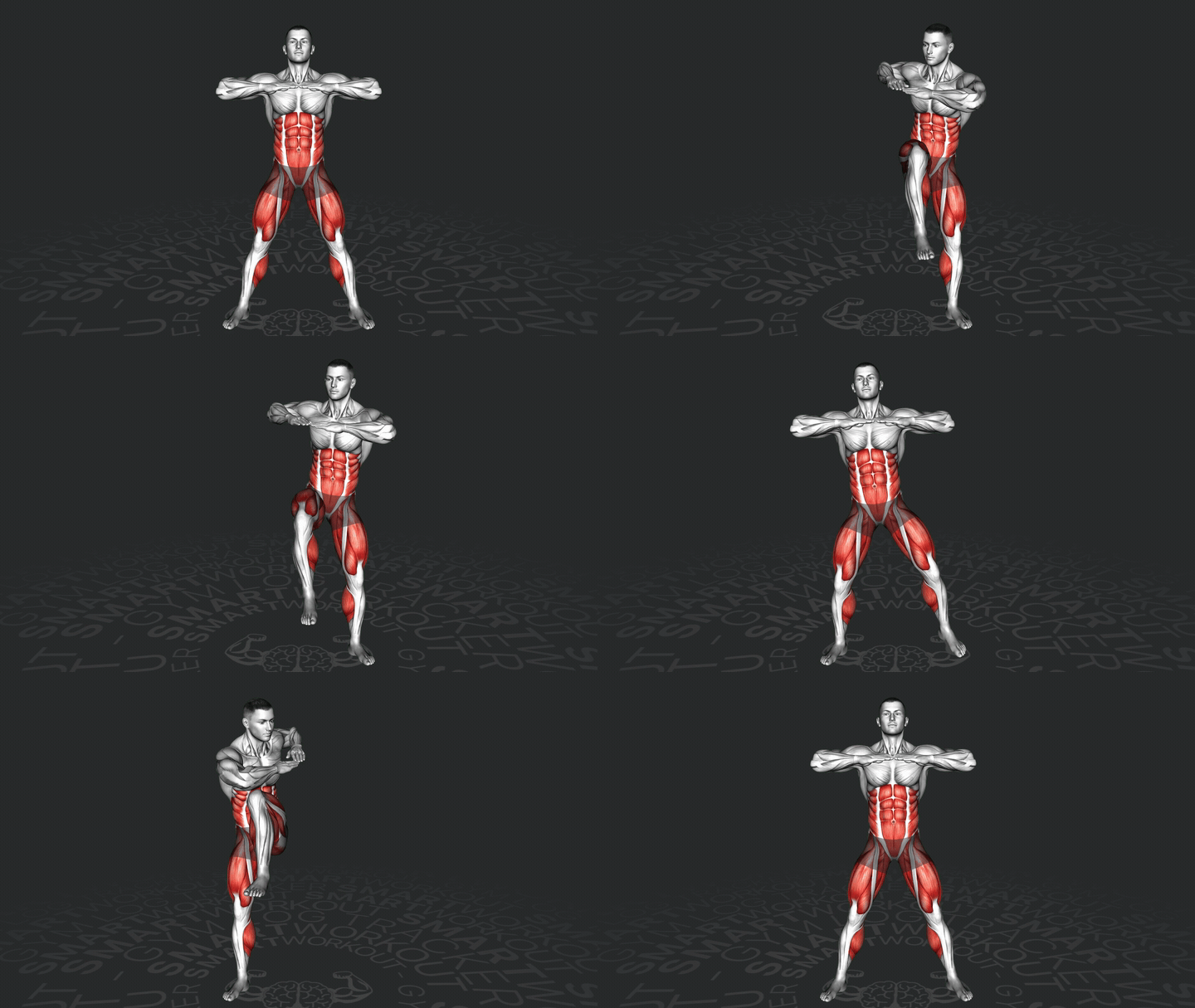
The Standing Air Bike exercise is a dynamic cardiovascular movement that mimics the pedaling motion of cycling while standing. This exercise engages the core, legs, and arms, providing a full-body workout that enhances endurance and coordination.
exercise_detail.how_to_perform
- Stand upright with feet shoulder-width apart.
- Lift your arms to shoulder height, bending elbows at 90 degrees.
- Begin by lifting your right knee towards your left elbow while twisting your torso slightly.
- Return to the starting position and immediately lift your left knee towards your right elbow.
- Continue alternating sides in a rhythmic, pedaling motion.
- Maintain a steady pace and focus on controlled movements.
exercise_detail.what_muscles_work
exercise_detail.primary_muscle:
exercise_detail.tips
- Keep your core engaged throughout the exercise to maintain balance.
- Focus on smooth, controlled movements rather than speed.
- Ensure your breathing is steady; exhale as you bring the knee up and inhale as you return to the starting position.
- If you're new to this exercise, start slowly to master the coordination before increasing speed.
- To increase intensity, try lifting your knees higher or speeding up the motion.
- Keep your shoulders relaxed and avoid tensing your neck.
exercise_detail.common_mistakes
- Leaning too far back, causing loss of balance and ineffective core engagement.
- Failing to keep the core tight, reducing the effectiveness of the exercise.
- Allowing the knees to collapse inward, misaligning the joints and reducing stability.
- Swinging the arms excessively instead of controlled movements, leading to poor form.
- Not fully extending the legs, limiting the range of motion and muscle activation.
- Moving too quickly, sacrificing control and precision for speed.
- Neglecting to maintain a neutral spine, increasing the risk of back strain.
- Holding the breath, which can lead to fatigue and decreased performance.
- Allowing the shoulders to hunch forward, reducing upper body engagement.
exercise_detail.recommended_exercises
exercise_detail.recommended_exercises_intro
exercise_detail.app_ad.title
exercise_detail.app_ad.description