Seated Leg Raise
enums.exercise_tag.CORE
exercise_detail.body_part: enums.body_part.ABS
exercise_detail.description
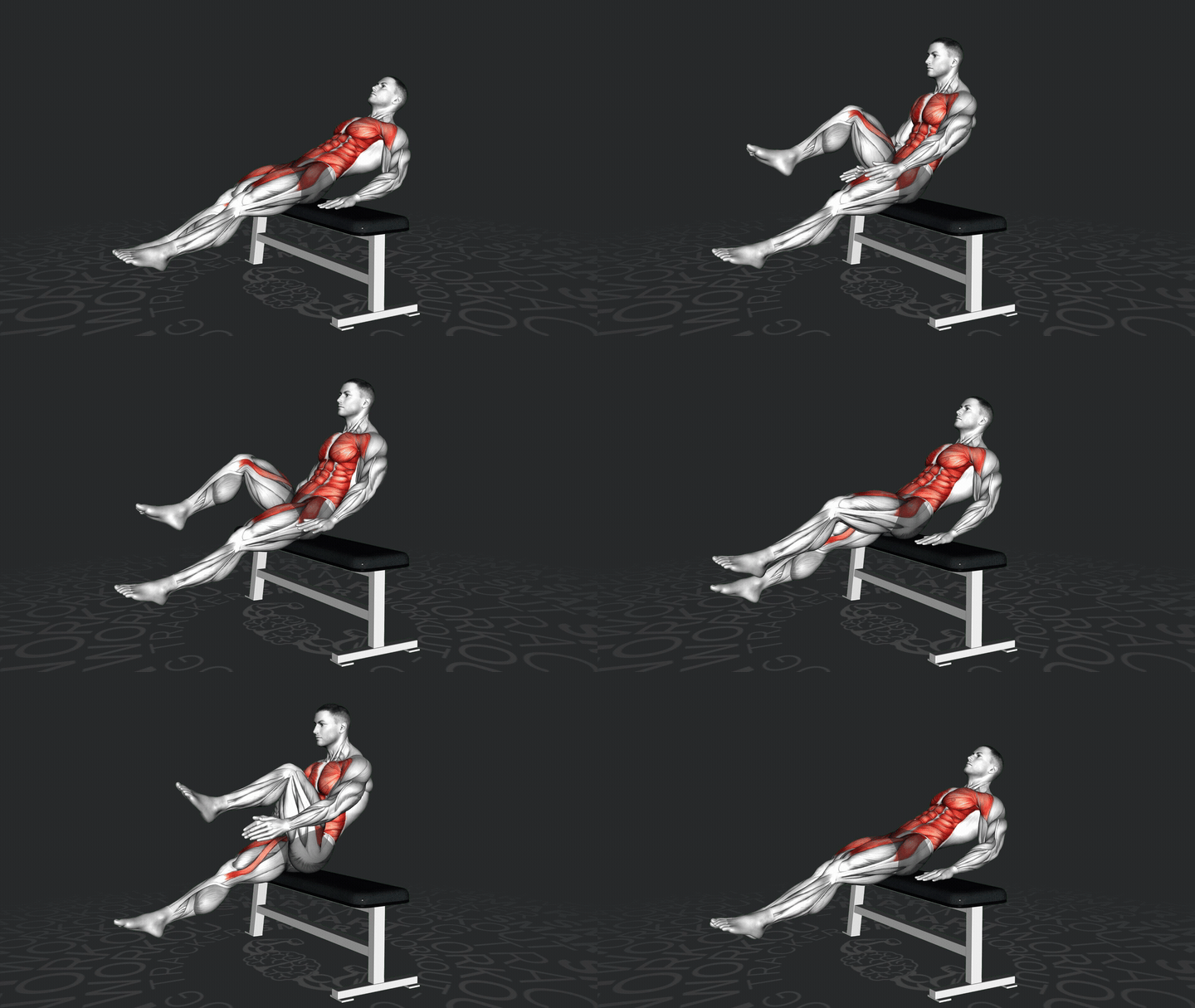
The Seated Leg Raise is an exercise targeting the lower abdominal muscles. It involves lifting the legs while seated, engaging the core for stability and control. This exercise helps improve core strength and stability, essential for overall fitness and injury prevention.
exercise_detail.how_to_perform
- Sit on a bench or chair with your back straight and feet flat on the floor.
- Place your hands beside you for support, gripping the edges of the bench or chair.
- Engage your core by pulling your belly button towards your spine.
- Slowly lift your legs off the ground, keeping them straight or slightly bent at the knees.
- Raise your legs until they are parallel to the floor or as high as comfortable.
- Hold the position briefly, focusing on squeezing your lower abs.
- Slowly lower your legs back to the starting position without letting them touch the ground.
- Repeat for the desired number of repetitions.
exercise_detail.what_muscles_work
exercise_detail.primary_muscle:
exercise_detail.tips
- Keep your back straight and avoid leaning backward to maintain proper form.
- Focus on controlled movements rather than speed to maximize muscle engagement.
- Breathe out as you lift your legs and inhale as you lower them.
- If you find it difficult to keep your legs straight, try bending your knees slightly.
- To increase difficulty, hold a weight between your feet or use ankle weights.
- Ensure that your shoulders remain relaxed and not hunched during the exercise.
exercise_detail.common_mistakes
- Leaning back too far, which reduces engagement of the abdominal muscles.
- Using momentum instead of controlled movements, leading to reduced muscle activation.
- Failing to keep the back straight, which can strain the lower back.
- Allowing the legs to drop too quickly, reducing the effectiveness of the exercise.
- Not fully extending the legs, limiting the range of motion and muscle engagement.
- Rounding the shoulders forward, which can cause neck and shoulder discomfort.
- Holding the breath, which can increase blood pressure unnecessarily.
- Engaging the hip flexors more than the core, reducing the focus on abdominal muscles.
exercise_detail.recommended_exercises
exercise_detail.recommended_exercises_intro
exercise_detail.app_ad.title
exercise_detail.app_ad.description