Band Pulldown Behind Neck
enums.exercise_tag.STRENGTHenums.exercise_tag.PULLenums.exercise_tag.MOBILITY
exercise_detail.body_part: enums.body_part.BACK
exercise_detail.description
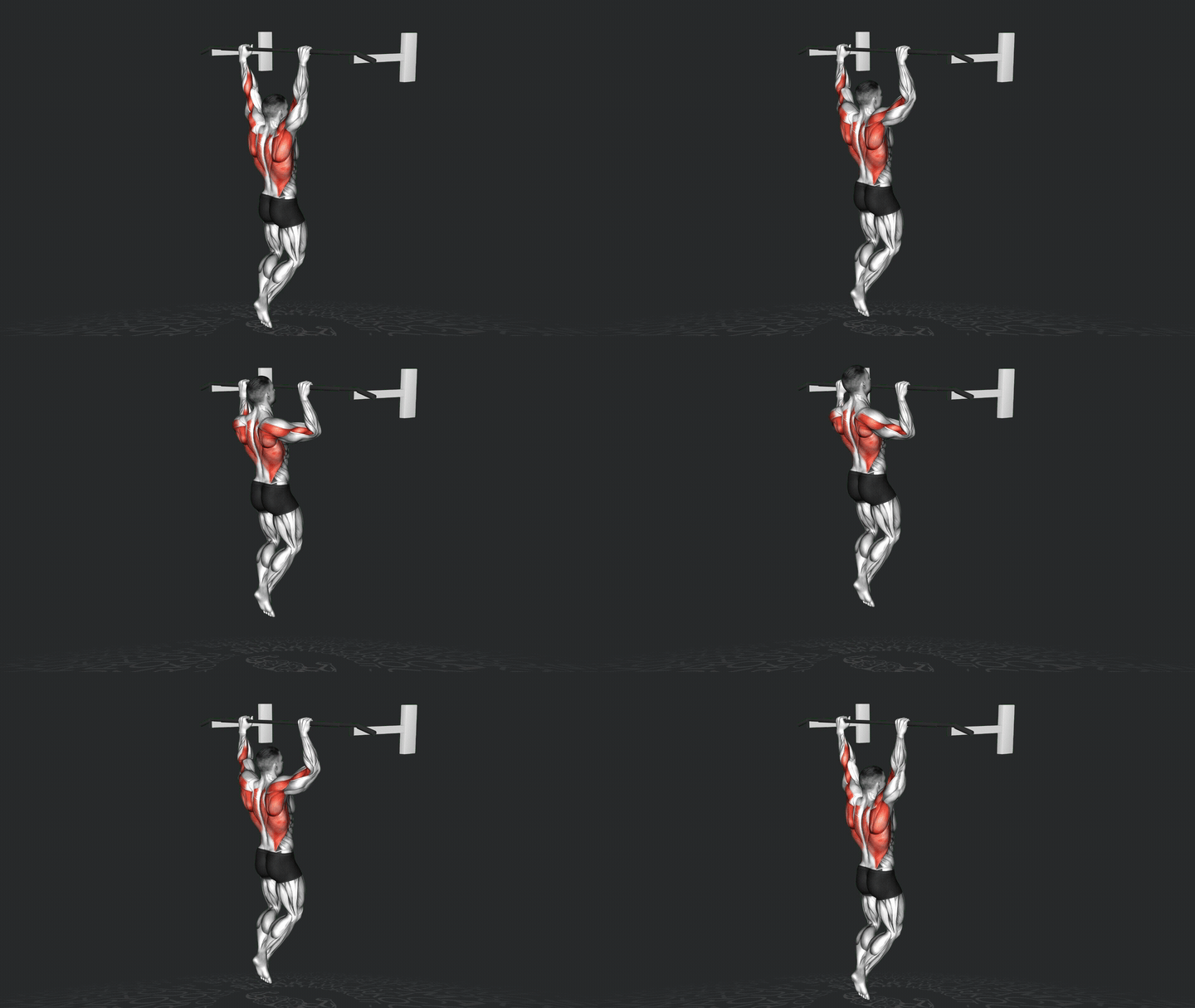
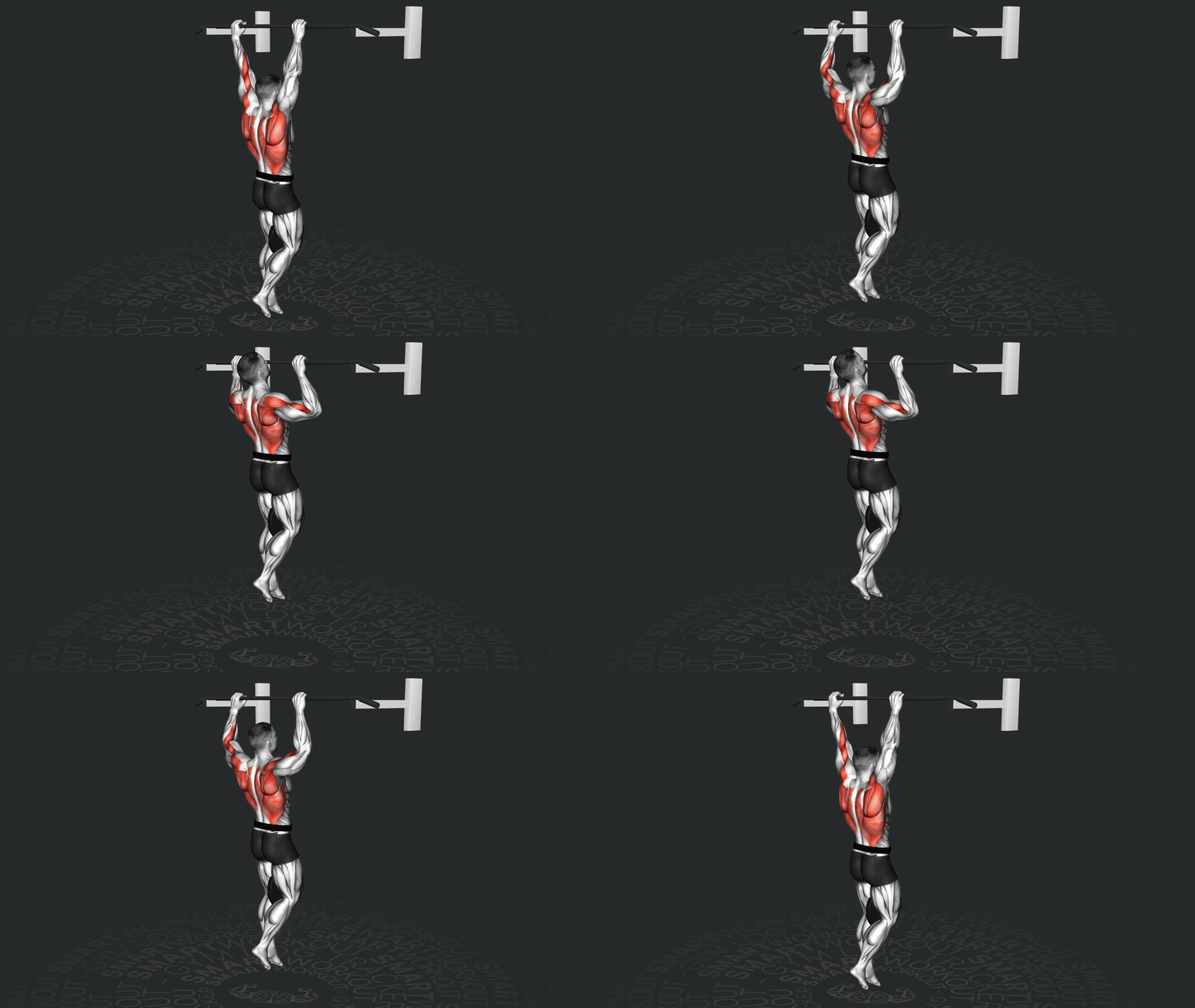
The 'Band Pull Down Behind Neck' exercise targets the upper back muscles, particularly the latissimus dorsi, rhomboids, and trapezius. It involves pulling a resistance band down behind the neck while maintaining proper posture and control. This exercise helps improve shoulder mobility and upper back strength.
exercise_detail.how_to_perform
- Attach a resistance band to a high anchor point.
- Stand or sit facing the anchor point with feet shoulder-width apart.
- Grasp the band with both hands, palms facing forward, and arms extended overhead.
- Engage your core and keep your back straight.
- Pull the band down behind your neck by bending your elbows and squeezing your shoulder blades together.
- Pause briefly at the bottom of the movement, ensuring tension in the back muscles.
- Slowly return to the starting position with control.
- Repeat for the desired number of repetitions.
exercise_detail.what_muscles_work
exercise_detail.primary_muscle:
exercise_detail.tips
- Keep your core engaged throughout the exercise to maintain stability.
- Avoid arching your back; maintain a neutral spine position.
- Focus on squeezing your shoulder blades together as you pull down.
- Ensure that your movements are controlled and not jerky to prevent injury.
- Start with a lighter resistance band to master form before progressing to heavier resistance.
- Breathe out as you pull down and inhale as you return to the starting position.
exercise_detail.common_mistakes
- Pulling the band too far behind the neck, leading to excessive shoulder strain.
- Using momentum instead of controlled movement, reducing muscle engagement.
- Arching the lower back excessively, compromising spinal alignment.
- Allowing the elbows to flare out too wide, reducing lat activation.
- Failing to keep the core engaged, leading to instability.
- Not maintaining a neutral neck position, causing unnecessary neck tension.
- Using a band with improper resistance, affecting form and effectiveness.
- Neglecting to retract the shoulder blades, limiting upper back involvement.
exercise_detail.recommended_exercises
exercise_detail.recommended_exercises_intro
exercise_detail.app_ad.title
exercise_detail.app_ad.description