Kettlebel Renegade Row
enums.exercise_tag.STRENGTHenums.exercise_tag.COREenums.exercise_tag.BALANCEenums.exercise_tag.FUNCTIONALenums.exercise_tag.PULL
exercise_detail.body_part: enums.body_part.BACK
exercise_detail.description
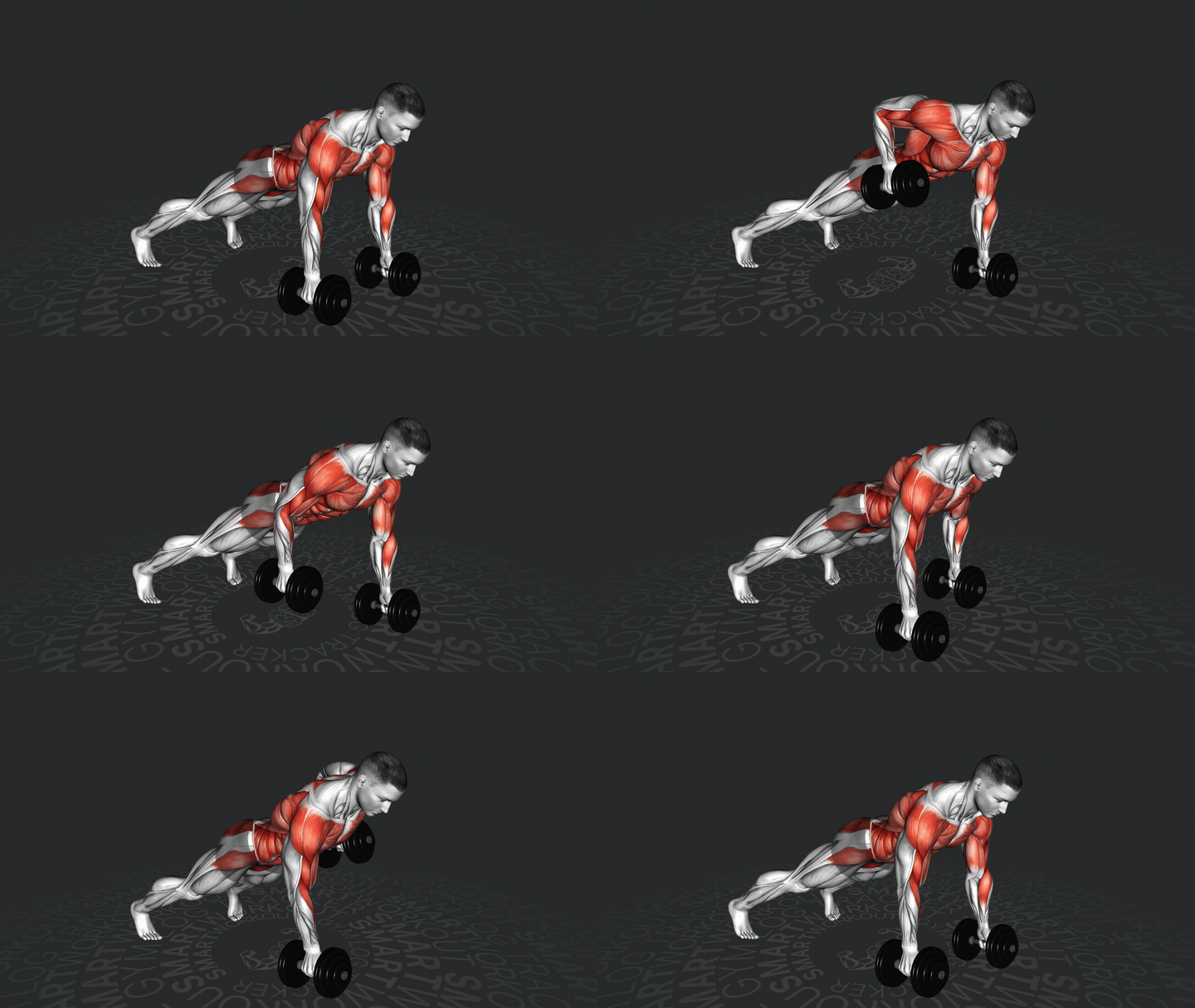
The Kettlebell Renegade Row is a compound exercise that targets the back, shoulders, arms, and core. It combines a plank position with a rowing motion, enhancing stability and strength. This exercise is effective for improving balance and coordination while building upper body and core strength.
exercise_detail.how_to_perform
- Start in a high plank position with a kettlebell in each hand, wrists aligned under your shoulders, and feet slightly wider than shoulder-width apart for stability.
- Engage your core to maintain a straight line from head to heels.
- Shift your weight slightly to one side and row the kettlebell on the opposite side towards your hip, keeping your elbow close to your body.
- Lower the kettlebell back to the ground with control.
- Repeat the movement on the other side, alternating rows while maintaining plank position throughout.
exercise_detail.what_muscles_work
exercise_detail.primary_muscle:
exercise_detail.secondary_muscles:
exercise_detail.tips
- Keep your hips as stable as possible to avoid rocking side to side during the row.
- Focus on squeezing your shoulder blades together at the top of the row for maximum engagement.
- Maintain a neutral spine by keeping your head in line with your body and avoiding arching or rounding your back.
- If you're new to this exercise, start with lighter kettlebells to ensure proper form before progressing to heavier weights.
- Breathe steadily throughout the exercise, exhaling as you row the kettlebell up and inhaling as you lower it down.
exercise_detail.common_mistakes
- Allowing the hips to sag or rotate, losing core stability.
- Rowing the kettlebell with the shoulder instead of engaging the back muscles.
- Not maintaining a neutral spine, leading to excessive arching or rounding.
- Using momentum to lift the kettlebell instead of controlled muscle engagement.
- Feet positioned too close together, reducing balance and stability.
- Failing to keep the wrist straight, causing strain on the joint.
- Not fully extending the arm during the row, limiting range of motion.
- Letting the elbow flare out instead of keeping it close to the body.
- Rushing the movement, compromising form and control.
exercise_detail.recommended_exercises
exercise_detail.recommended_exercises_intro
exercise_detail.app_ad.title
exercise_detail.app_ad.description