Seated Cable Row
enums.exercise_tag.STRENGTHenums.exercise_tag.PULL
exercise_detail.body_part: enums.body_part.BACK
exercise_detail.description
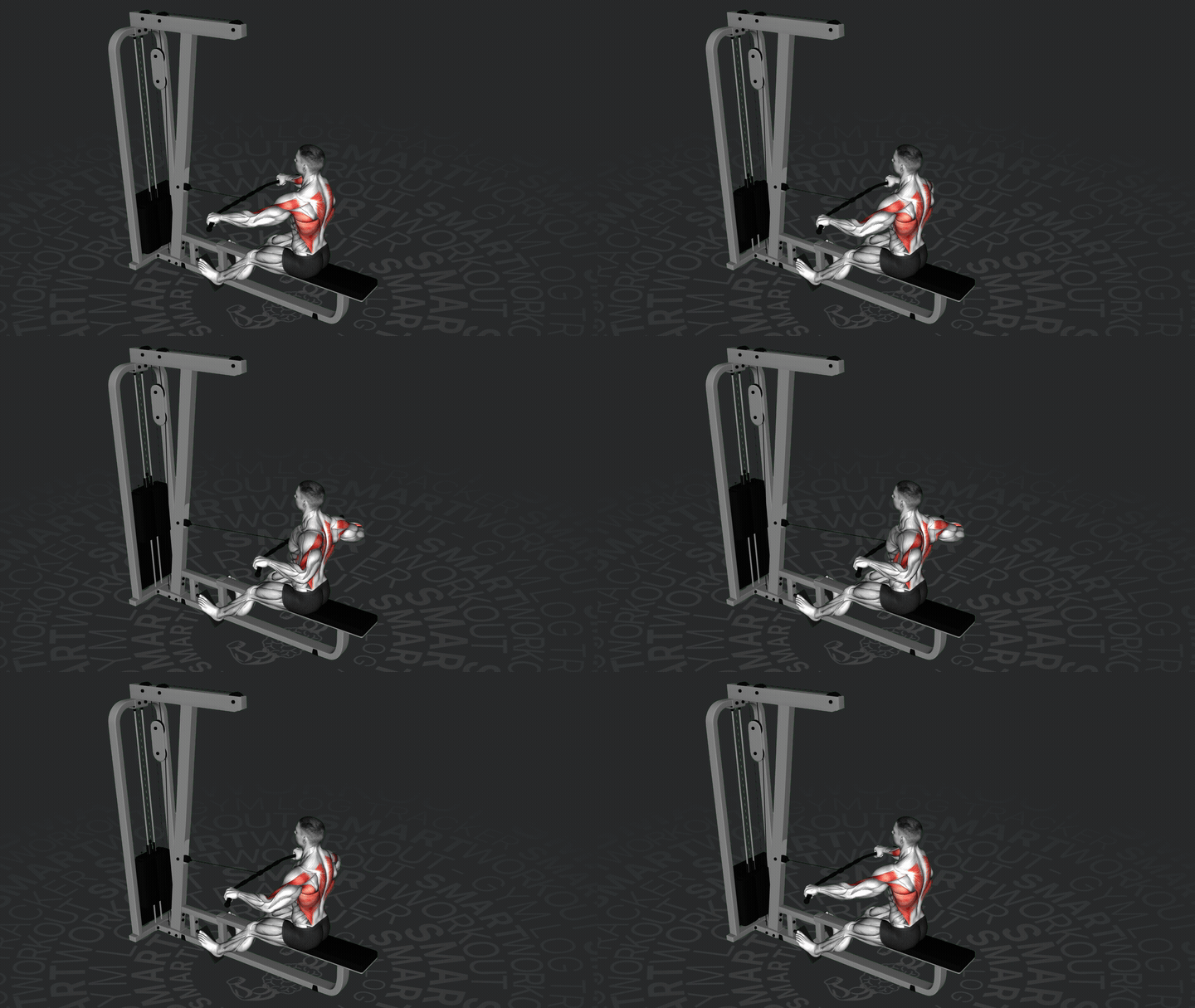
The Cable Low Seated Row is a compound exercise targeting the muscles of the upper back, including the latissimus dorsi, rhomboids, trapezius, and biceps. It involves pulling a weighted cable handle towards the torso while seated, emphasizing back muscle engagement and posture.
exercise_detail.how_to_perform
- Sit on the low row machine with your feet firmly placed on the foot platform and knees slightly bent.
- Grasp the cable handle with both hands using a neutral grip (palms facing each other).
- Keep your back straight and chest up as you lean slightly forward at the hips to reach the handle.
- Pull the handle towards your abdomen by retracting your shoulder blades and bending your elbows.
- Pause briefly when the handle reaches your torso, ensuring full contraction of the back muscles.
- Slowly extend your arms back to the starting position while maintaining control over the weight.
- Repeat for the desired number of repetitions.
exercise_detail.what_muscles_work
exercise_detail.primary_muscle:
exercise_detail.secondary_muscles:
exercise_detail.tips
- Ensure your back remains straight throughout the movement to avoid strain.
- Focus on squeezing your shoulder blades together at the peak of each row for maximum muscle engagement.
- Avoid using momentum; perform each repetition in a controlled manner.
- Keep your core engaged to stabilize your torso during the exercise.
- Adjust the seat height and foot placement to ensure proper alignment and comfort.
- Breath out as you pull the handle towards you and inhale as you return to the starting position.
exercise_detail.common_mistakes
- Leaning too far back, reducing tension on the back muscles.
- Using momentum instead of controlled movement.
- Allowing shoulders to round forward, disengaging the back muscles.
- Pulling with the arms instead of initiating the movement with the back.
- Shrugging shoulders up towards ears, causing neck strain.
- Not fully retracting the shoulder blades at the end of the pull.
- Extending the elbows too far back, causing overextension.
- Using a grip that is too wide or too narrow, affecting muscle engagement.
- Letting the cable snap back instead of controlling the return phase.
- Not maintaining a neutral spine, leading to lower back strain.
exercise_detail.recommended_exercises
exercise_detail.recommended_exercises_intro
exercise_detail.app_ad.title
exercise_detail.app_ad.description