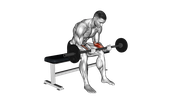
Barbell Standing Wrist Curl
Strength
Track this exercise in SmartWorkout
Log sets, weights and progress for free, with no workout limits.


Body Part: Forearms
Description
The Standing Barbell Wrist Curl is an isolation exercise targeting the forearm muscles, specifically the wrist flexors. It involves holding a barbell with an underhand grip and curling the wrists upward while standing, to strengthen and build endurance in the forearms.
How to Perform
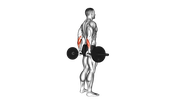
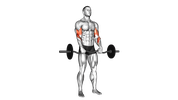
- Stand upright with your feet shoulder-width apart, holding a barbell with an underhand grip.
- Keep your arms straight and close to your body, allowing the barbell to rest against your thighs.
- Flex your wrists upward, curling the barbell as high as possible while keeping your arms stationary.
- Pause briefly at the top of the movement, feeling the contraction in your forearms.
- Slowly lower the barbell back to the starting position, maintaining control throughout.
- Repeat for the desired number of repetitions.
What Muscles Work
Primary Muscle:
Tips
- Use a moderate weight that allows you to perform the exercise with proper form.
- Focus on moving only your wrists; keep your arms and shoulders stable.
- Maintain a slight bend in your knees to support balance and reduce strain on your lower back.
- Exhale as you curl the barbell upwards and inhale as you lower it back down.
- Avoid using momentum; control the movement for maximum muscle engagement.
- Ensure a full range of motion by fully extending and flexing your wrists.
Common Mistakes
- Using too much weight, leading to poor control and ineffective muscle engagement.
- Bending the elbows, which shifts focus away from the forearms.
- Allowing the wrists to drop too low, causing unnecessary strain.
- Not maintaining a neutral spine, increasing risk of lower back strain.
- Failing to keep the wrists aligned with the forearms, reducing exercise effectiveness.
- Rushing through the movement, compromising muscle activation.
- Not fully extending the wrists, limiting range of motion and potential gains.
- Engaging the shoulders, which detracts from forearm isolation.
Recommended Exercises
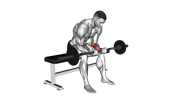
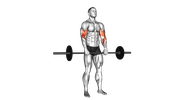
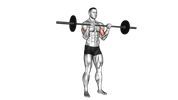
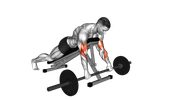
Explore exercises related to Barbell Standing Wrist Curl for forearms training and similar movement patterns.


Choose a workout plan or create your own - for free
Ready-made plans for every goal, a free plan creator, hundreds of exercises and an advanced workout journal - all in SmartWorkout.