Dumbbell Rear Lunge
enums.exercise_tag.STRENGTHenums.exercise_tag.BALANCEenums.exercise_tag.FUNCTIONAL
exercise_detail.body_part: enums.body_part.GLUTEUS
exercise_detail.description
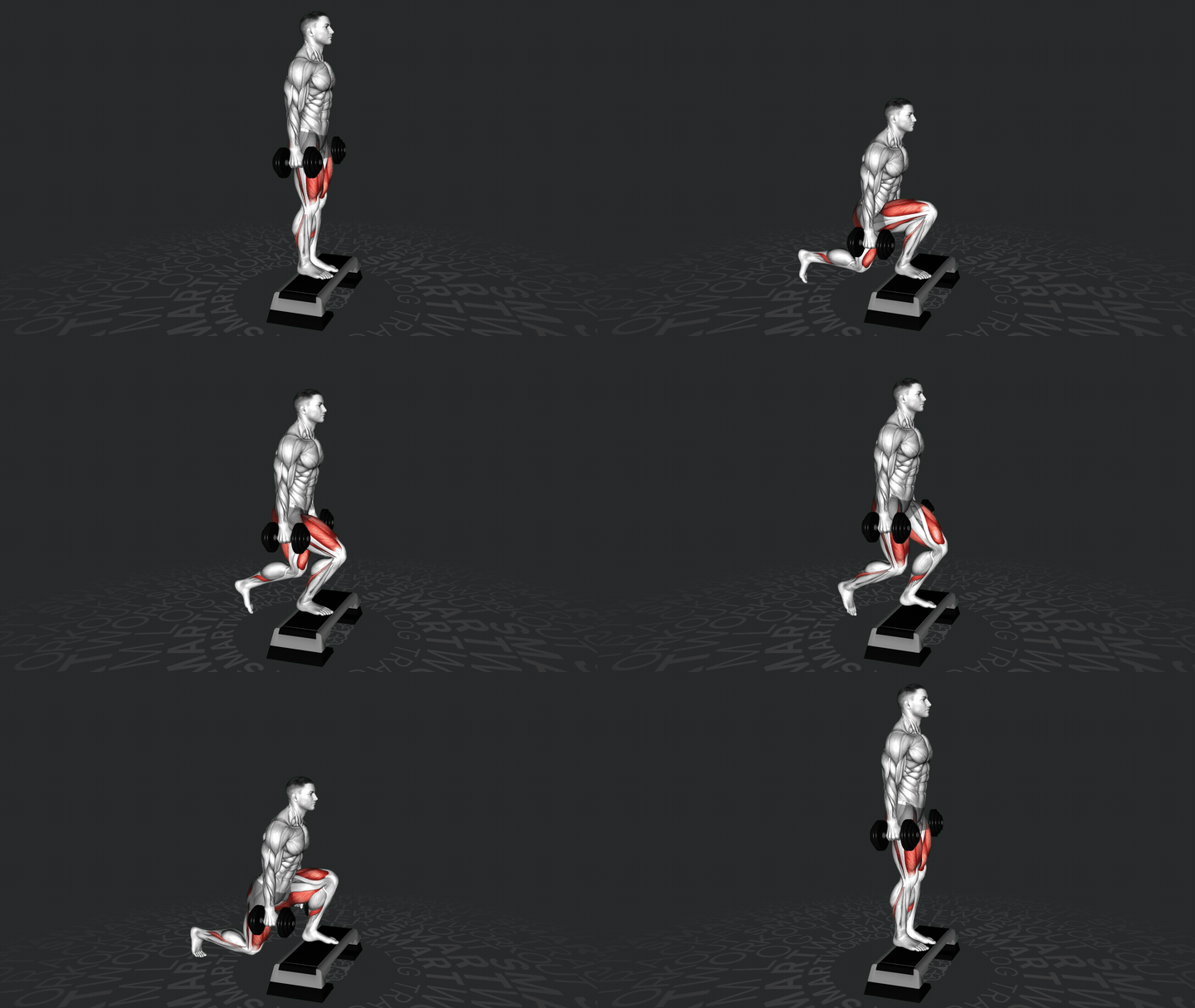
The Dumbbell Rear Lunge is a compound lower body exercise that targets the quadriceps, hamstrings, glutes, and calves. It also engages the core for stabilization. This exercise involves stepping backward into a lunge position while holding dumbbells, providing resistance to enhance muscle strength and endurance.
exercise_detail.how_to_perform
- Stand upright with your feet hip-width apart, holding a dumbbell in each hand at your sides.
- Engage your core and keep your chest up as you take a step backward with your right foot.
- Lower your hips until both knees are bent at approximately 90 degrees. Your front knee should be directly above your ankle.
- Push through the heel of your left foot to return to the starting position.
- Repeat the movement with your left leg stepping back to complete one full repetition.
- Continue alternating legs for the desired number of repetitions.
exercise_detail.what_muscles_work
exercise_detail.primary_muscle:
exercise_detail.secondary_muscles:
exercise_detail.tips
- Maintain an upright torso throughout the movement to prevent leaning forward.
- Ensure your front knee does not extend past your toes to avoid unnecessary strain on the knee joint.
- Focus on a controlled descent and ascent to maximize muscle engagement.
- Keep your core tight to maintain balance and stability during the exercise.
- Start with lighter weights to perfect your form before progressing to heavier dumbbells.
exercise_detail.common_mistakes
- Allowing the front knee to extend beyond the toes, which can lead to knee strain.
- Failing to maintain an upright torso, resulting in excessive forward lean.
- Not stepping back far enough, limiting the range of motion and muscle engagement.
- Letting the back knee touch the ground, causing a loss of control and balance.
- Holding the dumbbells too far from the body, increasing shoulder strain.
- Using momentum to push back to standing instead of controlled muscle engagement.
- Neglecting to keep the core engaged, leading to instability and poor posture.
- Allowing the front foot to roll inward or outward, compromising ankle stability.
- Not keeping the weight evenly distributed between both legs, causing imbalance.
- Failing to align the hips and shoulders, resulting in a twisted or uneven stance.
exercise_detail.recommended_exercises
exercise_detail.recommended_exercises_intro
exercise_detail.app_ad.title
exercise_detail.app_ad.description