Dumbbell Single Leg Hip Thrust
StrengthBalanceFunctional
Track this exercise in SmartWorkout
Log sets, weights and progress for free, with no workout limits.


Body Part: Gluteal
Description
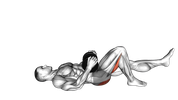
The Dumbbell Single Leg Hip Thrust is a lower body exercise targeting the glutes, hamstrings, and core. It involves lifting the hips while balancing on one leg, with a dumbbell placed on the working hip for added resistance. This exercise enhances unilateral strength, stability, and muscle activation in the posterior chain.
How to Perform
- Sit on the ground with your upper back resting against a bench or elevated surface.
- Bend one knee and place your foot flat on the floor, while extending the other leg straight out.
- Place a dumbbell on the hip of the bent leg, holding it securely with your hand.
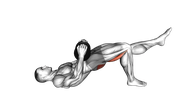
- Engage your core and drive through the heel of the bent leg to lift your hips towards the ceiling.
- At the top of the movement, your body should form a straight line from shoulders to knee.
- Squeeze your glutes at the top and hold for a moment before lowering back down.
- Repeat for the desired number of repetitions before switching legs.
What Muscles Work
Primary Muscle:
Secondary Muscles:
Tips
- Ensure your upper back is firmly supported by the bench to maintain stability.
- Keep your core engaged throughout the movement to prevent lower back strain.
- Focus on driving through your heel to maximize glute activation.
- Control the descent to maintain tension in the muscles and avoid dropping your hips too quickly.
- Maintain a straight line from shoulders to knee at the top of the thrust for proper form.
- Start with a lighter dumbbell to master form before progressing to heavier weights.
Common Mistakes
- Placing the non-working leg too low, causing loss of balance and improper hip alignment.
- Allowing the dumbbell to roll or shift, leading to uneven weight distribution.
- Hyperextending the lower back at the top of the movement instead of focusing on hip extension.
- Failing to engage the glutes and hamstrings, relying too much on the lower back.
- Dropping the hips too quickly on the descent, losing control and tension.
- Positioning the back too high or too low on the bench, affecting range of motion and stability.
- Allowing the knee of the working leg to cave inward, risking knee strain.
- Not maintaining a neutral spine throughout the movement, increasing lower back strain.
- Using momentum to lift the hips instead of controlled muscle engagement.
- Neglecting to keep the core engaged, leading to poor posture and balance issues.
Recommended Exercises
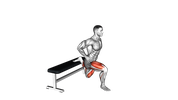
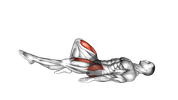
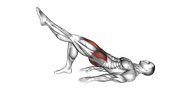
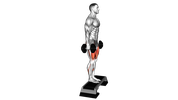
Explore exercises related to Dumbbell Single Leg Hip Thrust for gluteal training and similar movement patterns.
Choose a workout plan or create your own - for free
Ready-made plans for every goal, a free plan creator, hundreds of exercises and an advanced workout journal - all in SmartWorkout.