Kettlebell Around the Head Rotation
MobilityBalanceFunctionalWarm-up
Track Kettlebell Around the Head Rotation in SmartWorkout and watch your numbers go up
Log sets, weights and progress for free, with no workout limits.


Body Part: Shoulders
Description
The Kettlebell Around the Head Rotation is a dynamic exercise that targets the shoulders, core, and upper back. It involves rotating a kettlebell around your head in a controlled manner, enhancing shoulder mobility and stability while engaging the core muscles.
How to Perform
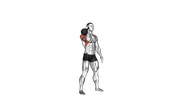
- Stand with your feet shoulder-width apart, holding a kettlebell with both hands in front of you at chest level.
- Engage your core and keep your back straight.
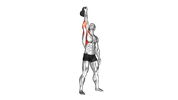
- Lift the kettlebell over your head, starting to rotate it around your head in a clockwise direction.
- Keep the movement smooth and controlled, ensuring the kettlebell stays close to your head.
- Complete the rotation by bringing the kettlebell back to the starting position in front of your chest.
- Repeat the movement in a counterclockwise direction.
- Perform the desired number of repetitions for each direction.
What Muscles Work
Primary Muscle:
Secondary Muscles:
Tips
- Maintain a tight core throughout the exercise to stabilize your body.
- Keep your elbows slightly bent to reduce strain on the joints.
- Focus on smooth, controlled movements rather than speed.
- Ensure that the kettlebell remains close to your head to maximize shoulder engagement.
- Breathe steadily and avoid holding your breath during the rotation.
- Start with a lighter kettlebell to master the technique before progressing to heavier weights.
Common Mistakes
- Using too heavy a kettlebell, compromising control and form.
- Allowing the elbows to flare out excessively, reducing shoulder engagement.
- Failing to keep the core engaged, leading to unnecessary lower back strain.
- Rotating the head instead of the kettlebell, reducing exercise effectiveness.
- Not maintaining a steady pace, causing jerky and uncontrolled movements.
- Holding the kettlebell too far from the head, increasing shoulder strain.
- Neglecting to keep a neutral spine, risking neck and back discomfort.
- Rushing through the movement, reducing focus on muscle engagement.
- Gripping the kettlebell too tightly, causing forearm fatigue.
Recommended Exercises
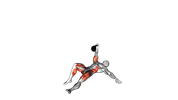
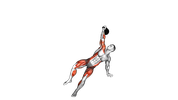
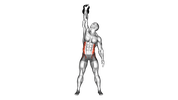
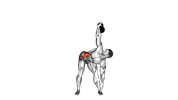
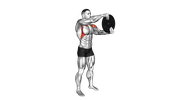
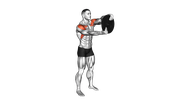
Explore exercises related to Kettlebell Around the Head Rotation for shoulders training and similar movement patterns.
Choose a workout plan or create your own - for free
Ready-made plans for every goal, a free plan creator, hundreds of exercises and an advanced workout journal - all in SmartWorkout.