Band Triceps Pushdown
StrengthPush
Track Band Triceps Pushdown in SmartWorkout and watch your numbers go up
Log sets, weights and progress for free, with no workout limits.


Body Part: Triceps
Description
The Band Triceps Pushdown is an isolation exercise targeting the triceps brachii muscles. It utilizes resistance bands to provide tension, making it a versatile and accessible exercise for enhancing triceps strength and definition.
How to Perform
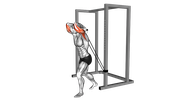
- Attach a resistance band to a high anchor point, such as a pull-up bar or a sturdy door frame.
- Stand facing the anchor point, holding the ends of the band with both hands, palms facing down.
- Position your feet shoulder-width apart and slightly bend your knees for stability.
- Start with your elbows bent at approximately 90 degrees, keeping your upper arms close to your sides.
- Exhale as you extend your arms downward, straightening your elbows until your arms are fully extended.
- Pause briefly at the bottom of the movement, ensuring full contraction of the triceps.
- Inhale as you slowly return to the starting position with controlled movement.
- Repeat for the desired number of repetitions.
What Muscles Work
Primary Muscle:
Tips
- Keep your elbows stationary and close to your body throughout the exercise to maximize triceps engagement.
- Avoid using momentum; focus on slow and controlled movements for better muscle activation.
- Adjust the resistance by stepping closer or further from the anchor point to increase or decrease tension.
- Maintain a neutral spine and engage your core for better posture and stability during the exercise.
- Ensure that the resistance band is securely anchored to prevent any accidents or injuries.
Common Mistakes
- Elbows flaring out instead of staying close to the body, reducing triceps engagement.
- Using momentum by swinging the body or arms, which decreases control and effectiveness.
- Inadequate range of motion, such as not fully extending the arms, limiting muscle activation.
- Leaning too far forward, causing the shoulders to take over the movement.
- Wrists bending excessively, leading to strain and reduced force transmission.
- Not maintaining a stable core, resulting in poor posture and potential back strain.
- Allowing the band to snap back too quickly, losing tension and control.
Recommended Exercises
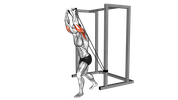
Explore exercises related to Band Triceps Pushdown for triceps training and similar movement patterns.





Choose a workout plan or create your own - for free
Ready-made plans for every goal, a free plan creator, hundreds of exercises and an advanced workout journal - all in SmartWorkout.