Lat Pulldown Machine
enums.exercise_tag.STRENGTHenums.exercise_tag.PULL
exercise_detail.body_part: enums.body_part.BACK
exercise_detail.description
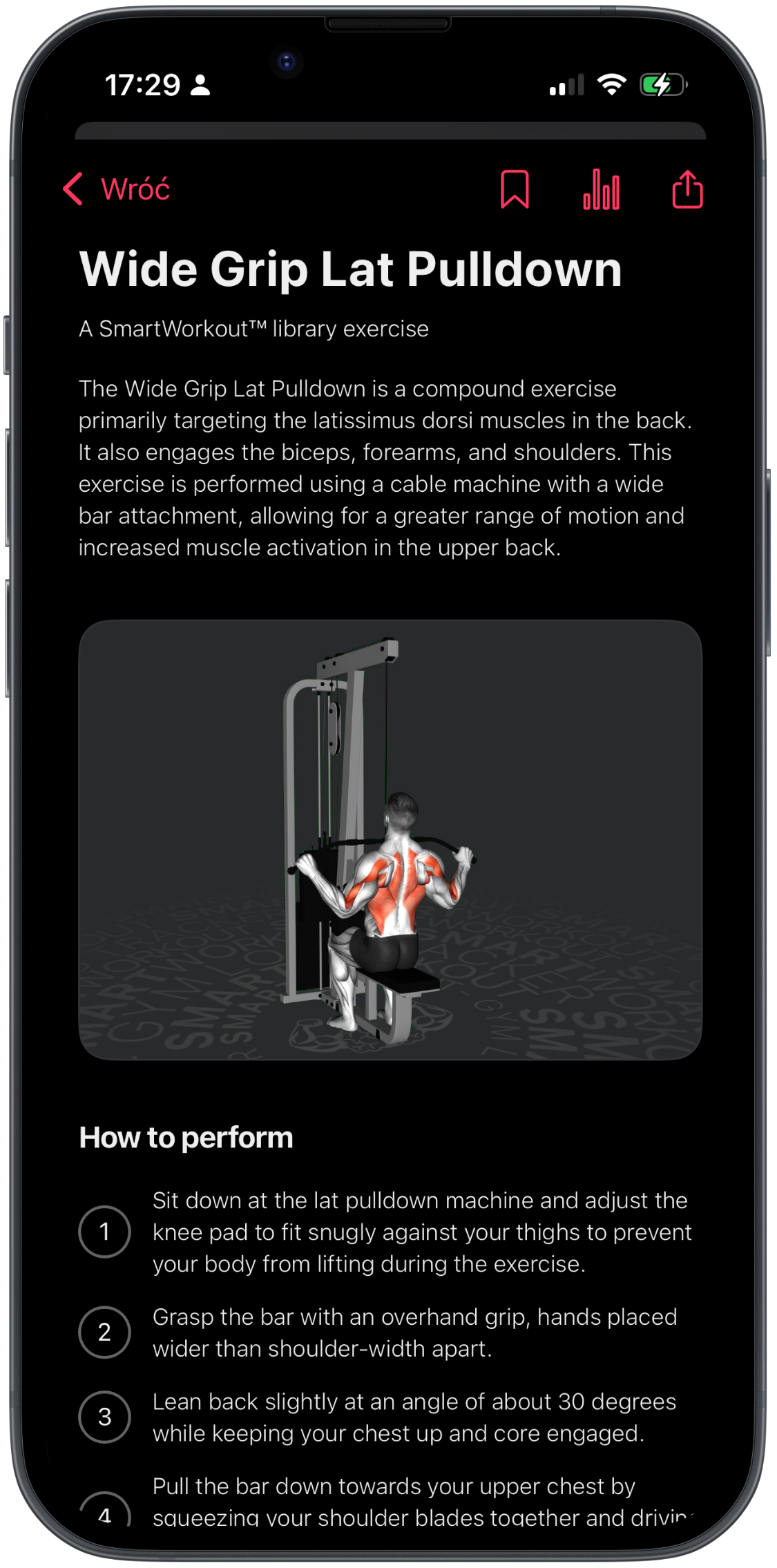
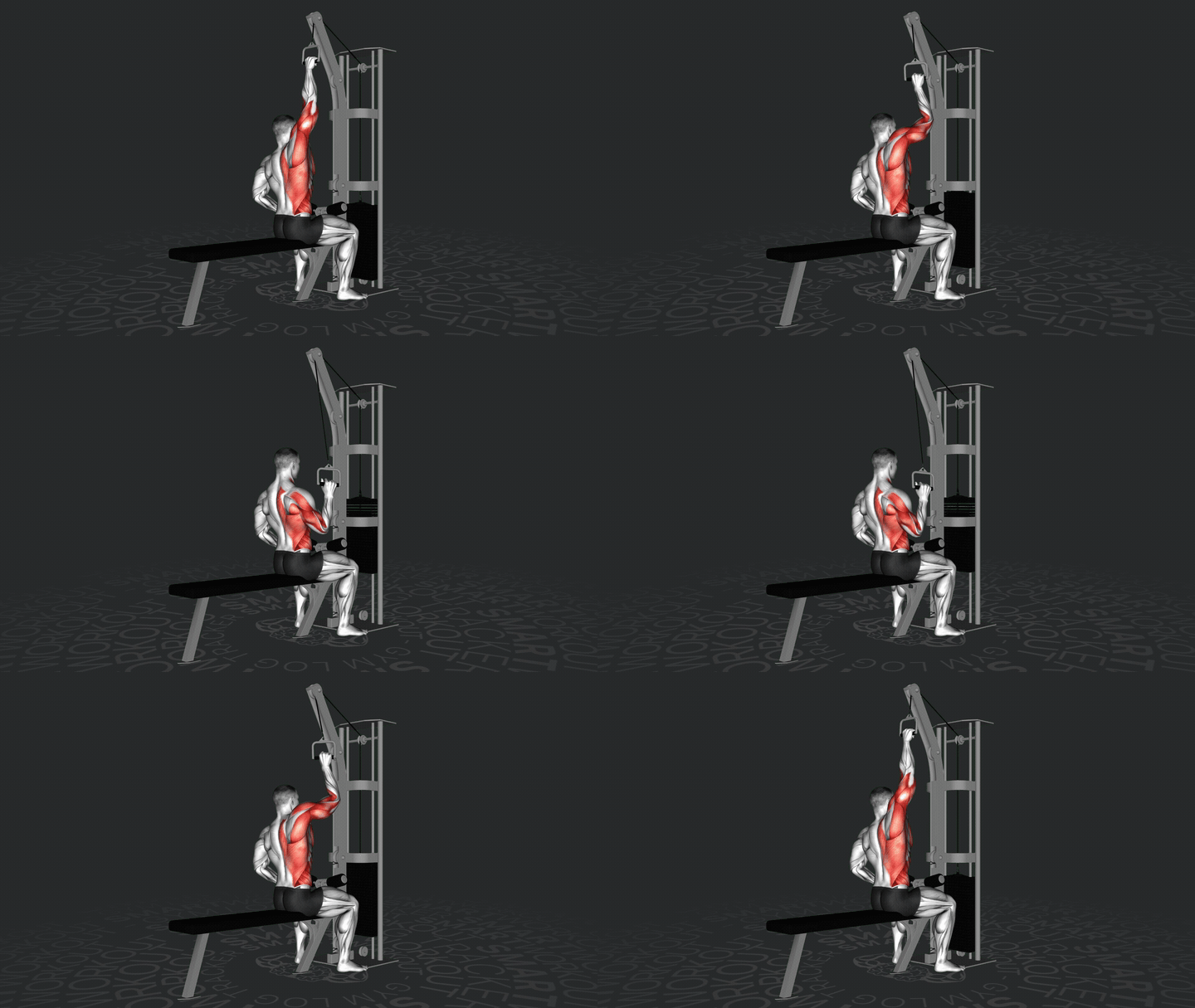
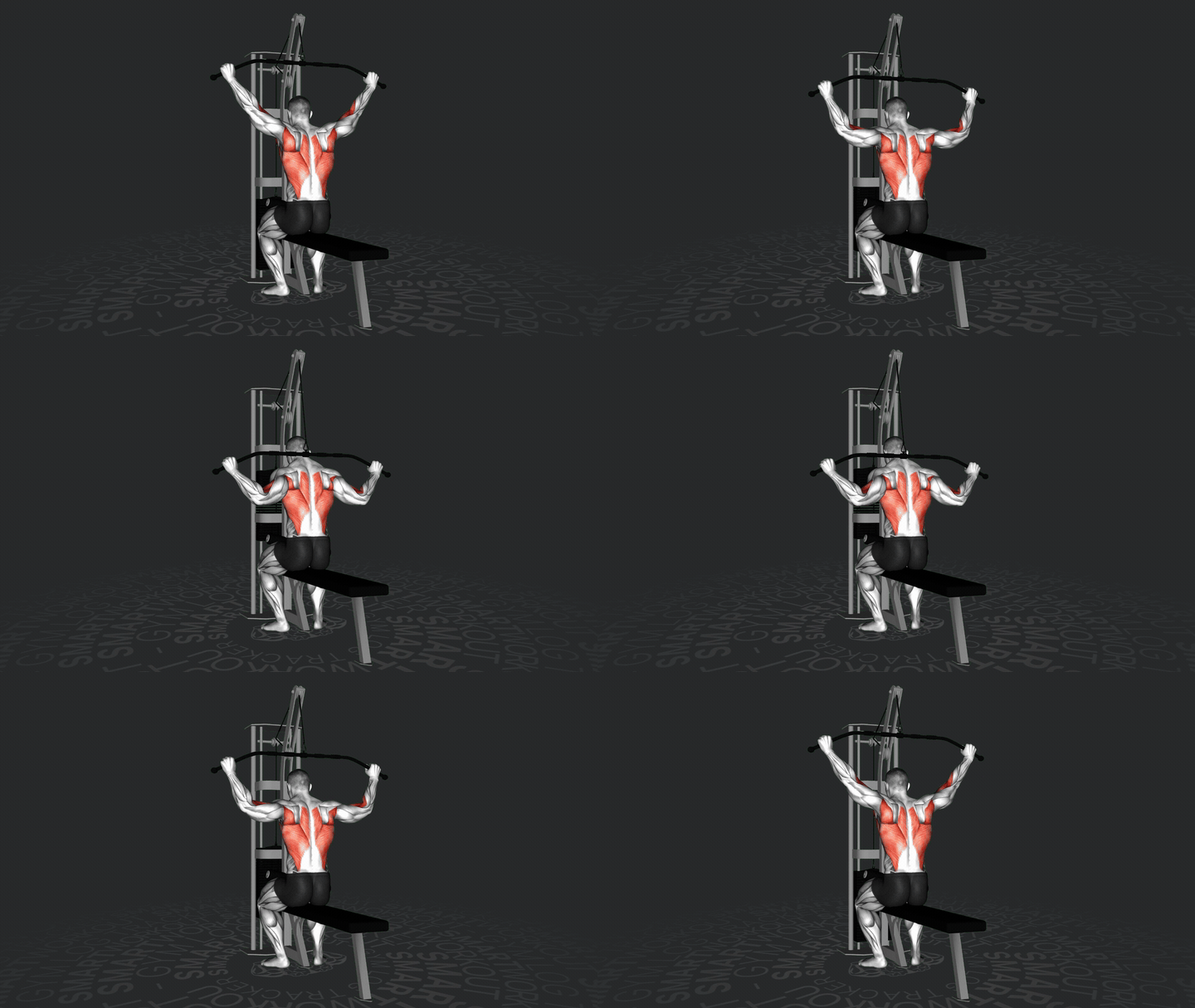
The Lat Pulldown Machine is designed to target the latissimus dorsi muscles in the back, along with secondary engagement of the biceps, shoulders, and upper back. It is a seated exercise where you pull a bar down towards your chest, simulating a pull-up motion.
exercise_detail.how_to_perform
- Adjust the seat height so that your feet are flat on the floor and your thighs are secured under the thigh pads.
- Select an appropriate weight on the machine.
- Grasp the bar with a wide overhand grip, slightly wider than shoulder-width apart.
- Sit down with your back straight and chest up, positioning yourself directly under the bar.
- Pull the bar down towards your upper chest while keeping your elbows pointed down and back.
- Pause briefly at the bottom of the movement, ensuring full contraction of the lats.
- Slowly release the bar back to the starting position with controlled movement.
- Repeat for the desired number of repetitions.
exercise_detail.what_muscles_work
exercise_detail.primary_muscle:
exercise_detail.secondary_muscles:
exercise_detail.tips
- Keep your core engaged throughout the exercise to maintain stability and proper form.
- Avoid using momentum; focus on controlled movements to maximize muscle engagement.
- Ensure your shoulders are relaxed and not hunched during the exercise to prevent strain.
- Exhale as you pull the bar down and inhale as you return to the starting position.
- If you experience discomfort in your shoulders or wrists, adjust your grip or consult a trainer.
exercise_detail.common_mistakes
- Pulling the bar behind the neck instead of to the chest, which can strain the shoulders and neck.
- Using too much weight, leading to improper form and reduced muscle engagement.
- Leaning back excessively, turning the exercise into more of a row than a pulldown.
- Allowing the bar to snap back up too quickly, reducing control and effectiveness.
- Using arms and biceps to pull instead of engaging the lats.
- Not fully extending the arms at the top of the movement, limiting range of motion.
- Shrugging the shoulders up during the pull, which disengages the lats.
- Gripping the bar too wide or too narrow, which can affect the range of motion and muscle engagement.
- Not keeping the core engaged, leading to poor posture and potential lower back strain.
exercise_detail.recommended_exercises
exercise_detail.recommended_exercises_intro
exercise_detail.app_ad.title
exercise_detail.app_ad.description