Arm Blaster Biceps Dumbbell Curl
enums.exercise_tag.STRENGTHenums.exercise_tag.PULL
exercise_detail.body_part: enums.body_part.BICEPS
exercise_detail.description
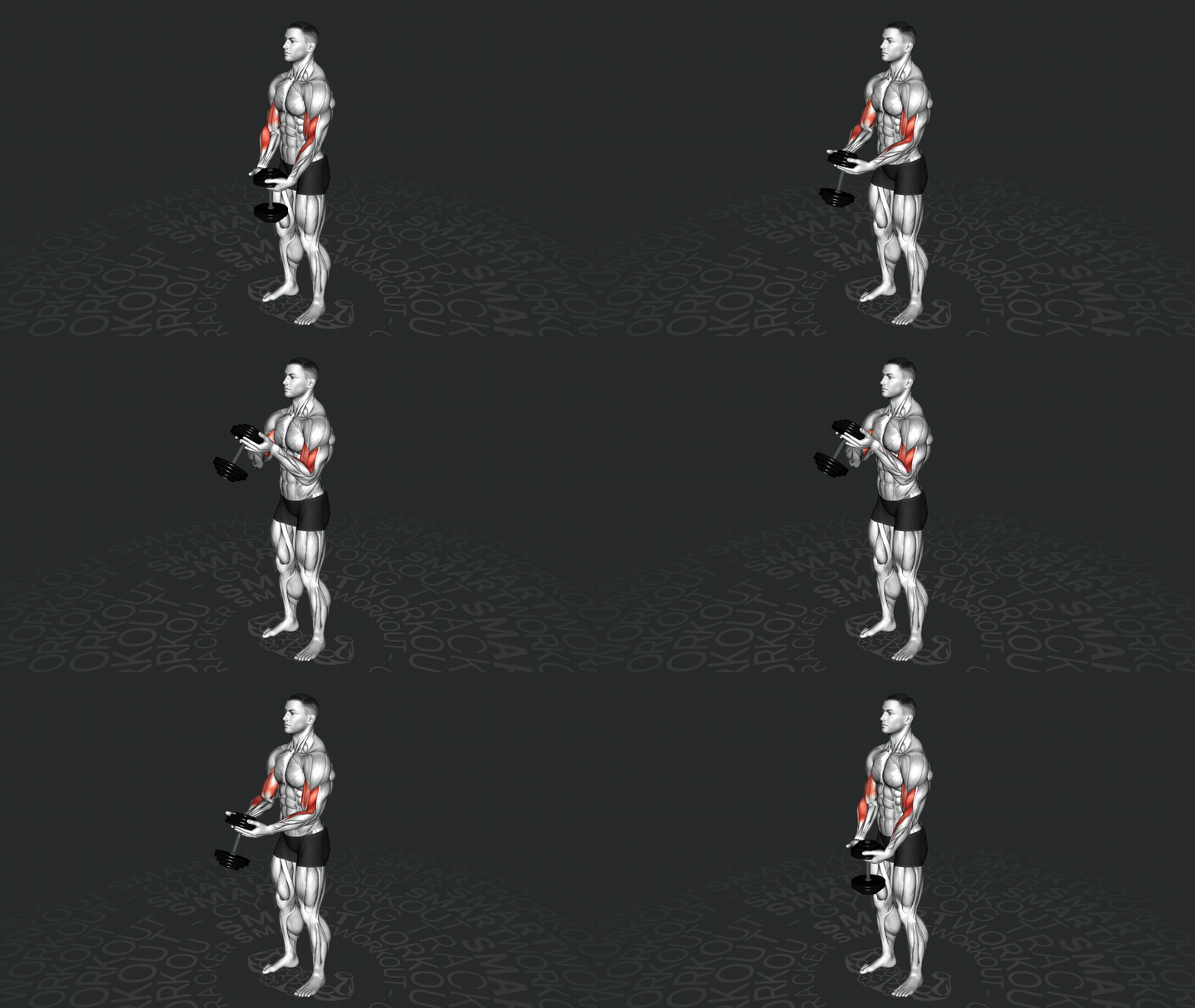
The Arm Blaster Biceps Dumbbell Curl is an isolation exercise targeting the biceps brachii. Utilizing an arm blaster helps maintain proper form by preventing elbow movement, thus maximizing bicep engagement. This exercise is ideal for building bicep size and strength by focusing on strict form and muscle contraction.
exercise_detail.how_to_perform
- Adjust the arm blaster so it fits comfortably around your neck and rests against your upper body.
- Stand with your feet shoulder-width apart, holding a dumbbell in each hand with an underhand grip.
- Position your elbows against the arm blaster, ensuring they remain stationary throughout the movement.
- Curl the dumbbells upward by contracting your biceps, keeping your upper arms stationary.
- Continue lifting until your biceps are fully contracted and the dumbbells are at shoulder level.
- Pause briefly at the top of the movement to maximize contraction.
- Slowly lower the dumbbells back to the starting position, maintaining control.
- Repeat for the desired number of repetitions.
exercise_detail.what_muscles_work
exercise_detail.primary_muscle:
exercise_detail.secondary_muscles:
exercise_detail.tips
- Focus on keeping your elbows pinned to the arm blaster to prevent swinging.
- Use a weight that allows you to maintain strict form throughout all repetitions.
- Engage your core to stabilize your body and prevent any unnecessary movement.
- Exhale as you lift the dumbbells and inhale as you lower them.
- Avoid using momentum; concentrate on slow, controlled movements for maximum effectiveness.
- Ensure a full range of motion by fully extending and contracting your biceps with each rep.
exercise_detail.common_mistakes
- Using momentum to lift the weights instead of isolating the biceps.
- Allowing the elbows to drift away from the arm blaster, reducing isolation.
- Curling the wrists at the top of the movement, shifting tension away from the biceps.
- Not fully extending the arms at the bottom, limiting range of motion.
- Leaning back or swaying the torso to assist the lift.
- Gripping the dumbbells too tightly, causing forearm fatigue.
- Rushing through reps without controlled movement.
- Using excessively heavy weights, compromising form and control.
- Neglecting to keep the shoulders down and relaxed.
exercise_detail.recommended_exercises
exercise_detail.recommended_exercises_intro
exercise_detail.app_ad.title
exercise_detail.app_ad.description