Concentration Hammer Curl
enums.exercise_tag.STRENGTHenums.exercise_tag.PULL
exercise_detail.body_part: enums.body_part.BICEPS
exercise_detail.description
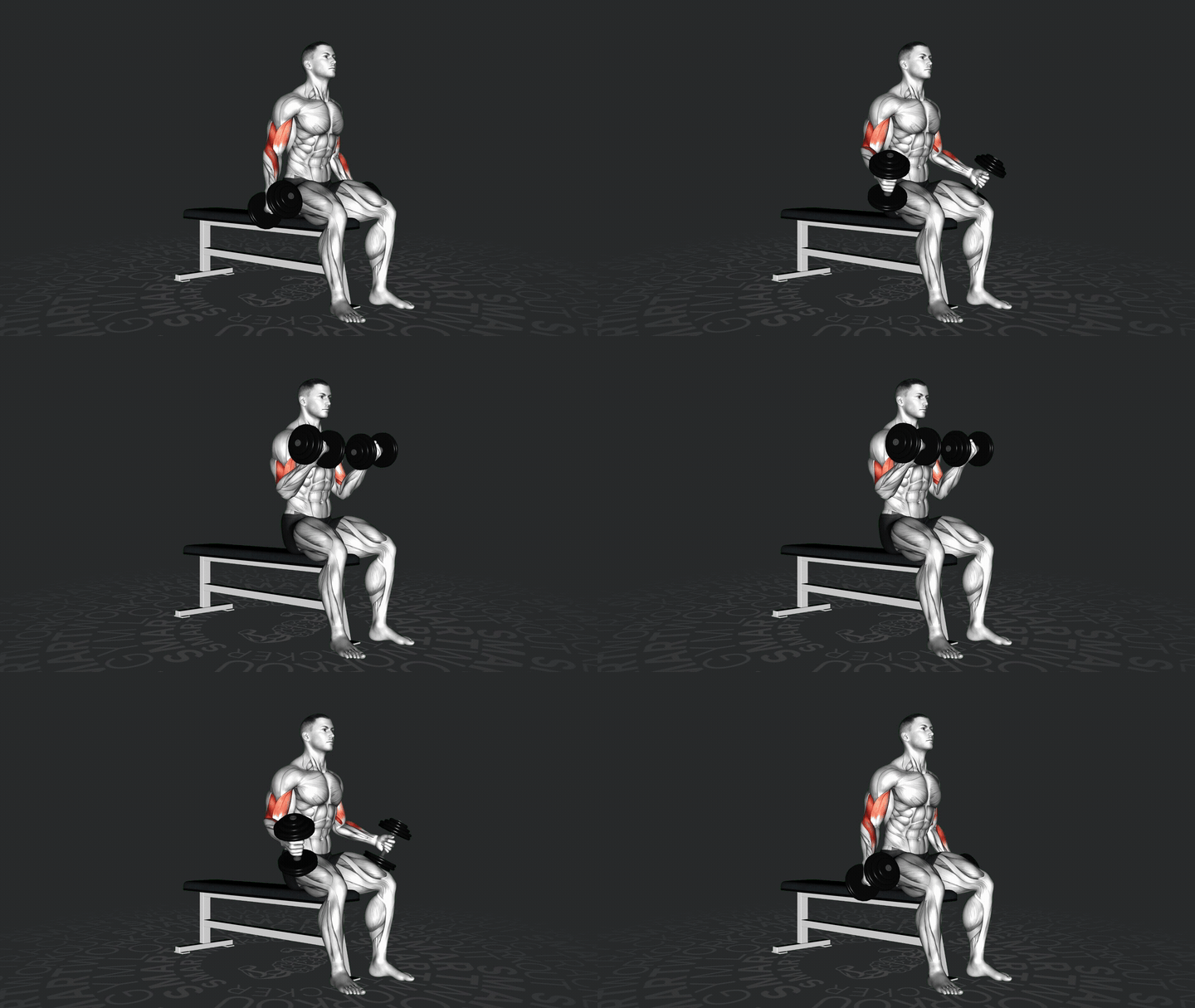
The Concentration Hammer Curl is an isolation exercise targeting the brachialis and brachioradialis muscles, as well as the biceps brachii. It is performed with a dumbbell while seated, focusing on strict form and controlled movement to maximize muscle engagement and hypertrophy.
exercise_detail.how_to_perform
- Sit on a bench with your feet flat on the floor, legs spread slightly apart.
- Hold a dumbbell in one hand using a neutral grip (thumb facing up).
- Lean forward slightly and rest the elbow of the working arm against the inner thigh of the same side leg.
- Keep your back straight and core engaged throughout the movement.
- Slowly curl the dumbbell upwards by flexing your elbow, keeping your wrist straight.
- Pause briefly at the top of the movement when your forearm is vertical or slightly beyond.
- Lower the dumbbell back to the starting position in a controlled manner.
- Complete the desired number of repetitions before switching arms.
exercise_detail.what_muscles_work
exercise_detail.primary_muscle:
exercise_detail.secondary_muscles:
exercise_detail.tips
- Focus on using a slow and controlled motion to maximize muscle tension.
- Avoid swinging or using momentum to lift the weight; keep the movement strict.
- Ensure your elbow remains stationary against your thigh to isolate the target muscles effectively.
- Maintain a neutral wrist position throughout to prevent strain and ensure proper form.
- Breathe out while lifting the weight and inhale while lowering it.
- Start with a lighter weight to master the form before progressing to heavier dumbbells.
exercise_detail.common_mistakes
- Using momentum to lift the weight instead of controlled muscle engagement.
- Allowing the elbow to drift away from the inner thigh, reducing isolation of the biceps.
- Curling the wrist at the top of the movement, which shifts focus away from the biceps.
- Not fully extending the arm at the bottom, limiting the range of motion.
- Leaning back or using the torso to assist the lift, decreasing bicep activation.
- Gripping the dumbbell too tightly, leading to forearm fatigue before bicep fatigue.
- Failing to keep the shoulder stable, which can lead to strain or discomfort.
- Rushing through the eccentric phase, minimizing muscle tension and growth potential.
exercise_detail.recommended_exercises
exercise_detail.recommended_exercises_intro
exercise_detail.app_ad.title
exercise_detail.app_ad.description