Kettlebell Biceps Curl
enums.exercise_tag.STRENGTHenums.exercise_tag.PULL
exercise_detail.body_part: enums.body_part.BICEPS
exercise_detail.description
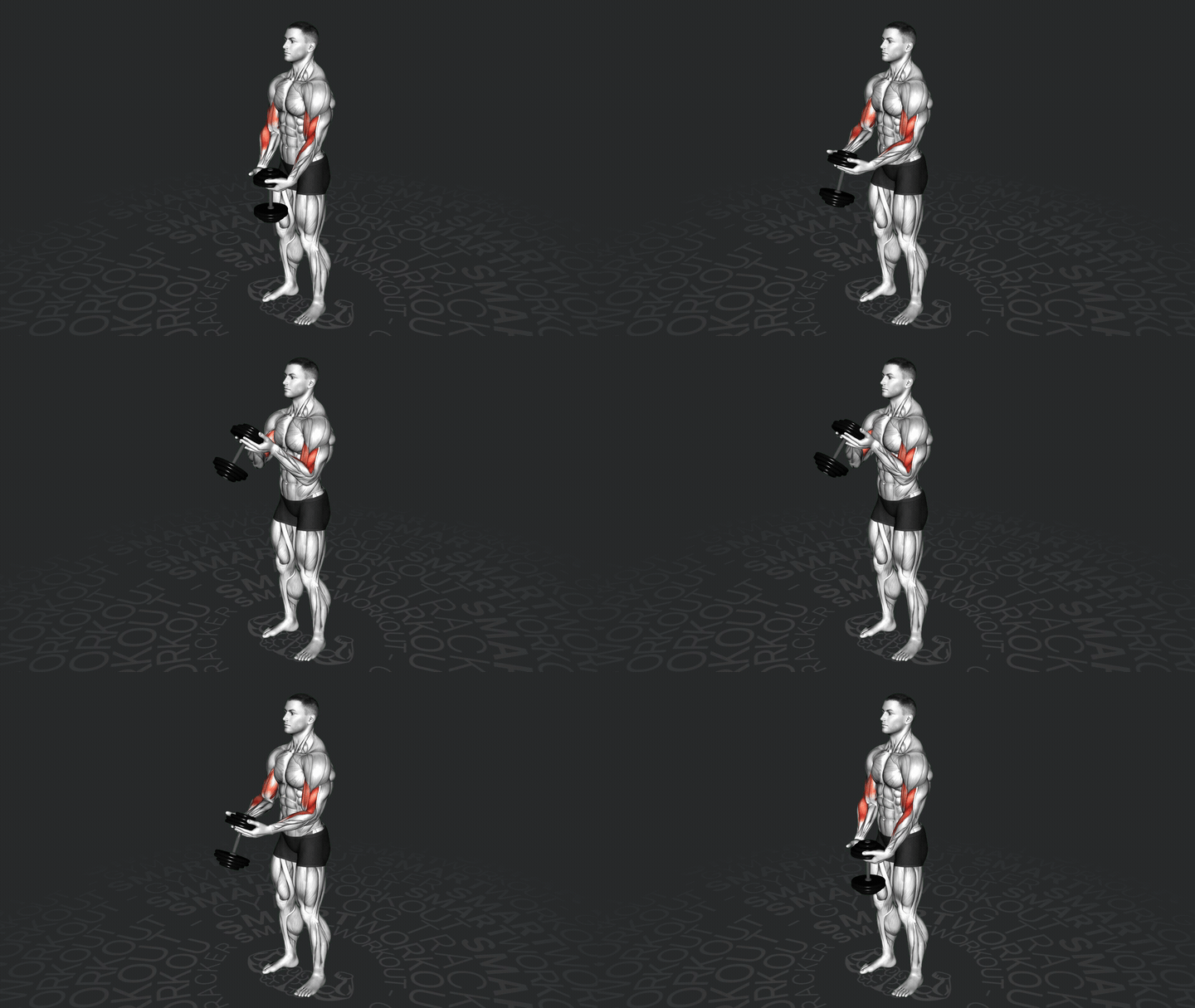
The Kettlebell Biceps Curl is an isolation exercise targeting the biceps brachii. It involves lifting a kettlebell with a controlled motion to engage the biceps, promoting muscle strength and hypertrophy. This exercise can be performed standing or seated and is suitable for various fitness levels.
exercise_detail.how_to_perform
- Stand with your feet shoulder-width apart, holding a kettlebell in each hand with an underhand grip.
- Keep your elbows close to your torso and your palms facing forward.
- Exhale as you curl the kettlebells upward by bending your elbows, keeping your upper arms stationary.
- Continue lifting until the kettlebells are at shoulder level and your biceps are fully contracted.
- Pause briefly at the top of the movement, then inhale as you slowly lower the kettlebells back to the starting position.
- Repeat for the desired number of repetitions.
exercise_detail.what_muscles_work
exercise_detail.primary_muscle:
exercise_detail.secondary_muscles:
exercise_detail.tips
- Maintain a straight posture throughout the exercise to avoid using momentum.
- Focus on squeezing the biceps at the top of the curl for maximum contraction.
- Control the descent of the kettlebells to maximize muscle engagement.
- Avoid swinging or using your back to lift the weights; keep the movement isolated to your arms.
- Start with a lighter weight to perfect your form before progressing to heavier kettlebells.
exercise_detail.common_mistakes
- Using excessive weight, leading to poor form and momentum-driven lifts.
- Swinging the kettlebell instead of maintaining controlled, smooth movements.
- Not fully extending the arms at the bottom of the curl, limiting the range of motion.
- Curling the wrists at the top of the movement, causing unnecessary strain.
- Engaging the shoulders and upper back instead of isolating the biceps.
- Leaning back or using the lower back to assist the lift, risking strain.
- Allowing the elbows to drift forward, reducing biceps activation.
- Rushing through the exercise, compromising muscle engagement and control.
exercise_detail.recommended_exercises
exercise_detail.recommended_exercises_intro
exercise_detail.app_ad.title
exercise_detail.app_ad.description