Seated Incline Biceps Curl
Also known as: Incline Dumbbell Curl, Seated Incline Dumbbell Curl, Incline Bicep Curl
Track Seated Incline Biceps Curl in SmartWorkout and watch your numbers go up
Log sets, weights and progress for free, with no workout limits.


Description
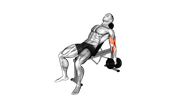
Lean back on an incline bench and curl two dumbbells up from arms hanging straight down, to train your biceps from a deep stretch. Both heads of the biceps work, and the backrest stops you from swinging the weight up. With your arms hanging behind your torso, the long head, which crosses the shoulder, gets more stretch than in most other curls, so the first third of every rep is the hardest part. Pick it over the Seated Dumbbell Curl when you want that extra stretch and can live with lighter dumbbells; it suits lifters who already curl cleanly standing.
How to Perform
- Set the backrest to about 45–60°. The lower it goes, the deeper the stretch and the harder the curl.
- Sit with your hips all the way back, feet flat and wide on either side of the bench, knees bent about 90°.
- Pick up the dumbbells sitting upright, rest them on your thighs, then lean back until your back, shoulders and head touch the pad.
- Let your arms hang straight down beside the seat, palms facing forward. They should hang behind your torso, clear of the bench edge.
- Curl both dumbbells at once. Elbows keep pointing at the floor and upper arms stay vertical as the dumbbells arc up toward your shoulders.
- Stop with your forearms about vertical and palms facing your shoulders, and squeeze for a moment. Head and back stay on the pad.
- Lower on the same arc over 2–3 seconds until your arms are fully straight. Pause in the stretch, then curl again without bouncing.
- When you finish, bend your elbows to bring the dumbbells back onto your thighs, sit up, and only then put them down.
What Muscles Work
Primary Muscle:
Tips
- Do 2–4 sets of 8–15 reps; 10–15 suits this curl best. Add reps with the same dumbbells first. When you get 15 in every set with straight arms at the bottom, move up to the next pair, usually 1–2 kg heavier per hand, and drop back to 10.
- At the bottom you should feel a strong stretch along the front of your upper arm, sometimes up into the front of the shoulder. A sharp pain there means it's time to raise the backrest a notch or go lighter.
- Want it harder without heavier dumbbells? Drop the backrest a notch toward 45° and take 3–4 seconds on the way down with a one-second pause at the bottom. For an easier version, set the backrest at 60–75°.
- Substitutes: Seated Dumbbell Curl (upright backrest, less stretch, easier on the shoulder, more weight), Dumbbell Incline Alternate Supinated Curl (same bench, one arm at a time with a wrist turn), Incline Cable Curl (the cable keeps pulling in the stretch) and Bayesian Cable Curl when no incline bench is free.
Common Mistakes
- Elbows drifting forward as the dumbbells come up. The shoulder starts helping and the stretch is gone. Keep the elbows pointing at the floor, stop once your forearms are vertical, and go lighter if the elbows still wander.
- Shoulders rolling forward off the pad at the bottom. Pull your shoulder blades back and lift your chest before every rep, so the arms keep hanging behind you.
- Half reps that never reach straight arms. Lower until your elbows are fully straight and the arms hang vertically, pause, then curl. If you can't get there, the dumbbells are too heavy.
- Dropping into the stretch and bouncing out of it. Count 2–3 seconds on the way down and come to a dead stop at the bottom before you curl again.
- Setting the backrest almost upright. That's an ordinary seated curl; lower it to about 45–60° so your arms hang behind your torso.
Workout plans with this exercise
- Full body · 2 days
- Full body · 3 days
- Upper/Lower · 3 days
- Upper/Lower · 4 days
- Push/Pull · 4 days
- PPL · 3 days
- PPL · 3 days
- PPL · 6 days
- PPL + Upper/Lower · 5 days
- Body part split · 4 days
- Body part split · 5 days
- Upper/Lower · 4 days · Dumbbells
- Upper/Lower · 5 days · Glutes
- Push/Pull/Legs + Arms · 4 days
- Upper/Lower · 4 days · Chest
- Upper/Lower · 4 days · V-taper
Recommended Exercises
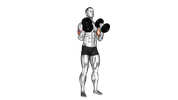
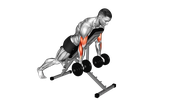
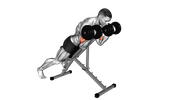
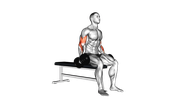
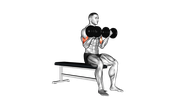
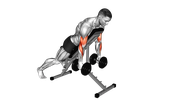
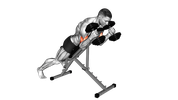
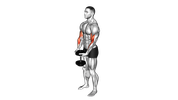
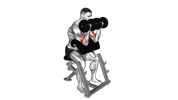
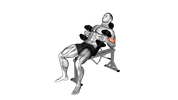
Explore exercises related to Seated Incline Biceps Curl for biceps training and similar movement patterns.
Choose a workout plan or create your own for free
Ready-made plans for every goal, a free plan creator, hundreds of exercises and an advanced workout journal: all in SmartWorkout.