Dumbbell Low to High Fly
Also known as: Low-to-High Dumbbell Fly, Standing Low-to-High Dumbbell Fly, Low-to-High Dumbbell Chest Fly
Track this exercise in SmartWorkout
Log sets, weights and progress for free, with no workout limits.


Description
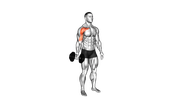
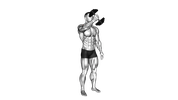
Stand with a dumbbell in each hand and sweep them from your thighs forward, up and in until they meet in front of your face, to build your upper chest. You feel it just under the collarbones, mostly in the last third of the rep as the hands come together, while your front delts work hard from start to finish and the middle chest chips in. The dumbbells are light and your shoulders never sink into a deep stretch, so it's kind to the joints. Use it as a warm-up before incline presses or as a finisher when all you have is dumbbells.
How to Perform
- Pick light dumbbells, roughly what you'd use for a front raise or a bit less, and stand tall with your feet hip-width apart.
- Let the dumbbells hang beside your outer thighs, palms facing your legs, hands in the middle of the handles and wrists straight.
- Unlock your elbows into a small bend you'll keep until the last rep. Shoulders down away from your ears, ribs down, abs lightly braced.
- Sweep both dumbbells forward, up and in along a wide arc, like scooping up a big ball to hug it, palms facing each other.
- Move only at the shoulders. The elbow angle doesn't change and your torso stays upright, with no lean back.
- Stop with the dumbbells almost touching at eye level, upper arms near shoulder height. Squeeze your upper chest for half a second.
- Lower along the same arc in about 2 seconds, hands drifting apart, until the dumbbells hang beside your thighs. Start each rep from a standstill.
What Muscles Work
Primary Muscle:
Secondary Muscles:
Tips
- Take 2–4 sets of 12–20 reps close to failure. Add reps with the same dumbbells until you get 20 on every set with the hands meeting at eye level and no lean back. Then move to the next pair, usually 1–2 kg heavier per hand, and restart at 12.
- Light dumbbells make big jumps: going from 5 to 6 kg adds a fifth to the load. Before you move up, earn it with a 1–2 second pause at the top or a 3-second lowering.
- Only the fronts of your shoulders burning? Bring your hands closer to the midline and think "upper arms across the chest" instead of "hands up". A pinch at the front of the shoulder near the top means you stop each rep at shoulder height.
- Can't feel your upper chest yet? Learn the arc one arm at a time with your free hand on your upper chest, as in the One-Arm Low Fly Dumbbell.
- Substitutes: Low-to-High Cable Fly, which keeps tension at the top where dumbbells go slack; One-Arm Low-to-High Cable Fly; Incline Dumbbell Chest Fly for a heavier, stretched upper-chest fly. After the classic lying fly? That's the Dumbbell Chest Fly on a flat bench.
Common Mistakes
- Lifting straight ahead with your hands staying shoulder-width apart. That's a front raise, and it leaves most of the work to your front delts. Sweep up and in until the dumbbells nearly touch.
- Opening the arms out to the sides like a lateral raise. From your thighs, travel forward and in; at the top your hands sit at the midline in front of you.
- Bending and straightening the elbows, so the dumbbells get curled or pressed up. Set a small bend before the first rep and hold it; if it keeps changing, go lighter.
- Leaning back, dipping the knees or snapping the hips to get the weights moving. Take about 2 seconds on the way up; if you still need a swing, go lighter or stand with your back against a wall.
- Shrugging at the top or lifting the hands overhead. Keep your shoulders down and stop at eye level.
- Letting the dumbbells drop back to your thighs after the squeeze. Let them travel back down the arc as slowly as they went up: that half of the rep counts too.
Recommended Exercises
Explore exercises related to Dumbbell Low to High Fly for chest training and similar movement patterns.
Choose a workout plan or create your own - for free
Ready-made plans for every goal, a free plan creator, hundreds of exercises and an advanced workout journal - all in SmartWorkout.