Planche Dips
StrengthPushBalance
Track Planche Dips in SmartWorkout and watch your numbers go up
Log sets, weights and progress for free, with no workout limits.


Body Part: Chest
Description
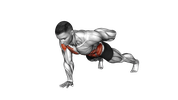
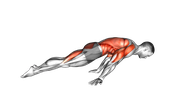
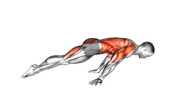
Planche Dips are an advanced bodyweight exercise that combines elements of the planche hold and dip movement. This exercise primarily targets the chest, shoulders, triceps, and core muscles. It requires significant upper body strength, balance, and coordination.
How to Perform
- Begin in a planche position with your hands on the ground, arms straight, and body parallel to the floor.
- Engage your core and maintain a hollow body position to keep your body stable.
- Slowly bend your elbows to lower your body towards the ground while keeping your legs elevated and straight.
- Pause briefly at the bottom of the movement, ensuring your elbows do not flare out excessively.
- Press through your palms to straighten your arms and return to the starting planche position.
- Repeat for the desired number of repetitions while maintaining control throughout the movement.
What Muscles Work
Primary Muscle:
Secondary Muscles:
Tips
- Ensure your wrists are strong and flexible to handle the pressure during Planche Dips.
- Focus on keeping your core tight to prevent sagging or arching of the lower back.
- Practice static planche holds to build foundational strength before attempting Planche Dips.
- Use parallettes or push-up bars if wrist flexibility is a concern.
- Start with partial range of motion dips if full Planche Dips are too challenging initially.
- Maintain a slow and controlled tempo to maximize muscle engagement and minimize injury risk.
Common Mistakes
- Allowing elbows to flare out, reducing shoulder stability.
- Failing to maintain a straight body line, leading to sagging hips.
- Not engaging the core, causing loss of balance and control.
- Descending too quickly, compromising form and control.
- Not achieving full range of motion, limiting muscle engagement.
- Placing hands too wide, decreasing shoulder engagement.
- Bending wrists excessively, increasing strain on joints.
- Leaning too far forward, shifting focus away from target muscles.
- Neglecting to retract scapula, reducing upper back activation.
Recommended Exercises
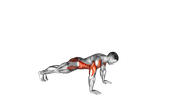
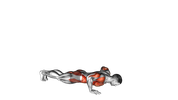
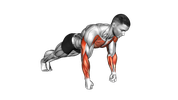
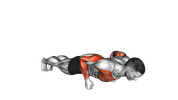
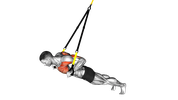
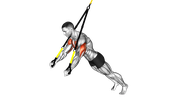
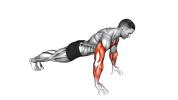
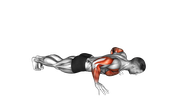
Explore exercises related to Planche Dips for chest training and similar movement patterns.
Choose a workout plan or create your own for free
Ready-made plans for every goal, a free plan creator, hundreds of exercises and an advanced workout journal: all in SmartWorkout.
Start with a free plan. Keep progressing with SmartWorkout.
- users
- 200k+
- exercises with technique guides
- 1,000+
- workouts on the free plan
- ∞