Hanging Scapular Retractions
MobilityRehabilitationWarm-upPull
Track this exercise in SmartWorkout
Log sets, weights and progress for free, with no workout limits.


Body Part: Forearms
Description
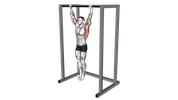
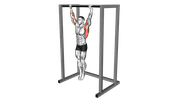
Hanging Scapular Retractions are an exercise focused on strengthening the muscles around the scapula, particularly the lower trapezius, rhomboids, and serratus anterior. This exercise helps improve shoulder stability and posture, making it beneficial for athletes and individuals looking to enhance upper body strength and mobility.
How to Perform
- Begin by hanging from a pull-up bar with an overhand grip, hands shoulder-width apart.
- Engage your core and keep your body straight without swinging or bending at the hips.
- Initiate the movement by retracting your scapulae, pulling your shoulder blades down and together.
- Hold the retracted position for a moment, ensuring full engagement of the scapular muscles.
- Slowly release and return to the starting position with control.
- Repeat for the desired number of repetitions.
What Muscles Work
Primary Muscle:
Secondary Muscles:
Tips
- Focus on moving only your shoulder blades; avoid bending your elbows or using your arms to pull.
- Keep your neck relaxed and avoid shrugging your shoulders during the movement.
- Maintain a steady breathing pattern; exhale as you retract your scapulae and inhale as you release.
- Start with shorter holds if you're new to this exercise, gradually increasing duration as you build strength.
- Ensure a strong grip on the bar to maintain stability throughout the exercise.
Common Mistakes
- Failing to engage the scapular muscles, leading to reliance on arm muscles.
- Allowing the shoulders to shrug upwards instead of retracting the scapula.
- Using momentum to perform the movement rather than controlled muscle engagement.
- Not fully retracting the scapula, resulting in a limited range of motion.
- Arching the back excessively, causing improper alignment and potential strain.
- Letting the head protrude forward, disrupting spinal alignment.
- Neglecting to maintain a stable core, which affects overall control and stability.
- Gripping the bar too tightly, which can lead to unnecessary tension in the forearms.
Recommended Exercises
Explore exercises related to Hanging Scapular Retractions for forearms training and similar movement patterns.
Choose a workout plan or create your own - for free
Ready-made plans for every goal, a free plan creator, hundreds of exercises and an advanced workout journal - all in SmartWorkout.