Pistol Squat
enums.exercise_tag.STRENGTHenums.exercise_tag.BALANCEenums.exercise_tag.MOBILITYenums.exercise_tag.FUNCTIONAL
exercise_detail.body_part: enums.body_part.LEGS
exercise_detail.description
The Pistol Squat is a unilateral lower body exercise that targets the quadriceps, glutes, hamstrings, and calves. It requires balance, strength, and flexibility, making it an advanced movement primarily used to build leg strength and improve coordination.
exercise_detail.how_to_perform
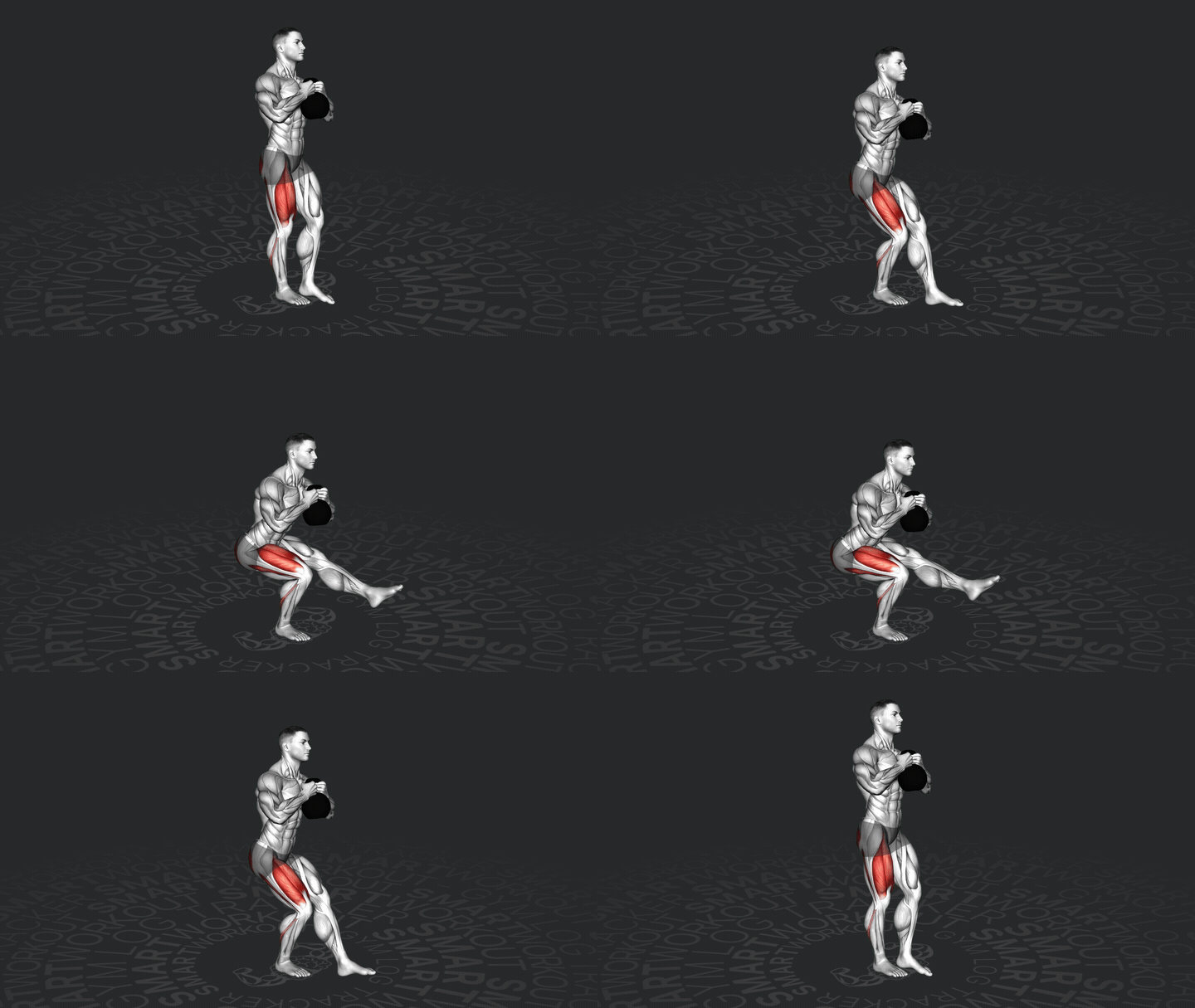
- Stand upright with feet hip-width apart and arms extended forward for balance.
- Shift your weight onto one leg while lifting the opposite leg off the ground, keeping it straight in front of you.
- Engage your core and slowly lower your body into a squat position on the standing leg, keeping the lifted leg extended.
- Descend until your thigh is parallel to the ground or as low as your flexibility allows.
- Push through the heel of the standing leg to return to the starting position.
- Repeat for the desired number of repetitions before switching legs.
exercise_detail.what_muscles_work
exercise_detail.primary_muscle:
exercise_detail.secondary_muscles:
exercise_detail.tips
- Maintain a straight back throughout the movement to prevent injury.
- Focus on keeping your knee aligned with your toes to ensure proper form.
- Use a wall or a pole for support if you are new to this exercise.
- Start with partial range of motion if full depth is challenging, gradually increasing depth as strength improves.
- Warm up thoroughly before attempting pistol squats to prevent strain on muscles and joints.
- Incorporate ankle mobility exercises into your routine to enhance stability during pistol squats.
exercise_detail.common_mistakes
- Allowing the heel of the standing leg to lift off the ground, reducing stability and control.
- Leaning too far forward, which can strain the lower back and reduce balance.
- Collapsing the knee inward, increasing the risk of knee injury.
- Failing to keep the chest up, leading to poor posture and balance.
- Not engaging the core, resulting in a lack of control and stability.
- Dropping too quickly into the squat, which can lead to loss of balance.
- Not extending the non-working leg fully, affecting balance and form.
- Rounding the back, which compromises spinal alignment and increases injury risk.
- Using momentum instead of controlled movement, reducing muscle engagement.
- Failing to keep the weight centered over the midfoot, leading to instability.
exercise_detail.recommended_exercises
exercise_detail.recommended_exercises_intro
exercise_detail.app_ad.title
exercise_detail.app_ad.description