Barbell Cossack Squat
Track Barbell Cossack Squat in SmartWorkout and watch your numbers go up
Log sets, weights and progress for free, with no workout limits.


Description
Stand with a wide stance and rest a barbell securely across your upper back. Shift your hips to one side, bending that knee while keeping the opposite leg straight and the heel on the floor. Keep your chest up, spine neutral, and the bent knee tracking over the toes. Lower under control as far as mobility allows, then drive through the bent-leg foot to return to the starting position and repeat on the other side.
How to Perform
- Set a barbell in a squat rack at upper-chest height and load it lightly. Step under the bar, place it securely across your upper traps or rear shoulders, grip the bar firmly, brace your core, and walk back carefully into a wide stance with your toes turned slightly outward.
- Stand tall with your feet wider than shoulder width, keep your chest lifted, and distribute your weight evenly through both feet before starting the movement.
- Shift your body weight toward one leg while bending that knee and pushing your hips back and down. Keep the working foot flat on the floor and allow the knee to track in the same direction as the toes.
- As you descend, keep the opposite leg straight and extend it out to the side. Keep the heel of the straight leg on the floor if your mobility allows; otherwise, allow the toes to point upward while maintaining control.
- Lower only as far as you can while keeping your spine neutral, chest proud, and the barbell stable over your mid-foot. Avoid rounding your lower back or letting the working knee collapse inward.
- Press firmly through the heel and mid-foot of the bent leg to return to the starting wide stance, keeping your core braced and the bar level throughout the ascent.
- Repeat on the opposite side, alternating sides for the desired number of repetitions. Re-rack the barbell carefully when finished.
What Muscles Work
Primary Muscle:
Secondary Muscles:
Tips
- Use a light barbell at first and place it securely across your upper back in a high-bar or comfortable back-squat position, keeping your torso braced before each repetition.
- Set your feet wider than shoulder width with toes turned slightly outward, allowing enough room to shift fully into each side.
- Shift your hips toward one leg and bend that knee while keeping the opposite leg as straight as your mobility allows.
- Keep the working foot flat on the floor and track the working knee in the same direction as the toes; do not let the knee collapse inward.
- Keep your chest proud and spine neutral rather than rounding forward to reach depth.
- Let the straight-leg foot stay planted with the toes pointing upward or forward according to your hip and ankle mobility, without forcing an uncomfortable position.
- Descend only as far as you can control while maintaining heel contact, knee alignment, and a stable barbell position.
- Drive through the heel and midfoot of the bent leg to return to the starting position, then repeat smoothly on the other side.
- Move slowly and avoid bouncing at the bottom, especially when learning the exercise or using heavier weight.
- Stop and reduce the range of motion or load if you feel sharp pain in the knees, hips, groin, or lower back.
Common Mistakes
- Letting the working knee collapse inward instead of tracking over the toes
- Rising onto the heel of the bent leg instead of keeping the foot planted
- Allowing the straight-leg heel to lift or the toes to turn excessively upward
- Rounding the lower back or collapsing the chest under the bar
- Leaning too far forward and turning the movement into a hip hinge
- Shifting weight onto the straight leg instead of loading the bent leg
- Using a range of motion that the hips and ankles cannot control
- Dropping into the bottom position without control
- Bouncing out of the bottom instead of driving smoothly through the working foot
- Losing barbell stability by letting the torso twist or tilt to one side
- Failing to brace the core, causing the pelvis and spine to shift under load
- Pushing off the toes rather than the midfoot and heel of the bent leg
Recommended Exercises
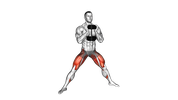
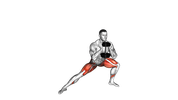
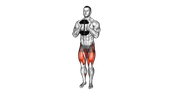
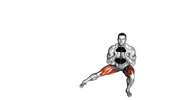
Explore exercises related to Barbell Cossack Squat for legs training and similar movement patterns.
Choose a workout plan or create your own - for free
Ready-made plans for every goal, a free plan creator, hundreds of exercises and an advanced workout journal - all in SmartWorkout.


Start with a free plan. Keep progressing with SmartWorkout.
- users
- 200k+
- exercises with technique guides
- 1,000+
- workouts on the free plan
- ∞