Weighted Cossack Squat
StrengthMobilityBalanceFunctional
Track this exercise in SmartWorkout
Log sets, weights and progress for free, with no workout limits.


Body Part: Legs
Description
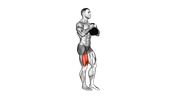
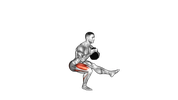
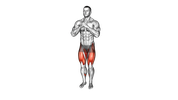
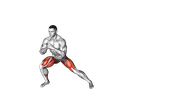
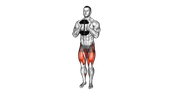
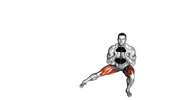
The Weighted Cossack Squat is a unilateral lower body exercise that targets the quadriceps, hamstrings, glutes, and adductors. It involves performing a deep lateral squat while holding a weight, such as a dumbbell or kettlebell, to increase resistance and improve strength, balance, and flexibility.
How to Perform
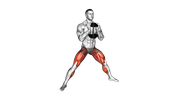
- Stand with your feet wider than shoulder-width apart, toes pointing slightly outward.
- Hold a dumbbell or kettlebell with both hands close to your chest.
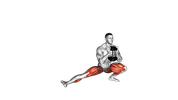
- Shift your weight onto your right leg, bending the knee and pushing your hips back as you lower into a squat.
- Keep your left leg straight with the foot flat on the ground or with the heel slightly raised if necessary.
- Lower yourself until your right thigh is parallel to the ground or as low as your flexibility allows.
- Push through your right heel to return to the starting position.
- Repeat the movement on the left side.
What Muscles Work
Primary Muscle:
Secondary Muscles:
Tips
- Maintain an upright torso throughout the movement to ensure proper form.
- Engage your core muscles to stabilize your body and protect your lower back.
- Focus on keeping your knee aligned with your toes to avoid unnecessary strain.
- Start with a light weight or no weight at all to master the technique before progressing.
- Perform the exercise slowly and controlled to maximize muscle engagement and balance.
- Inhale as you lower into the squat and exhale as you push back up to the starting position.
Common Mistakes
- Leaning forward excessively, which shifts the load away from the targeted leg.
- Allowing the knee to cave inward, increasing stress on the joint.
- Rising onto the toes of the working leg, reducing stability and engagement.
- Holding the weight too far from the body, causing balance issues.
- Failing to keep the non-working leg straight, limiting range of motion.
- Dropping the hips too low without maintaining control, risking strain.
- Not engaging the core, leading to a lack of support and balance.
- Using momentum to rise instead of controlled muscle activation.
- Neglecting to keep the chest up, which can lead to rounding of the back.
Recommended Exercises
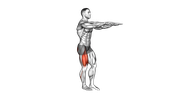
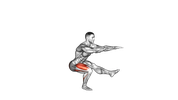
Explore exercises related to Weighted Cossack Squat for legs training and similar movement patterns.
Choose a workout plan or create your own - for free
Ready-made plans for every goal, a free plan creator, hundreds of exercises and an advanced workout journal - all in SmartWorkout.


Start with a free plan. Keep progressing with SmartWorkout.
- users
- 200k+
- exercises with technique guides
- 1,000+
- workouts on the free plan
- ∞