Weighted Pistol Squat
Track Weighted Pistol Squat in SmartWorkout and watch your numbers go up
Log sets, weights and progress for free, with no workout limits.


Description
The Weighted Pistol Squat is an advanced lower body exercise that targets the quadriceps, glutes, hamstrings, and core. It involves performing a single-leg squat while holding a weight, enhancing strength, balance, and coordination. This exercise requires significant flexibility and stability, making it suitable for experienced athletes.
How to Perform
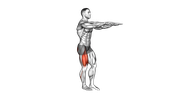
- Begin by standing upright with your feet hip-width apart and hold a dumbbell or kettlebell close to your chest.
- Extend one leg forward, keeping it straight and off the ground.
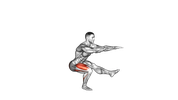
- Engage your core and slowly lower your body into a squat on the supporting leg, keeping your chest up and back straight.
- Descend until your thigh is parallel to the ground or as low as your flexibility allows.
- Pause briefly at the bottom of the movement, then press through your heel to return to the starting position.
- Complete the desired number of repetitions on one leg before switching to the other.
What Muscles Work
Primary Muscle:
Secondary Muscles:
Tips
- Maintain a tight core throughout the movement to ensure balance and stability.
- Focus on keeping your knee aligned with your toes to prevent injury.
- If you're new to this exercise, start without weights to master the form before adding resistance.
- Use a bench or box for support if needed when learning the movement.
- Control the descent and ascent to maximize muscle engagement and avoid using momentum.
Common Mistakes
- Leaning forward excessively, causing imbalance and potential knee strain.
- Allowing the non-working leg to drop or touch the ground, reducing exercise effectiveness.
- Failing to maintain a straight back, leading to poor posture and reduced core engagement.
- Using momentum instead of controlled movement, increasing the risk of loss of balance.
- Not squatting deep enough, limiting the range of motion and muscle activation.
- Allowing the knee of the working leg to cave inward, increasing the risk of knee injury.
- Holding the weight incorrectly, which can lead to poor balance and strain on the wrists.
- Neglecting to engage the glutes and hamstrings, reducing overall stability and power.
- Rising onto the toes of the working leg, disrupting balance and proper muscle engagement.
- Rushing through the movement, which can compromise form and increase injury risk.
Recommended Exercises
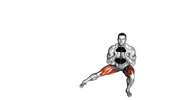
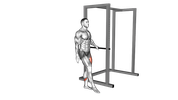
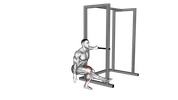
Explore exercises related to Weighted Pistol Squat for legs training and similar movement patterns.

Choose a workout plan or create your own - for free
Ready-made plans for every goal, a free plan creator, hundreds of exercises and an advanced workout journal - all in SmartWorkout.


Start with a free plan. Keep progressing with SmartWorkout.
- users
- 200k+
- exercises with technique guides
- 1,000+
- workouts on the free plan
- ∞