Band Hip Abduction
MobilityRehabilitationWarm-up
Track Band Hip Abduction in SmartWorkout and watch your numbers go up
Log sets, weights and progress for free, with no workout limits.


Body Part: Gluteal
Description
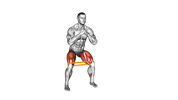
The Band Hip Abduction is an exercise targeting the gluteus medius and minimus muscles, as well as the tensor fasciae latae. It involves using a resistance band to create tension, which helps in strengthening and stabilizing the hips. This exercise is beneficial for improving hip stability, enhancing athletic performance, and preventing injuries.
How to Perform
- Place a resistance band around your legs, just above your knees.
- Stand with your feet shoulder-width apart and slightly bend your knees.
- Engage your core and keep your back straight.
- Slowly move one leg out to the side against the resistance of the band, keeping your toes pointing forward.
- Pause briefly at the top of the movement, ensuring maximum tension on the band.
- Return your leg to the starting position with control.
- Repeat for the desired number of repetitions, then switch to the other leg.
What Muscles Work
Primary Muscle:
Tips
- Ensure the resistance band is tight enough to provide adequate tension throughout the movement.
- Focus on maintaining a stable core and avoid leaning to one side.
- Keep your movements slow and controlled to maximize muscle engagement.
- Breathe steadily throughout the exercise, exhaling as you abduct your leg.
- To increase difficulty, use a heavier resistance band or perform more repetitions.
Common Mistakes
- Leaning too far forward, which reduces glute engagement.
- Allowing the knees to cave inward, leading to poor alignment.
- Using too much resistance, causing compensatory movements.
- Failing to keep the core engaged, resulting in loss of stability.
- Moving too quickly, which decreases muscle activation.
- Not maintaining a slight bend in the standing leg, reducing balance.
- Neglecting to keep the pelvis level, leading to hip drop.
- Allowing the band to snap back uncontrollably, risking joint strain.
- Not keeping the toes pointed forward, altering muscle focus.
- Using a range of motion that's too short, limiting effectiveness.
Recommended Exercises
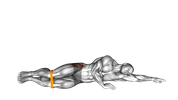
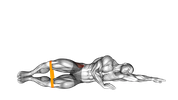
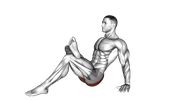
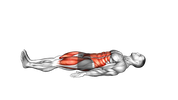
Explore exercises related to Band Hip Abduction for gluteal training and similar movement patterns.






Choose a workout plan or create your own - for free
Ready-made plans for every goal, a free plan creator, hundreds of exercises and an advanced workout journal - all in SmartWorkout.