Lateral Monster Walk
MobilityRehabilitationBalanceFunctionalWarm-up
Track this exercise in SmartWorkout
Log sets, weights and progress for free, with no workout limits.


Body Part: Gluteal
Description
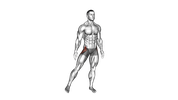
The Lateral Side (Monster) Walk Squat is a dynamic exercise that targets the gluteus medius, hip abductors, and quadriceps. It involves performing a squat while simultaneously stepping laterally, often using a resistance band to increase intensity. This exercise enhances hip stability, strengthens the lower body, and improves lateral movement capabilities.
How to Perform
- Place a resistance band around your legs just above your knees.
- Stand with your feet shoulder-width apart and lower into a squat position, keeping your chest up and back straight.
- Engage your core and maintain tension in the band throughout the movement.
- Step laterally to the right with your right foot, followed by your left foot, maintaining the squat position.
- Take 3-5 steps to the right, then reverse the movement by stepping to the left with your left foot, followed by your right foot.
- Continue alternating sides for the desired number of repetitions or time.
What Muscles Work
Primary Muscle:
Secondary Muscles:
Tips
- Keep your knees aligned with your toes to prevent inward collapse during the movement.
- Maintain a low squat position to maximize engagement of the glutes and thighs.
- Focus on controlled movements rather than speed to ensure proper muscle activation.
- Use a mirror or ask for feedback to ensure you are maintaining proper form throughout the exercise.
- Start with a lighter resistance band if you're new to this exercise and gradually increase resistance as you become more comfortable.
Common Mistakes
- Allowing knees to cave inward, reducing glute engagement.
- Taking steps that are too wide, causing loss of control.
- Leaning forward excessively, shifting focus away from hip muscles.
- Failing to maintain a slight bend in the knees, reducing stability.
- Not keeping feet parallel, leading to improper muscle activation.
- Rising up during the movement, decreasing tension on target muscles.
- Using momentum instead of controlled movements, risking loss of balance.
- Neglecting to keep core engaged, compromising posture and alignment.
Recommended Exercises
Explore exercises related to Lateral Monster Walk for gluteal training and similar movement patterns.









Choose a workout plan or create your own - for free
Ready-made plans for every goal, a free plan creator, hundreds of exercises and an advanced workout journal - all in SmartWorkout.