Standing Hip Abduction
MobilityBalanceRehabilitation
Track Standing Hip Abduction in SmartWorkout and watch your numbers go up
Log sets, weights and progress for free, with no workout limits.


Body Part: Gluteal
Description
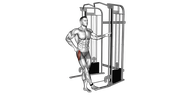
Standing Hip Abduction is an exercise targeting the gluteus medius and minimus muscles, as well as the tensor fasciae latae. It helps improve hip stability and strength, which is essential for various athletic activities and daily movements.
How to Perform
- Stand upright with your feet hip-width apart. You can hold onto a stable surface like a wall or chair for balance.
- Shift your weight onto your left leg, keeping it slightly bent.
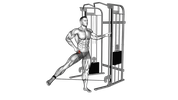
- Lift your right leg out to the side as high as you can without tilting your torso. Keep your toes pointing forward.
- Pause at the top of the movement, then slowly lower your leg back to the starting position.
- Complete the desired number of repetitions, then switch to the other leg.
What Muscles Work
Primary Muscle:
Tips
- Maintain a straight posture throughout the exercise to engage the correct muscles.
- Avoid leaning to the side when lifting your leg; focus on isolating the movement in the hip.
- Control the movement both when lifting and lowering your leg to maximize muscle engagement.
- Start with a small range of motion if you're new to this exercise, gradually increasing as you gain strength.
- Incorporate resistance bands around your ankles for added difficulty once you master the basic form.
Common Mistakes
- Leaning the torso to the side instead of keeping it upright, reducing effectiveness.
- Swinging the leg too quickly, leading to loss of control and muscle disengagement.
- Lifting the leg too high, causing hip rotation and reducing targeted muscle activation.
- Allowing the standing leg to bend, which decreases stability and engagement.
- Failing to engage the core, leading to poor balance and posture.
- Pointing the toes upwards, which shifts focus away from the hip abductors.
- Not maintaining a neutral spine, resulting in improper alignment.
- Using momentum instead of controlled muscle contractions, diminishing effectiveness.
Recommended Exercises
Explore exercises related to Standing Hip Abduction for gluteal training and similar movement patterns.

Choose a workout plan or create your own - for free
Ready-made plans for every goal, a free plan creator, hundreds of exercises and an advanced workout journal - all in SmartWorkout.