Barbell Good Morning
StrengthMobility
Track Barbell Good Morning in SmartWorkout and watch your numbers go up
Log sets, weights and progress for free, with no workout limits.


Body Part: Gluteal
Description
The Barbell Good Morning is a compound exercise that primarily targets the lower back, hamstrings, and glutes. It involves bending at the hips while maintaining a neutral spine, which helps in strengthening the posterior chain and improving hip hinge mechanics.
How to Perform
- Begin by setting up a barbell on a squat rack at shoulder height.
- Position yourself under the barbell, resting it across your upper back and shoulders. Grip the bar slightly wider than shoulder-width apart.
- Lift the bar off the rack by extending your legs and stepping back to clear the rack.
- Stand with your feet shoulder-width apart, toes pointing slightly outward.
- Engage your core and keep your chest up. Maintain a slight bend in your knees.
- Hinge at the hips by pushing them backward while keeping your back straight and chest up.
- Lower your torso until it is nearly parallel to the ground or as far as your flexibility allows without rounding your back.
- Reverse the movement by driving through your heels and extending your hips to return to the starting position.
What Muscles Work
Primary Muscle:
Secondary Muscles:
Tips
- Keep your core tight throughout the movement to protect your lower back.
- Focus on hinging at the hips rather than bending at the waist to maintain proper form.
- Start with a light weight to master the technique before progressing to heavier loads.
- Ensure that your knees remain slightly bent throughout the exercise to avoid unnecessary strain.
- Maintain a neutral spine by keeping your head in line with your torso; avoid looking up or down excessively.
- Control the descent and ascent of the movement to maximize muscle engagement and minimize injury risk.
Common Mistakes
- Rounding the back instead of maintaining a neutral spine.
- Bending the knees excessively, turning it into a squat.
- Allowing the barbell to roll up the neck instead of resting securely on the upper back.
- Leaning too far forward, causing loss of balance.
- Not engaging the core, leading to instability.
- Using too much weight, compromising form.
- Lowering the torso too quickly, losing control.
- Failing to hinge at the hips, reducing hamstring activation.
- Hyperextending the back at the top of the movement.
- Not keeping the chest up, leading to a collapsed posture.
Recommended Exercises
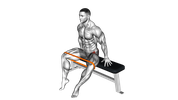
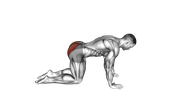
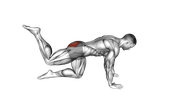
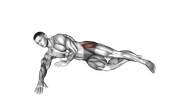
Explore exercises related to Barbell Good Morning for gluteal training and similar movement patterns.


Choose a workout plan or create your own - for free
Ready-made plans for every goal, a free plan creator, hundreds of exercises and an advanced workout journal - all in SmartWorkout.