Seated Good Morning
enums.exercise_tag.STRENGTHenums.exercise_tag.MOBILITYenums.exercise_tag.CORE
exercise_detail.body_part: enums.body_part.GLUTEUS
exercise_detail.description
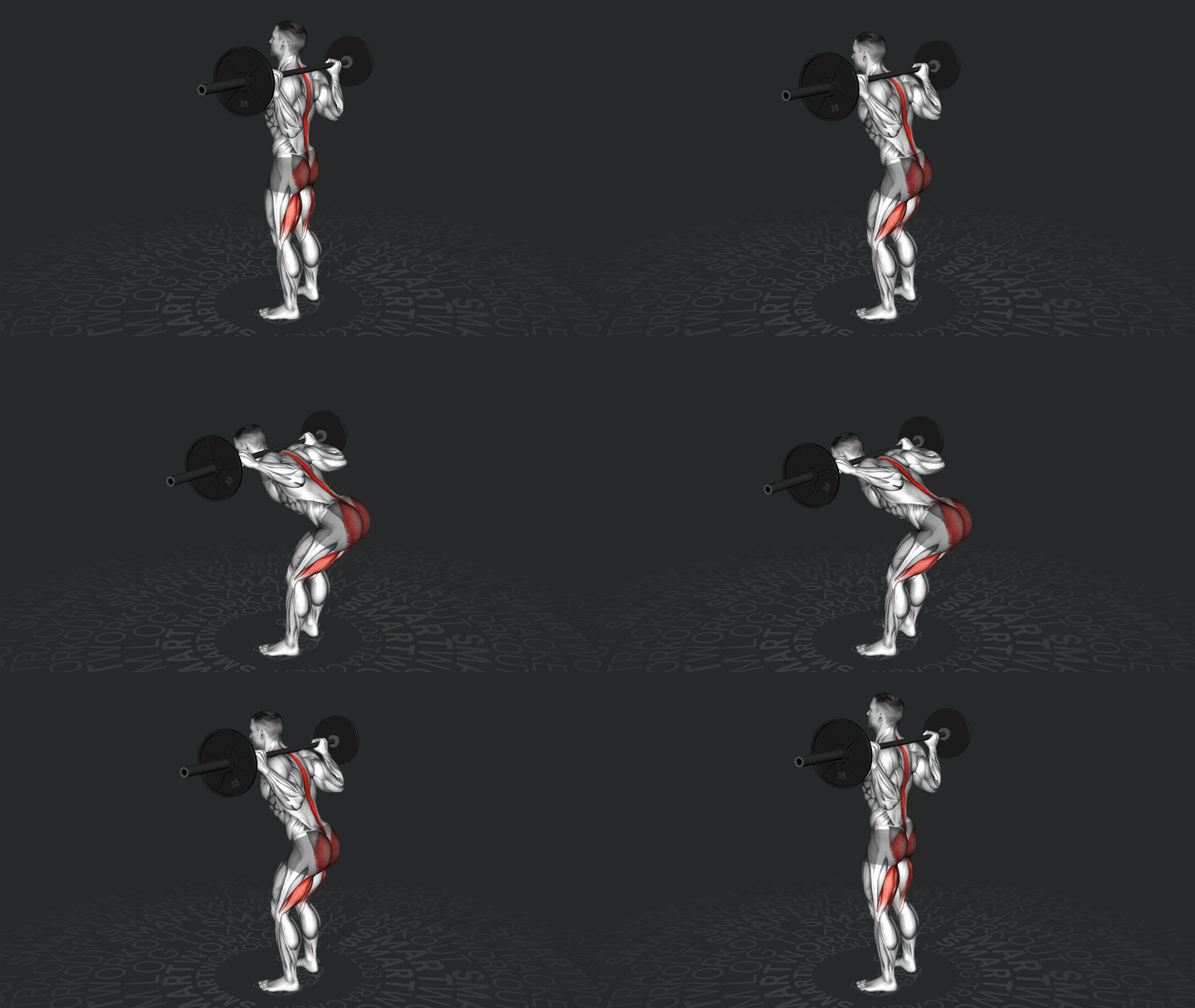
The Seated Good Morning is a compound exercise targeting the lower back, glutes, and hamstrings. It involves bending at the hips while maintaining a straight back, performed while seated to isolate the posterior chain muscles more effectively.
exercise_detail.how_to_perform
- Sit on a bench with your feet flat on the floor, shoulder-width apart.
- Hold a barbell across your upper back, ensuring it is not resting on your neck.
- Engage your core and keep your chest up.
- Inhale deeply, then hinge forward at the hips, keeping your back straight and head aligned with your spine.
- Lower your torso until it is nearly parallel to the floor or as far as your flexibility allows.
- Exhale as you return to the starting position by contracting your glutes and hamstrings.
- Repeat for the desired number of repetitions.
exercise_detail.what_muscles_work
exercise_detail.primary_muscle:
exercise_detail.secondary_muscles:
exercise_detail.tips
- Ensure the barbell is securely positioned on your upper back, avoiding any pressure on the neck.
- Maintain a neutral spine throughout the movement to prevent injury.
- Focus on hinging at the hips rather than bending at the waist to engage the correct muscle groups.
- Control the descent and ascent to maximize muscle engagement and avoid momentum.
- Start with a lighter weight to master form before progressing to heavier loads.
- Keep your feet firmly planted to provide stability during the exercise.
exercise_detail.common_mistakes
- Rounding the back instead of keeping a neutral spine.
- Allowing the knees to cave inward, reducing stability.
- Leaning forward too far, causing loss of balance.
- Not engaging the core, leading to poor control.
- Using momentum instead of controlled movements.
- Positioning the feet too close together, limiting range of motion.
- Failing to keep the chest lifted, increasing strain on the lower back.
- Arching the lower back excessively, risking injury.
- Not maintaining a fixed hip position, causing misalignment.
- Neglecting to activate the glutes and hamstrings.
exercise_detail.recommended_exercises
exercise_detail.recommended_exercises_intro
exercise_detail.app_ad.title
exercise_detail.app_ad.description