Glute Bridge
StrengthCoreFunctional
Track this exercise in SmartWorkout
Log sets, weights and progress for free, with no workout limits.


Body Part: Gluteal
Description
The Glute Bridge is a strength exercise that primarily targets the gluteal muscles, while also engaging the hamstrings and core. It is performed by lying on your back and lifting your hips towards the ceiling, creating a bridge-like position with your body.
How to Perform
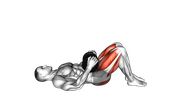
- Lie flat on your back with your knees bent and feet flat on the floor, hip-width apart.
- Place your arms at your sides with palms facing down.
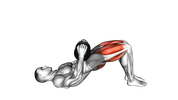
- Engage your core and squeeze your glutes as you lift your hips off the ground.
- Lift until your body forms a straight line from shoulders to knees.
- Hold the position for a moment, then slowly lower your hips back to the starting position.
- Repeat for the desired number of repetitions.
What Muscles Work
Primary Muscle:
Secondary Muscles:
Tips
- Ensure your feet are placed firmly on the ground to maintain stability.
- Focus on squeezing your glutes at the top of the movement for maximum activation.
- Keep your core engaged throughout the exercise to protect your lower back.
- Avoid arching your lower back; maintain a neutral spine position.
- Control the movement both when lifting and lowering your hips to enhance muscle engagement.
- If you feel strain in your lower back, adjust your foot placement or reduce the range of motion.
Common Mistakes
- Lifting hips too high, causing hyperextension of the lower back.
- Feet placed too far from the glutes, reducing activation and effectiveness.
- Feet placed too close to the glutes, limiting range of motion.
- Allowing knees to collapse inward, reducing glute engagement.
- Failing to engage the core, leading to lower back strain.
- Using momentum to lift hips instead of controlled muscle engagement.
- Not squeezing the glutes at the top of the movement.
- Allowing heels to lift off the ground, reducing stability.
- Holding breath instead of maintaining steady breathing.
- Dropping hips too quickly on the descent, losing control.
Recommended Exercises
Explore exercises related to Glute Bridge for gluteal training and similar movement patterns.

Choose a workout plan or create your own - for free
Ready-made plans for every goal, a free plan creator, hundreds of exercises and an advanced workout journal - all in SmartWorkout.