Side Plank Hip Abduction
StrengthCoreBalance
Track this exercise in SmartWorkout
Log sets, weights and progress for free, with no workout limits.


Body Part: Gluteal
Description
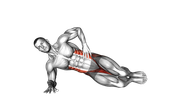
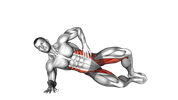
The Side Plank Hip Abduction is an advanced core and lower body exercise that targets the obliques, gluteus medius, and hip abductors. It enhances core stability, balance, and strength in the lateral muscles of the body.
How to Perform
- Begin by lying on your side with your legs extended and stacked on top of each other.
- Place your elbow directly under your shoulder to support your upper body.
- Engage your core and lift your hips off the ground, forming a straight line from head to heels.
- Once in the side plank position, lift your top leg as high as possible without compromising form.
- Hold the position briefly, then slowly lower your leg back to the starting position.
- Maintain a stable core throughout the movement and avoid letting your hips drop.
- Repeat for the desired number of repetitions before switching sides.
What Muscles Work
Primary Muscle:
Secondary Muscles:
Tips
- Ensure your elbow is directly under your shoulder to prevent strain.
- Keep your body in a straight line from head to heels for optimal form.
- Engage your core muscles to maintain stability during the exercise.
- Focus on controlled movements when lifting and lowering your leg.
- Avoid rotating your hips or shoulders; keep them square to the ground.
- Breathe steadily throughout the exercise to maintain focus and endurance.
- If you're new to this exercise, start with shorter holds and gradually increase duration as you build strength.
Common Mistakes
- Dropping the hips too low, causing loss of core engagement and alignment.
- Allowing the top leg to drop below hip level, reducing the effectiveness of the abduction.
- Failing to maintain a straight line from head to heels, leading to improper body alignment.
- Rotating the torso forward or backward, which disrupts balance and muscle activation.
- Neglecting to keep the supporting shoulder stable, increasing strain and risk of shoulder discomfort.
- Moving the top leg too quickly, compromising control and muscle engagement.
- Overextending the top leg, causing unnecessary strain on the hip joint.
- Bending the supporting arm, reducing stability and core activation.
Recommended Exercises
Explore exercises related to Side Plank Hip Abduction for gluteal training and similar movement patterns.
Choose a workout plan or create your own - for free
Ready-made plans for every goal, a free plan creator, hundreds of exercises and an advanced workout journal - all in SmartWorkout.