Deadlift from Blocks
enums.exercise_tag.STRENGTHenums.exercise_tag.PULL
exercise_detail.body_part: enums.body_part.GLUTEUS
exercise_detail.description
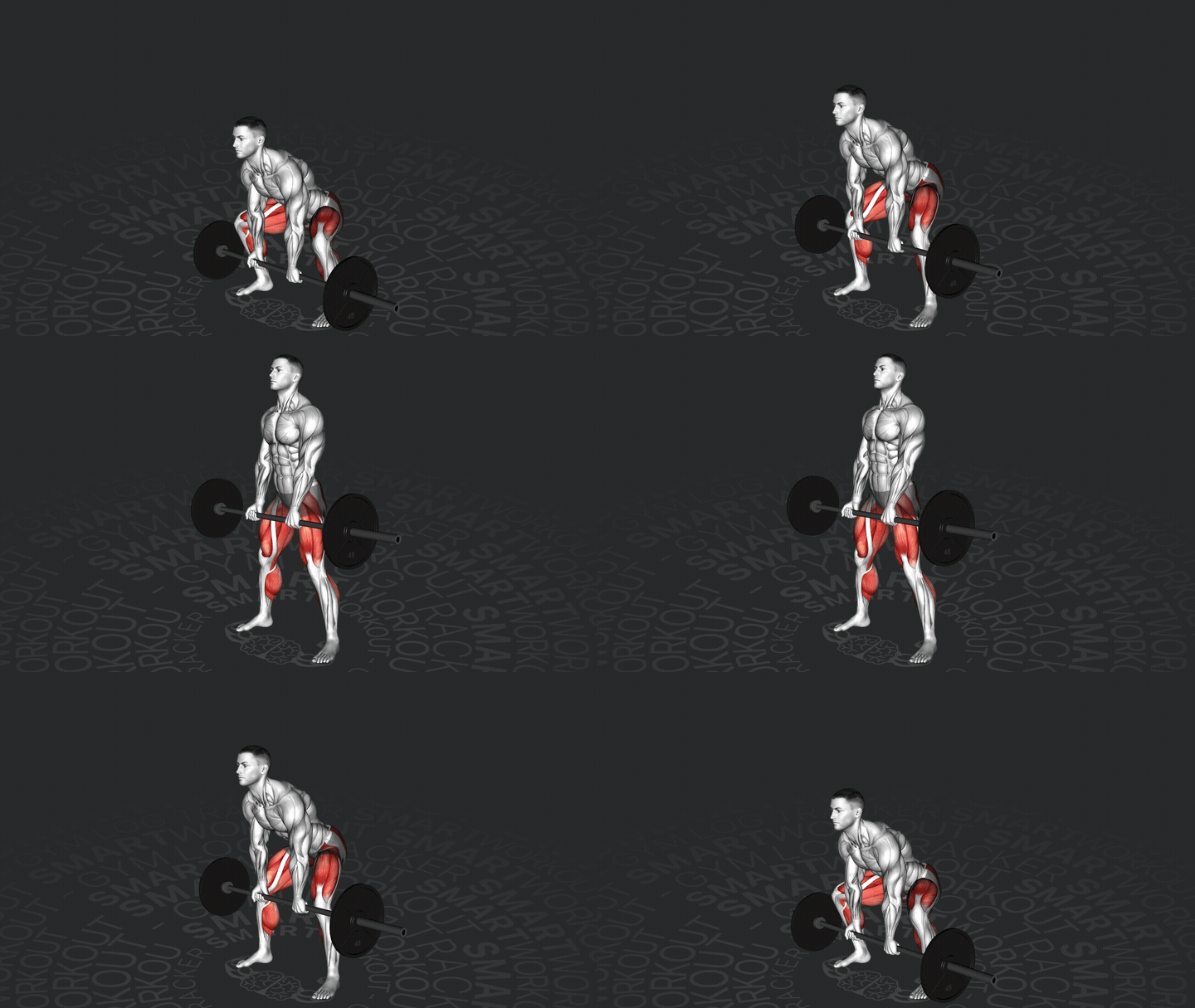
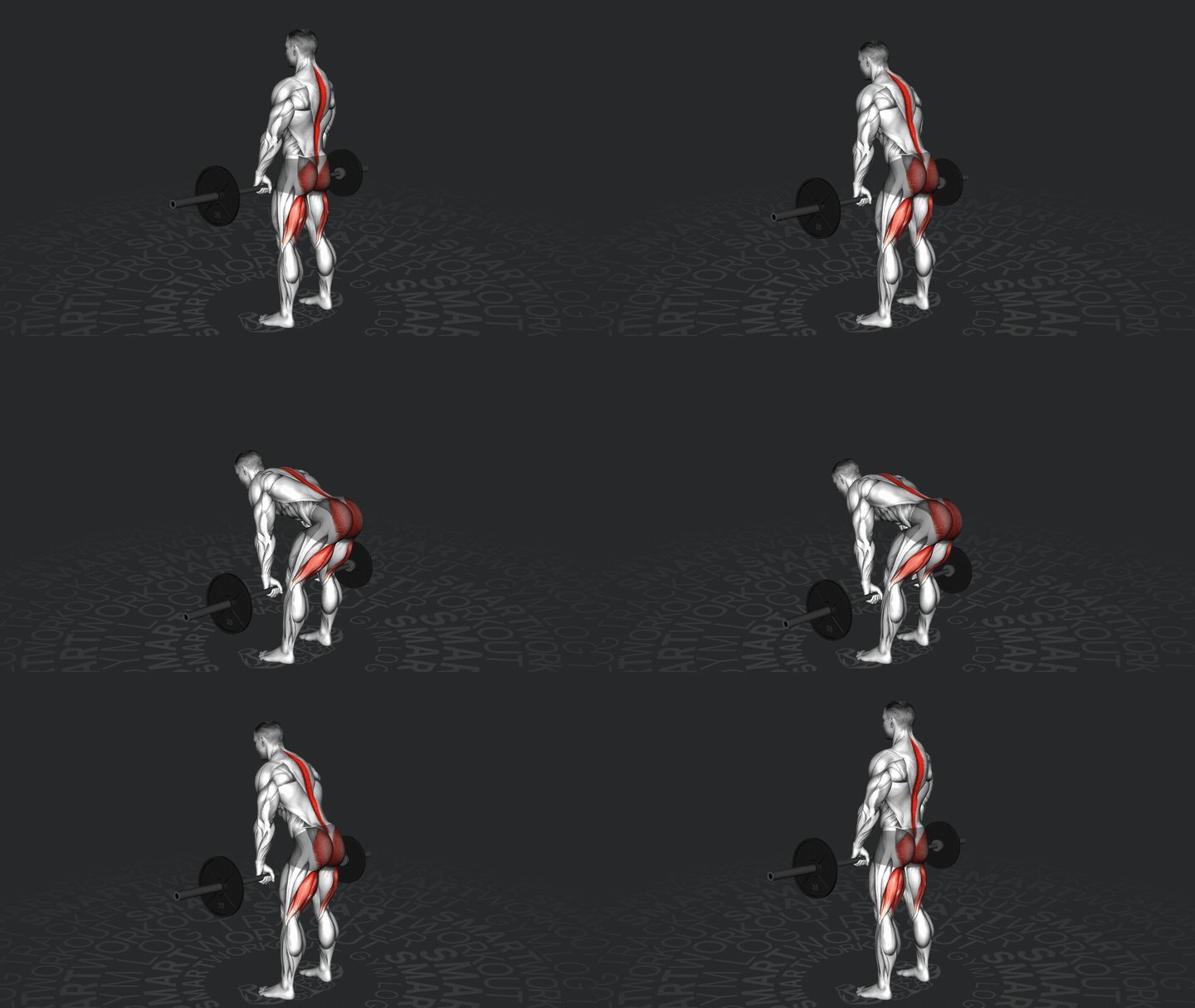
The Deadlift from Blocks is a variation of the conventional deadlift where the barbell is elevated on blocks, reducing the range of motion. This exercise targets the posterior chain, including the glutes, hamstrings, and lower back, while allowing for heavier lifting due to the shortened lift distance. It is particularly useful for improving lockout strength and addressing sticking points in the deadlift.
exercise_detail.how_to_perform
- Set up blocks or plates to elevate the barbell to your desired height, typically just below or at knee level.
- Stand with your feet hip-width apart, positioning the mid-foot under the barbell.
- Grip the barbell with a shoulder-width overhand or mixed grip.
- Engage your core and keep your back straight as you hinge at the hips and bend your knees slightly.
- Lift the barbell by extending your hips and knees simultaneously, keeping the bar close to your body.
- Stand fully upright at the top of the lift, squeezing your glutes.
- Lower the barbell back to the blocks in a controlled manner by hinging at the hips and bending your knees.
exercise_detail.what_muscles_work
exercise_detail.primary_muscle:
exercise_detail.secondary_muscles:
exercise_detail.tips
- Ensure that your back remains straight throughout the lift to prevent injury.
- Focus on engaging your core muscles to maintain stability during the lift.
- Keep the barbell close to your body to maximize leverage and efficiency.
- Use a mixed grip if necessary to improve grip strength and control.
- Start with a manageable weight to master form before progressing to heavier loads.
- Concentrate on driving through your heels as you lift to engage your posterior chain effectively.
exercise_detail.common_mistakes
- Starting with hips too high, leading to excessive lower back strain.
- Rounding the lower back instead of maintaining a neutral spine.
- Allowing the knees to cave inward during the lift.
- Not engaging the core, resulting in loss of stability.
- Pulling with the arms instead of driving through the legs.
- Setting the blocks too high, reducing the range of motion excessively.
- Using momentum to lift rather than controlled movement.
- Failing to keep the barbell close to the body throughout the lift.
- Not locking out the hips at the top of the movement.
- Dropping the barbell too quickly, risking loss of control.
exercise_detail.recommended_exercises
exercise_detail.recommended_exercises_intro
exercise_detail.app_ad.title
exercise_detail.app_ad.description