B Stance Romanian Deadlift
enums.exercise_tag.STRENGTHenums.exercise_tag.FUNCTIONAL
exercise_detail.body_part: enums.body_part.LEGS
exercise_detail.description
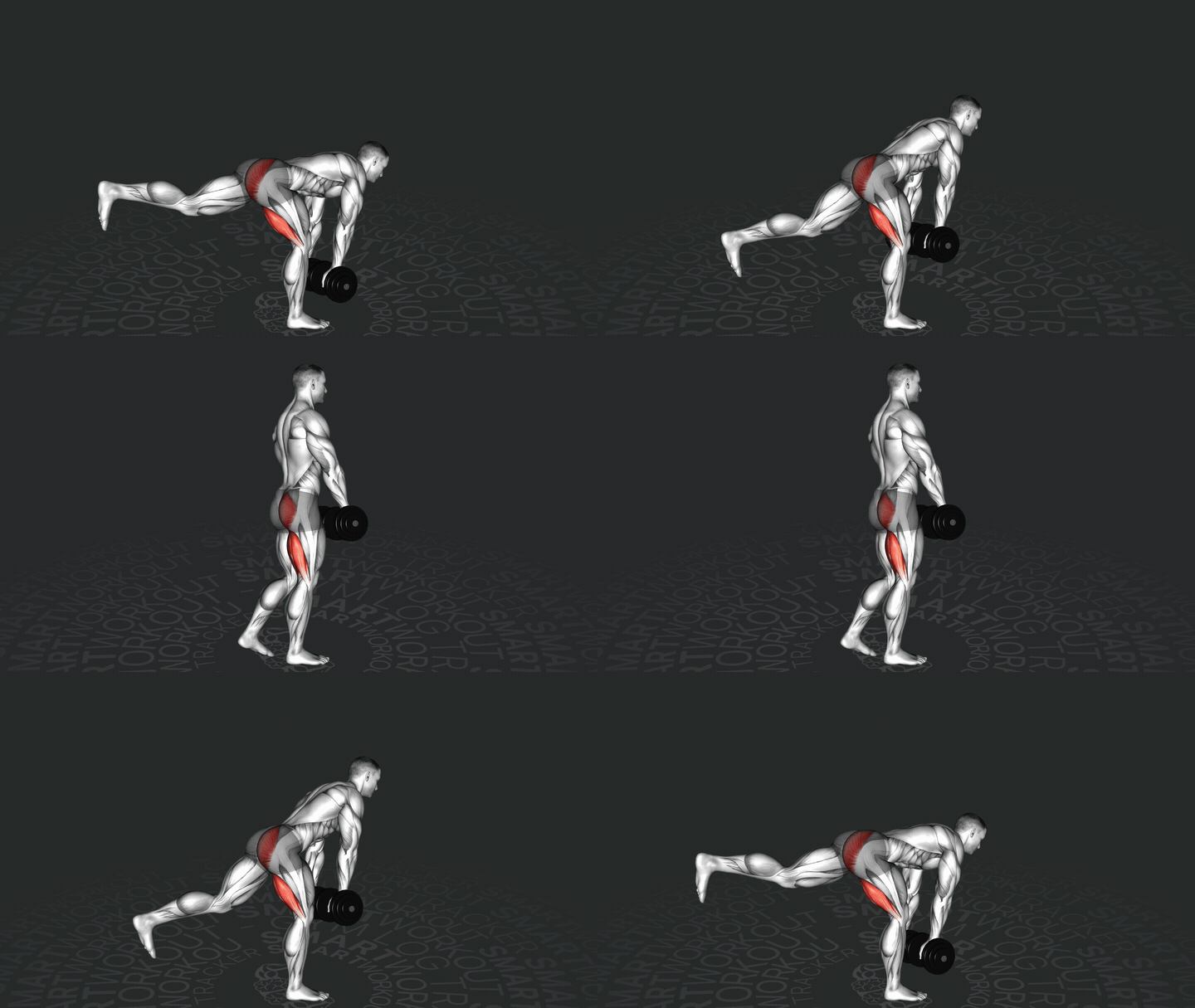
The B Stance Romanian Deadlift is a unilateral variation of the traditional Romanian Deadlift, designed to target the hamstrings, glutes, and lower back. This exercise involves a staggered stance where one foot is positioned slightly behind the other, allowing for greater emphasis on the front leg while maintaining balance and stability.
exercise_detail.how_to_perform
- Stand with your feet hip-width apart. Shift your weight onto your right foot and place your left foot slightly behind you, toes touching the ground for balance.
- Hold a dumbbell or barbell in front of your thighs with an overhand grip, keeping your arms straight.
- Engage your core and keep your back straight as you hinge at the hips, lowering the weight towards the floor. Your right knee should have a slight bend.
- Lower the weight until you feel a stretch in your right hamstring, ensuring your back remains flat and your shoulders are pulled back.
- Push through your right heel to return to the starting position, keeping the movement controlled.
- Complete the desired number of repetitions on one side before switching to the other leg.
exercise_detail.what_muscles_work
exercise_detail.primary_muscle:
exercise_detail.secondary_muscles:
exercise_detail.tips
- Focus on maintaining a neutral spine throughout the movement to prevent lower back strain.
- Keep your core engaged to help stabilize your body and maintain balance.
- Ensure that most of your weight is on the front leg to maximize muscle engagement.
- Move slowly and with control to fully engage the hamstrings and glutes.
- Avoid rounding your back as you lower the weight; keep your chest open and shoulders back.
- Start with lighter weights to master form before progressing to heavier loads.
exercise_detail.common_mistakes
- Leaning too far forward, causing excessive strain on the lower back.
- Not keeping the back straight, leading to rounding of the spine.
- Allowing the front knee to bend excessively, reducing hamstring engagement.
- Failing to maintain a neutral spine throughout the movement.
- Using the back leg for support instead of balance, reducing load on the working leg.
- Raising the torso too quickly, compromising control and muscle engagement.
- Not hinging at the hips, resulting in a squat-like movement.
- Allowing the shoulders to round forward, disengaging the upper back muscles.
- Dropping the weights too low, causing unnecessary stress on the lower back.
- Not engaging the core, leading to instability and poor balance.
- Using momentum to lift the weight instead of controlled muscle activation.
- Positioning the back foot too far behind, causing imbalance and reduced effectiveness.
exercise_detail.recommended_exercises
exercise_detail.recommended_exercises_intro
exercise_detail.app_ad.title
exercise_detail.app_ad.description