Running
CardioMotor SkillFunctionalWarm-up
Track this exercise in SmartWorkout
Log sets, weights and progress for free, with no workout limits.


Body Part: Legs
Description
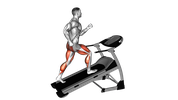
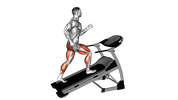
Running is a cardiovascular exercise that involves moving at a steady pace on foot. It enhances cardiovascular endurance, burns calories, and strengthens muscles, particularly in the legs and core. Running can be performed on a treadmill or outdoors and is adaptable to various fitness levels.
How to Perform
- Begin with a warm-up: walk briskly or jog lightly for 5-10 minutes to prepare your body.
- Set your pace: start at a comfortable speed that allows you to maintain a conversation without gasping for air.
- Maintain proper form: keep your head up, shoulders relaxed, and arms bent at a 90-degree angle, swinging naturally with each stride.
- Focus on your foot strike: land softly on the midfoot or forefoot to reduce impact on the joints.
- Breathe rhythmically: inhale and exhale deeply through both your nose and mouth to optimize oxygen intake.
- Cool down after your run: gradually decrease your speed to a walk for 5-10 minutes, allowing your heart rate to return to normal.
What Muscles Work
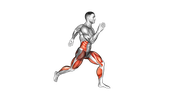
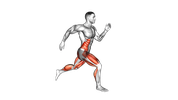
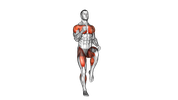
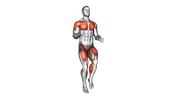
Primary Muscle:
Secondary Muscles:
Tips
- Invest in quality running shoes that provide adequate support and cushioning to prevent injuries.
- Incorporate interval training by alternating between periods of high intensity and recovery to improve speed and endurance.
- Stay hydrated by drinking water before, during, and after your run, especially in hot weather.
- Listen to your body and adjust your pace if you experience pain or excessive fatigue.
- Include strength training exercises for the legs and core to enhance running performance and reduce injury risk.
- Track your progress using a running app or fitness tracker to stay motivated and set achievable goals.
Common Mistakes
- Overstriding, leading to increased impact on joints.
- Heel striking, causing inefficient energy transfer.
- Poor arm swing, reducing momentum and balance.
- Excessive forward lean, straining the lower back.
- Inadequate core engagement, compromising stability.
- Lack of hip extension, limiting stride length.
- Neglecting foot placement, increasing risk of ankle sprains.
- Inconsistent breathing patterns, affecting endurance.
- Tense shoulders, wasting energy and restricting movement.
- Ignoring cadence, leading to inefficient pacing.
Recommended Exercises
Explore exercises related to Running for legs training and similar movement patterns.
Choose a workout plan or create your own - for free
Ready-made plans for every goal, a free plan creator, hundreds of exercises and an advanced workout journal - all in SmartWorkout.


Start with a free plan. Keep progressing with SmartWorkout.
- users
- 200k+
- exercises with technique guides
- 1,000+
- workouts on the free plan
- ∞