High-Bar Squat
StrengthFunctionalPush
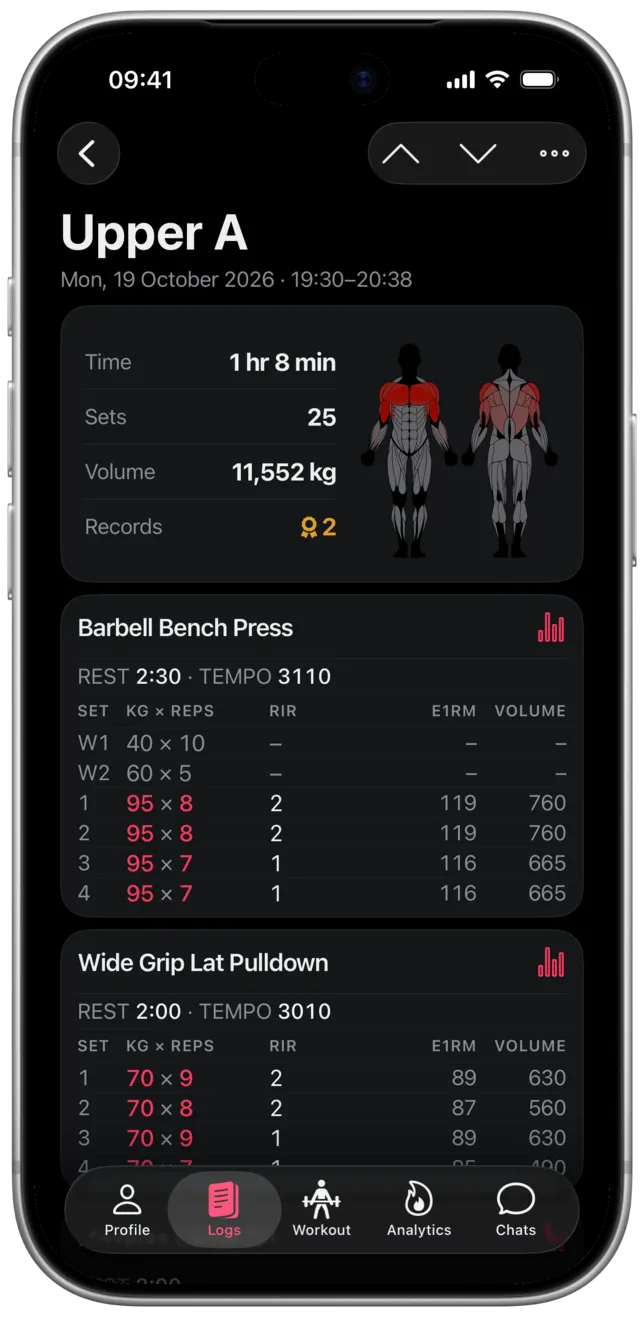
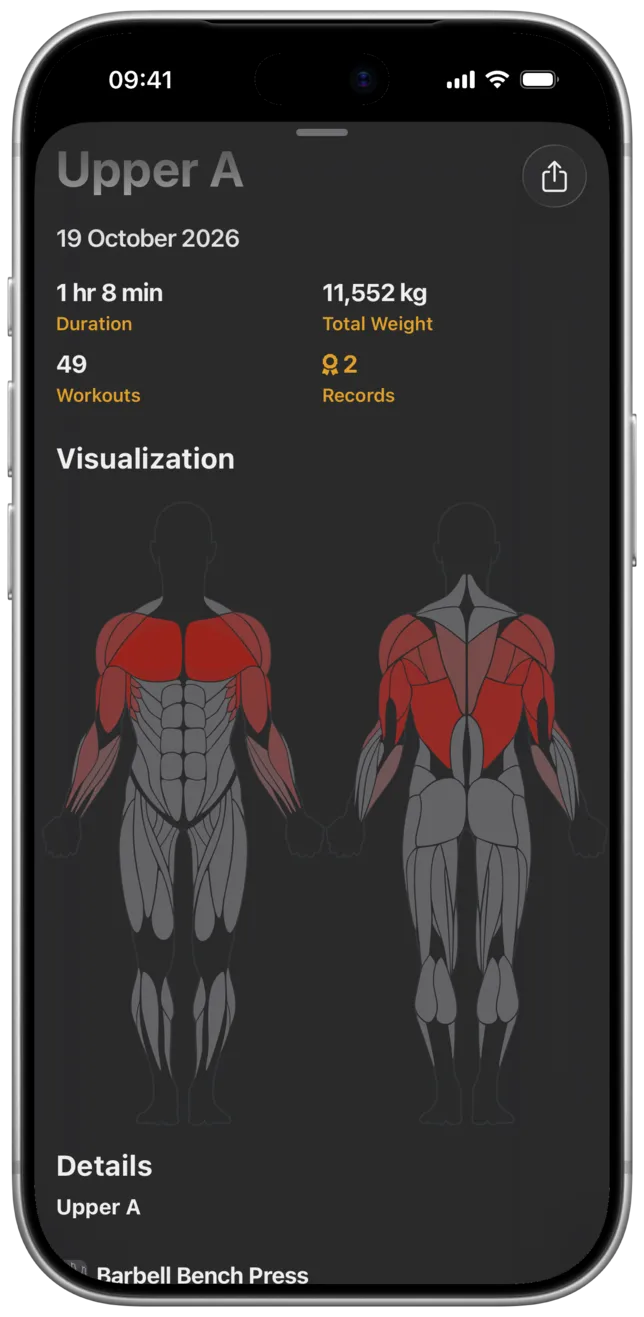
Track High-Bar Squat in SmartWorkout and watch your numbers go up
Log sets, weights and progress for free, with no workout limits.


Description
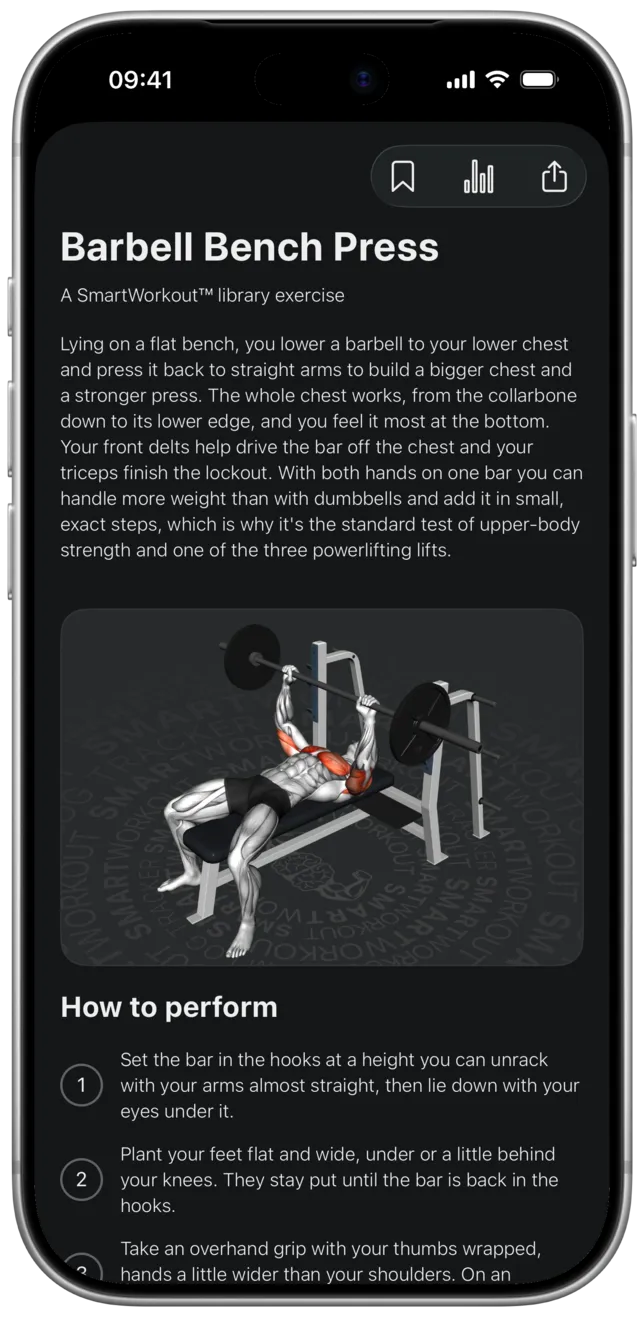
The Highbar Squat is a compound lower body exercise that primarily targets the quadriceps, glutes, and hamstrings. It involves placing the barbell on the upper traps, maintaining an upright torso, and descending into a squat position while keeping the knees aligned with the toes.
How to Perform
- Position a barbell on a squat rack at shoulder height.
- Step under the bar and place it on your upper traps, ensuring it is centered.
- Grip the bar slightly wider than shoulder-width and lift your elbows to create a stable shelf.
- Unrack the bar by standing up straight and take a step back.
- Set your feet shoulder-width apart with toes slightly pointed out.
- Engage your core and keep your chest up.
- Initiate the squat by bending at the hips and knees simultaneously.
- Descend until your thighs are parallel to the ground or slightly below.
- Ensure your knees track over your toes throughout the movement.
- Drive through your heels to return to the starting position, extending your hips and knees.
What Muscles Work
Primary Muscle:
Secondary Muscles:
Tips
- Keep your core tight to maintain stability and prevent lower back strain.
- Focus on keeping an upright torso to emphasize quadriceps engagement.
- Ensure your knees do not cave inward; they should align with your toes.
- Control the descent to maintain balance and prevent injury.
- Use a full range of motion for maximum muscle activation.
- Warm up properly before performing heavy squats to prepare your muscles and joints.
- Start with lighter weights to perfect form before progressing to heavier loads.
Common Mistakes
- Knees caving inward during the ascent.
- Heels lifting off the ground.
- Bar placed too high on the neck.
- Hips rising faster than the chest.
- Not reaching full depth with thighs parallel to the ground.
- Allowing the lower back to round.
- Feet positioned too narrowly or too widely.
- Failing to engage the core for stability.
- Leaning too far forward, causing excessive forward tilt.
- Not maintaining a neutral spine throughout the movement.
Recommended Exercises
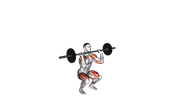
Explore exercises related to High-Bar Squat for legs training and similar movement patterns.

Choose a workout plan or create your own for free
Ready-made plans for every goal, a free plan creator, hundreds of exercises and an advanced workout journal: all in SmartWorkout.