Push-Up on Parallel Bars
StrengthPushFunctional
Track this exercise in SmartWorkout
Log sets, weights and progress for free, with no workout limits.


Body Part: Chest
Description
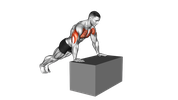
The push-up on parallel bars is a compound upper body exercise that primarily targets the chest, triceps, and shoulders. It involves supporting your body weight on parallel bars and lowering your chest towards the bars before pushing back up to the starting position. This exercise enhances upper body strength, stability, and muscle endurance.
How to Perform
- Position yourself between the parallel bars, gripping each bar firmly with your palms facing inward.
- Extend your arms fully to lift your body off the ground, keeping your legs straight and feet together.
- Engage your core and maintain a straight line from head to heels throughout the movement.
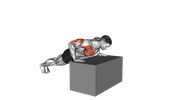
- Slowly bend your elbows to lower your chest towards the bars until your elbows reach approximately a 90-degree angle.
- Pause briefly at the bottom of the movement, ensuring control and stability.
- Push through your palms to extend your arms and return to the starting position.
- Repeat for the desired number of repetitions.
What Muscles Work
Primary Muscle:
Secondary Muscles:
Tips
- Keep your elbows close to your body to maximize tricep engagement and reduce shoulder strain.
- Maintain a neutral spine by engaging your core muscles throughout the exercise.
- Control the descent to avoid dropping too quickly, which can lead to injury.
- Focus on a full range of motion for maximum muscle activation.
- If you're new to this exercise, consider using resistance bands for assistance or performing negative repetitions to build strength gradually.
Common Mistakes
- Allowing hips to sag or rise, compromising core engagement and alignment.
- Flared elbows, increasing shoulder strain and reducing tricep activation.
- Incomplete range of motion, preventing full muscle engagement.
- Rushing the movement, leading to loss of control and form.
- Neglecting to keep shoulders down and back, causing neck tension.
- Failing to maintain a straight line from head to heels, affecting posture.
- Hands positioned too wide or too narrow, altering muscle focus.
- Not engaging the chest and triceps fully, reducing exercise effectiveness.
Recommended Exercises
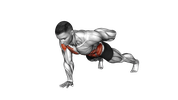
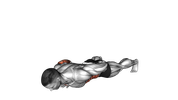
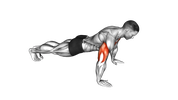
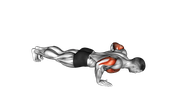
Explore exercises related to Push-Up on Parallel Bars for chest training and similar movement patterns.
Choose a workout plan or create your own - for free
Ready-made plans for every goal, a free plan creator, hundreds of exercises and an advanced workout journal - all in SmartWorkout.