Barbell Thruster
Track this exercise in SmartWorkout
Log sets, weights and progress for free, with no workout limits.


Description
The Barbell Thruster is a compound exercise that combines a front squat with an overhead press. It targets multiple muscle groups, including the quadriceps, glutes, shoulders, and triceps, making it an effective full-body workout. This exercise is commonly used in functional training and CrossFit routines to improve strength, power, and cardiovascular endurance.
How to Perform
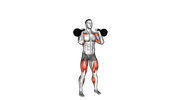
- Begin by standing with your feet shoulder-width apart, holding a barbell at shoulder height with an overhand grip. Your elbows should be pointing forward and slightly up.
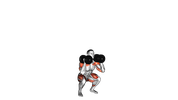
- Engage your core and keep your chest up as you lower into a squat, pushing your hips back and down until your thighs are parallel to the ground.
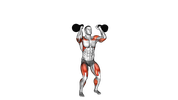
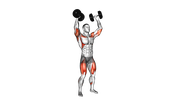
- Drive through your heels to stand up explosively, using the momentum to press the barbell overhead until your arms are fully extended.
- Lower the barbell back to shoulder height in a controlled manner to complete one repetition.
- Repeat for the desired number of repetitions, maintaining proper form throughout.
What Muscles Work
Primary Muscle:
Secondary Muscles:
Tips
- Focus on maintaining a strong core throughout the movement to protect your lower back.
- Ensure that your knees track over your toes during the squat to prevent injury.
- Use a weight that allows you to perform the exercise with proper form; avoid going too heavy too soon.
- Keep your elbows slightly forward during the press to maintain stability and control.
- Breathe out as you press the barbell overhead and inhale as you lower into the squat.
Common Mistakes
- Using excessive weight, leading to compromised form.
- Allowing knees to cave inward during the squat phase.
- Not achieving full depth in the squat, reducing effectiveness.
- Failing to keep the core engaged, causing instability.
- Pressing the barbell forward instead of directly overhead.
- Not maintaining a neutral spine throughout the movement.
- Rising onto the toes instead of keeping heels grounded.
- Using momentum rather than controlled movement.
- Allowing elbows to drop during the press, reducing power.
- Neglecting to lock out arms fully at the top of the press.
Recommended Exercises
Explore exercises related to Barbell Thruster for legs training and similar movement patterns.
Choose a workout plan or create your own - for free
Ready-made plans for every goal, a free plan creator, hundreds of exercises and an advanced workout journal - all in SmartWorkout.


Start with a free plan. Keep progressing with SmartWorkout.
- users
- 200k+
- exercises with technique guides
- 1,000+
- workouts on the free plan
- ∞