Pin Squat
Track Pin Squat in SmartWorkout and watch your numbers go up
Log sets, weights and progress for free, with no workout limits.


Description
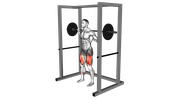
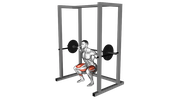
The Pin Squat is a variation of the traditional squat where the barbell is lifted from a set of safety pins or supports within a power rack. This exercise focuses on building strength and power by eliminating the stretch reflex, forcing the lifter to generate force from a dead stop. It is particularly useful for improving sticking points in the squat and enhancing overall squat performance.
How to Perform
- Set the safety pins in a power rack at the desired height, typically at or just below parallel to your squat depth.
- Position the barbell on the pins and load it with an appropriate weight.
- Stand under the bar with your feet shoulder-width apart and position it across your upper back, ensuring it is centered.
- Grip the bar firmly with your hands slightly wider than shoulder-width apart.
- Engage your core, retract your shoulder blades, and maintain a neutral spine.
- Lift the bar off the pins by driving through your heels and extending your hips and knees simultaneously.
- Pause briefly at the top, then lower the bar back to the pins by bending your hips and knees, maintaining control throughout.
- Ensure that each rep starts from a dead stop on the pins to maximize effectiveness.
What Muscles Work
Primary Muscle:
Secondary Muscles:
Tips
- Focus on maintaining a strong core throughout the movement to protect your lower back.
- Use a controlled tempo when lowering the bar to ensure proper form and reduce injury risk.
- Start with a lighter weight to master technique before progressing to heavier loads.
- Ensure that your knees track over your toes to avoid unnecessary strain on the joints.
- Experiment with different pin heights to target specific weaknesses in your squat.
Common Mistakes
- Setting the pins too high, limiting the range of motion and reducing effectiveness.
- Setting the pins too low, leading to excessive depth and potential loss of control.
- Failing to maintain a neutral spine, increasing the risk of back strain.
- Allowing knees to cave inward, which can lead to knee discomfort.
- Not engaging the core, resulting in instability and poor posture.
- Rising too quickly, sacrificing control and muscle engagement.
- Improper foot placement, causing imbalance and reduced power output.
- Neglecting to keep the chest up, leading to forward lean and poor form.
- Using too much weight, compromising form and increasing injury risk.
- Bouncing off the pins, which reduces tension and control.
Recommended Exercises
Explore exercises related to Pin Squat for legs training and similar movement patterns.
Choose a workout plan or create your own - for free
Ready-made plans for every goal, a free plan creator, hundreds of exercises and an advanced workout journal - all in SmartWorkout.


Start with a free plan. Keep progressing with SmartWorkout.
- users
- 200k+
- exercises with technique guides
- 1,000+
- workouts on the free plan
- ∞