Snatch
enums.exercise_tag.STRENGTHenums.exercise_tag.EXPLOSIVEenums.exercise_tag.BALANCEenums.exercise_tag.FUNCTIONAL
exercise_detail.body_part: enums.body_part.LEGS
exercise_detail.description
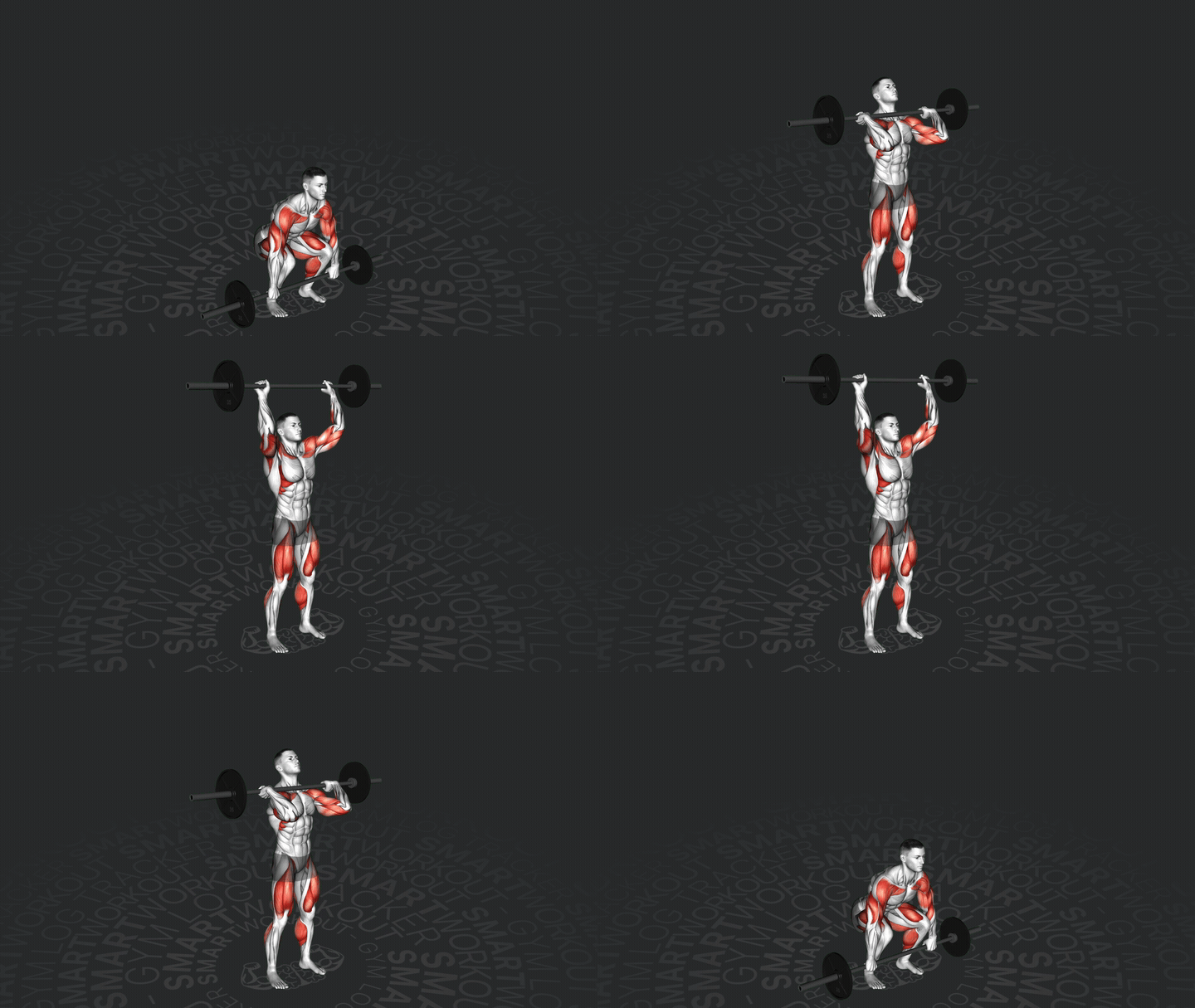
The snatch is a dynamic Olympic weightlifting exercise that involves lifting a barbell from the ground to overhead in one continuous motion. It requires a combination of strength, speed, flexibility, and technique. The movement is divided into several phases: the first pull, transition, second pull, and catch.
exercise_detail.how_to_perform
- Stand with feet hip-width apart, toes slightly turned out. Position the barbell over the middle of your feet.
- Grip the barbell with a wide grip, arms straight and outside of your knees.
- Lower your hips with your chest up and back straight, keeping your gaze forward.
- Initiate the lift by pushing through your heels, extending your knees and hips in a smooth motion.
- As the bar passes your knees, transition by pulling the bar close to your body and shrugging your shoulders.
- Explosively extend your hips and knees while pulling yourself under the bar.
- Catch the bar overhead in a deep squat position with arms fully extended and locked out.
- Stand up from the squat position to complete the lift, keeping the bar stable overhead.
exercise_detail.what_muscles_work
exercise_detail.primary_muscle:
exercise_detail.secondary_muscles:
exercise_detail.tips
- Ensure your grip is wide enough to allow for a comfortable overhead position.
- Keep the barbell close to your body throughout the lift to maintain control and efficiency.
- Focus on an explosive hip extension to generate maximum power during the second pull.
- Practice flexibility in shoulders and ankles to achieve a stable overhead squat position.
- Use lighter weights initially to perfect technique before progressing to heavier loads.
- Maintain a neutral spine throughout the lift to prevent injury and ensure proper form.
exercise_detail.common_mistakes
- Starting with hips too high or too low, disrupting the pull mechanics.
- Pulling with the arms too early, reducing power from the legs and hips.
- Not keeping the barbell close to the body, leading to inefficient movement.
- Failing to fully extend the hips, resulting in a lack of upward momentum.
- Inadequate shoulder mobility, causing poor overhead positioning.
- Catching the barbell with bent elbows, compromising stability overhead.
- Landing with feet too wide, affecting balance and control.
- Neglecting to engage the core, leading to instability during the lift.
- Rushing the lift, which can lead to a loss of control and precision.
- Improper grip width, affecting the bar path and balance.
exercise_detail.recommended_exercises
exercise_detail.recommended_exercises_intro
exercise_detail.app_ad.title
exercise_detail.app_ad.description