Barbell Split Squat
Track this exercise in SmartWorkout
Log sets, weights and progress for free, with no workout limits.


Description
The Barbell Split Squat is a unilateral lower body exercise targeting the quadriceps, hamstrings, glutes, and calves. It involves stepping one foot forward and lowering the hips while keeping the torso upright, using a barbell placed across the upper back for resistance. This exercise enhances balance, coordination, and strength in the legs.
How to Perform
- Begin by placing a barbell across your upper back, gripping it slightly wider than shoulder-width apart.
- Stand with your feet hip-width apart and step one foot forward into a staggered stance.
- Lower your hips by bending both knees until the back knee nearly touches the ground.
- Ensure the front knee is aligned over the ankle and does not extend past the toes.
- Push through the heel of the front foot to return to the starting position.
- Repeat for the desired number of repetitions before switching legs.
What Muscles Work
Primary Muscle:
Secondary Muscles:
Tips
- Maintain an upright torso throughout the movement to prevent leaning forward.
- Engage your core to stabilize your body and maintain balance.
- Focus on driving through the heel of the front foot to maximize glute activation.
- Keep your gaze forward to help maintain proper posture and alignment.
- Start with a lighter weight to master form before progressing to heavier loads.
- Ensure even distribution of weight on both feet during the descent.
Common Mistakes
- Placing the feet too close together, leading to instability and poor balance.
- Allowing the front knee to extend beyond the toes, increasing stress on the knee joint.
- Failing to maintain an upright torso, causing excessive forward lean.
- Dropping the back knee too quickly, resulting in lack of control and potential impact injury.
- Not engaging the core, leading to a lack of stability and potential lower back strain.
- Uneven weight distribution between the front and back leg, reducing effectiveness.
- Using too much weight, compromising form and increasing injury risk.
- Not lowering the back knee close enough to the ground, limiting range of motion.
- Allowing the front heel to lift off the ground, reducing stability and effectiveness.
- Neglecting to keep the shoulders retracted, causing rounding of the upper back.
Recommended Exercises
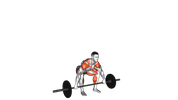
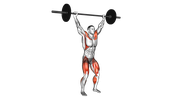
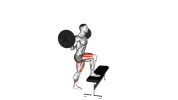
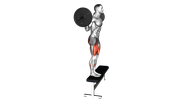
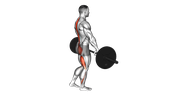
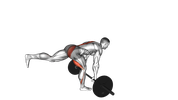
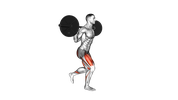
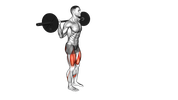
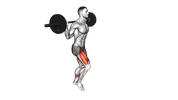
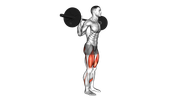
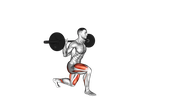
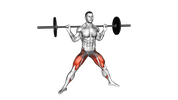
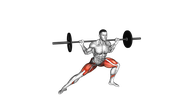
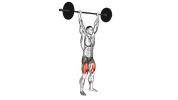
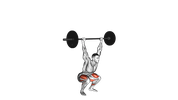
Explore exercises related to Barbell Split Squat for legs training and similar movement patterns.

Choose a workout plan or create your own - for free
Ready-made plans for every goal, a free plan creator, hundreds of exercises and an advanced workout journal - all in SmartWorkout.


Start with a free plan. Keep progressing with SmartWorkout.
- users
- 200k+
- exercises with technique guides
- 1,000+
- workouts on the free plan
- ∞