Barbell Bulgarian Squat
Also known as: Barbell Bulgarian Split Squat
Track this exercise in SmartWorkout
Log sets, weights and progress for free, with no workout limits.


Description
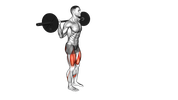
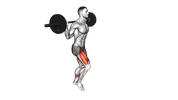
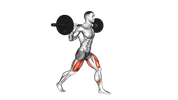
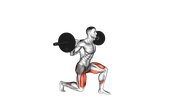
The Barbell Bulgarian Squat is a unilateral lower body exercise that targets the quadriceps, glutes, and hamstrings. It involves performing a squat with one leg elevated behind you on a bench or platform while holding a barbell across your upper back. This exercise enhances balance, stability, and muscular strength in the legs.
How to Perform
- Begin by positioning a bench or platform behind you at knee height.
- Place a barbell across your upper back, ensuring it is centered and secure.
- Stand about two feet in front of the bench with your feet hip-width apart.
- Lift one leg and place the top of your foot on the bench behind you.
- Engage your core and keep your chest up as you begin to lower your body by bending the front knee.
- Descend until your front thigh is parallel to the ground, ensuring your knee does not extend past your toes.
- Press through the heel of your front foot to return to the starting position.
- Complete the desired number of repetitions before switching legs.
What Muscles Work
Primary Muscle:
Secondary Muscles:
Tips
- Maintain an upright torso throughout the movement to prevent leaning forward.
- Focus on keeping your front knee aligned with your toes to avoid unnecessary strain.
- Engage your core muscles to enhance stability and control during the exercise.
- Start with a lighter weight to master the form before progressing to heavier loads.
- Ensure that the bench height allows for comfortable placement of your rear foot without causing discomfort.
- Perform the exercise in front of a mirror if possible to monitor form and alignment.
Common Mistakes
- Allowing the front knee to cave inward, which reduces stability and increases strain on the knee joint.
- Positioning the rear foot too high on the bench, leading to an unstable base and compromised balance.
- Failing to maintain an upright torso, which shifts the focus away from the targeted muscles and increases lower back strain.
- Dropping the hips too low, causing the front knee to travel excessively forward past the toes.
- Neglecting to engage the core, resulting in poor balance and reduced control over the movement.
- Using too heavy a weight, which can compromise form and lead to improper execution.
- Not keeping the front foot flat on the ground, leading to instability and reduced force production.
- Rushing through the movement, which decreases control and increases the likelihood of improper form.
- Allowing the barbell to roll or shift on the back, which disrupts balance and focus.
Recommended Exercises
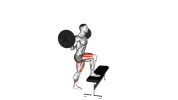
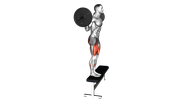
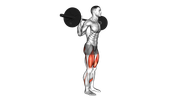
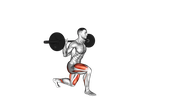
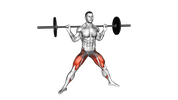
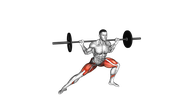
Explore exercises related to Barbell Bulgarian Squat for legs training and similar movement patterns.
Choose a workout plan or create your own - for free
Ready-made plans for every goal, a free plan creator, hundreds of exercises and an advanced workout journal - all in SmartWorkout.


Start with a free plan. Keep progressing with SmartWorkout.
- users
- 200k+
- exercises with technique guides
- 1,000+
- workouts on the free plan
- ∞