Barbell Squat
Also known as: Back squat, Barbell back squat
Track this exercise in SmartWorkout
Log sets, weights and progress for free, with no workout limits.


Description
The Barbell Squat is a fundamental compound exercise that targets the quadriceps, hamstrings, glutes, and lower back. It is performed by lowering the body into a squat position with a barbell resting on the upper back, then returning to a standing position. This exercise is essential for building overall leg strength and improving core stability.
How to Perform
- Position the barbell on a squat rack at about shoulder height.
- Step under the bar and place it across your upper back, ensuring it rests comfortably on your trapezius muscles.
- Grip the bar with both hands slightly wider than shoulder-width apart.
- Lift the bar off the rack by straightening your legs and stepping back carefully.
- Stand with feet shoulder-width apart, toes slightly pointed out.
- Engage your core and keep your chest up throughout the movement.
- Begin the squat by bending at the hips and knees, lowering your body until your thighs are parallel to the ground or slightly below.
- Ensure your knees track over your toes without caving inward.
- Push through your heels to return to a standing position, fully extending your hips and knees.
- Repeat for the desired number of repetitions.
What Muscles Work
Primary Muscle:
Secondary Muscles:
Tips
- Maintain a neutral spine throughout the exercise to prevent injury.
- Keep your weight distributed evenly across your feet, focusing on pressing through your heels.
- Avoid letting your knees collapse inward; keep them aligned with your toes.
- Control the descent and ascent to maximize muscle engagement and reduce injury risk.
- Breathe in as you lower into the squat and exhale as you push back up to standing.
- Start with lighter weights to perfect form before progressing to heavier loads.
Common Mistakes
- Allowing knees to cave inward during the squat descent or ascent.
- Rounding the lower back instead of maintaining a neutral spine.
- Squatting too shallow, not reaching parallel or below with thighs.
- Letting the heels lift off the ground, shifting weight onto toes.
- Dropping the chest forward excessively, losing upper back tightness.
- Failing to engage the core, leading to instability and poor control.
- Positioning the bar too high on the neck instead of across the shoulders.
- Not aligning knees with toes, causing knee strain.
- Descending too quickly without control, risking loss of balance.
- Overextending the knees at the top, locking them out forcefully.
Recommended Exercises
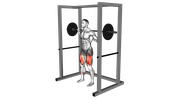
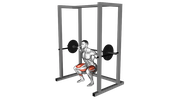
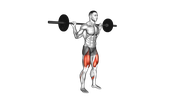
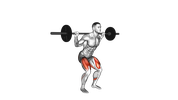
Explore exercises related to Barbell Squat for legs training and similar movement patterns.
Choose a workout plan or create your own - for free
Ready-made plans for every goal, a free plan creator, hundreds of exercises and an advanced workout journal - all in SmartWorkout.


Start with a free plan. Keep progressing with SmartWorkout.
- users
- 200k+
- exercises with technique guides
- 1,000+
- workouts on the free plan
- ∞